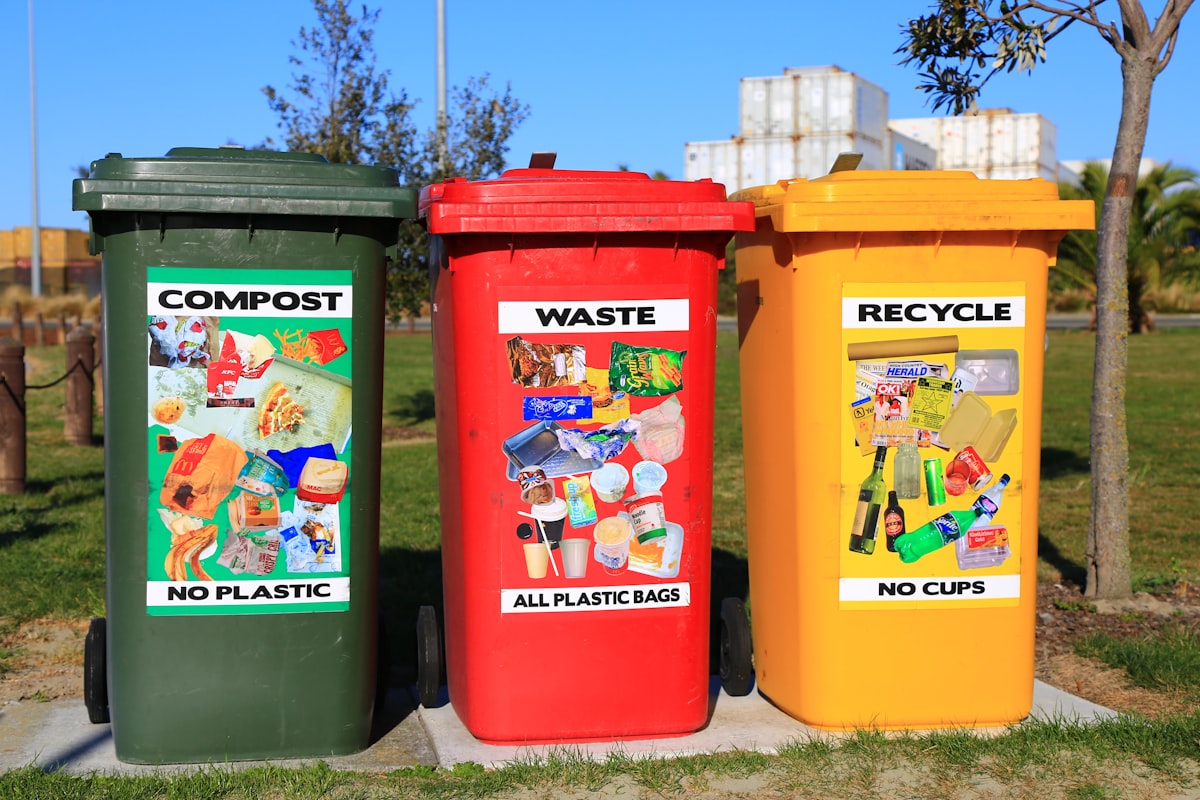
Bu Retno Wulandari has run Bank Sampah Melati Asri in the Cibeunying Kaler district of Bandung since early 2019. It started as one small unit with 40 housewife members in a single neighborhood block. Today it oversees 6 branch units across four larger sub-districts, with 612 active members and an average of 3,400 kg of waste processed every month, spanning PET plastic, cardboard, scrap metal, and used cooking oil. Every member carries a green paper passbook, filled in by hand by the weighing staff each time they deposit sorted waste.
The cracks showed once membership passed 500. In the last twelve months alone, two passbooks were lost outright, leaving no way to prove those members' balances except the weighing staff's memory. Three separate reconciliation mismatches turned up between member passbooks and the head office ledger, because the same number had to be handwritten in three different places and was prone to transcription errors. At the end of every month, Bu Retno and two other coordinators spent two full days manually combining figures from six units into one report for the sub-district office. Matters came to a head when a consumer goods company offered an annual CSR grant of Rp 45 million, on the condition of a verifiable environmental impact report, broken down by waste category in kilograms with an estimated carbon emissions reduction. Bu Retno simply could not produce data that clean from a stack of handwritten passbooks, and the grant went instead to a waste bank in the neighboring sub-district that already ran on a digital ledger.
What a Digital Waste Bank App Actually Is
A digital waste bank app replaces the paper passbook and handwritten ledger with an electronic record. Every member holds a digital savings account whose balance updates automatically each time they deposit sorted waste and it gets weighed by staff. These systems typically have three sides: a field input app for weighing staff that runs on an ordinary Android phone, a management dashboard that gives oversight across every branch unit at once, and an optional member-facing portal or WhatsApp notification so members can check their own balance without asking staff.
Unlike generic off-the-shelf waste bank apps sold as one-size-fits-all products, a custom-built system can match the operation's actual workflow: different pricing schemes per branch, locally specific waste categories such as textile production offcuts or market waste, or reporting formats already dictated by the local environmental agency. The point isn't simply swapping paper for a screen. It's making every waste-savings transaction traceable, auditable, and reportable in seconds rather than the days Bu Retno's team lost every month.
The Real Problems With Staying on Paper
- Passbooks get lost, soaked, and eaten by insects. Physical books that travel back and forth with members are easy to misplace, damage in the rain, or lose to termites, and once gone, a member's balance is nearly impossible to reconstruct accurately.
- Ledgers and member books drift apart. Every transaction is written down twice, once in the member's book and once in the coordinator's master ledger, and the two totals routinely diverge because of manual transcription errors.
- Category pricing goes stale and inconsistent across units. Collector prices for PET plastic, paper, and metal shift weekly with the market, but without a central system, different branches keep using outdated figures, and members notice and complain their payout feels unfair.
- Monthly reconciliation eats days of staff time. Manually merging records from multiple units, as Bu Retno experienced, consumes time that coordinators should be spending on member education or negotiating with bulk buyers.
- There's no auditable proof for CSR sponsors or local government. Sponsor companies and environmental agencies increasingly require verified impact reports, not rough estimates pulled from handwritten notebooks.
- Cash-outs are vulnerable to manipulation. Without a digital trail, a dishonest staffer can log a deposit as lighter than its actual weight, or cash out a dormant member's balance without their knowledge.
- Branch performance is impossible to compare. Head office coordinators have no fast way to see which unit's volume is declining, which unit's members have gone inactive, or which unit needs closer support.
Key Features a System Needs
- Member registration and a digital passbook, including a unique member ID, ID card photo, and a balance history that survives even if a phone or physical book is lost or destroyed.
- Weighing and category pricing that updates centrally, so an admin changes the price per kilogram for plastic, paper, metal, glass, and other categories once, and every branch unit immediately uses the current figure.
- Savings balances redeemable as cash or staple goods (sembako), with every redemption logged automatically so there's no gap for manipulation.
- Transaction history and digital receipts, sent via WhatsApp or SMS on every deposit, so members hold independent proof outside the coordinator's own records.
- A collector and recycling-plant integration module, to record bulk sales from the waste bank to end buyers, complete with sale price, date, and total weight per category.
- Automated ESG/CSR reporting, exportable per unit or combined across every unit, covering total kilograms processed, estimated carbon reduction, and active membership per period.
- A multi-unit dashboard for management, laying branch performance side by side: deposit volume, active membership, and monthly trends, so a lagging unit surfaces quickly.
- Role-based access control, so field weighing staff can only log deposits, while only head office coordinators can change pricing or approve large withdrawals.
- Offline input mode for low-signal areas, storing data locally on the staff phone and syncing automatically once a connection returns, essential since many collection points sit in narrow alleys or outlying areas with weak coverage.
Build vs Buy an Off-the-Shelf Waste Bank App
There are subscription-based, ready-made waste bank apps on the market. That option is reasonable for a small, single-location unit with simple needs, since it can be adopted immediately without waiting on a development cycle. But once an operation scales, the way Melati Asri grew to six branch units, generic apps typically struggle to accommodate per-unit pricing differences, locally specific waste categories, or reporting formats mandated by a particular local government.
A custom application gives full control over the workflow: commission schemes for per-unit coordinators, direct integration with a local sembako payment system, or export formats matching whatever template a specific district or city environmental agency requires. A custom build also avoids the per-member subscription cost that compounds as membership grows; once the system is built, ongoing costs are limited to hosting and maintenance rather than a fee tied to every active member, which is how most generic SaaS platforms price. The trade-off is a longer initial build time and a larger up-front investment compared to signing up for a ready-made app immediately.
For a waste bank still under 150 members and a single location, a cheap off-the-shelf app can be a reasonable starting point. But once there's a plan to expand into multiple units, partner with CSR sponsors, or report regularly to local government, a custom system usually costs less over a three-year horizon than the accumulating subscription fees that climb alongside membership.
Cost and Timeline Ranges in Indonesia
For a neighborhood-level waste bank with one or two units, a basic version covering member registration, deposit logging, and savings balances typically runs Rp 35 million to Rp 65 million, with a build time of 6 to 10 weeks.
For a sub-district-level waste bank with several branch units, plus a multi-unit dashboard, automated WhatsApp notifications, and a basic ESG reporting module, the range is Rp 90 million to Rp 160 million, with a build time of 3 to 4 months.
For a larger platform covering API integration with collectors or recycling plants, full offline mode for field staff, multi-tenant support across several sub-districts at once, and automated reports matching local government formats, costs range from Rp 220 million to Rp 400 million, with a build time of 5 to 7 months.
Beyond the initial build, budget for ongoing hosting, server maintenance, and technical support of roughly Rp 3 million to Rp 8 million per month, depending on unit count and transaction volume. These figures reflect the current market range for custom software in Indonesia and can shift depending on payment integration complexity, the number of regional languages supported, and how customized the reporting needs to be for a given sponsor or agency.
Case Study
Bank Sampah Bersama Lestari, a social enterprise in Sidoarjo Regency overseeing 9 units across 5 villages, moved from manual passbook tracking to a custom application in mid-2024. Before digitizing, they recorded 480 members with 2,100 kg of waste processed per month, monthly reconciliation took a full 3 working days, and 4 unresolved balance discrepancies were logged in the year before migration.
Sixteen months after the app went live across every unit, active membership rose to 890, monthly waste volume rose to 5,600 kg, and monthly reconciliation time dropped from 3 days to under 2 hours, since every unit's data now merges automatically into the central dashboard. Most consequential for the organization's sustainability, they secured two new CSR sponsorship contracts worth a combined Rp 78 million per year from two manufacturing companies in the Sidoarjo industrial area, because they could finally present a verified environmental impact report with monthly trend charts broken down by waste category, something that had been impossible to produce from a stack of handwritten ledgers.
Metrics to Track After Implementation
- Waste volume per category per month, to spot which categories are growing and which are stagnant, essential leverage when negotiating prices with collectors.
- Active members vs. registered members, since members who registered but never returned to deposit signal an education gap or a poorly located unit.
- Monthly member retention, the percentage returning to deposit in the following period, the most honest indicator of trust in the system.
- Total outstanding savings balance across units, so management knows the total liability that must be covered in cash or staple goods.
- Monthly reconciliation time, a realistic post-digitization target is under one working day, down from the two to three days typical of manual operations.
- Average price per kilogram versus current collector rates, to keep margins healthy while staying fair to members.
- Cash withdrawal ratio versus staple-goods redemption, helping management plan weekly cash and sembako stock needs more accurately.
- Number and value of ESG reports successfully exported to sponsors or local government, the most direct measure of this system's business value beyond day-to-day operations.
Where to Start
A waste bank still relying on manual passbooks already holds its most valuable asset: real transaction history and years of member trust. What's missing is a way to present that data so it can be audited, trusted by sponsors, and used to make fast decisions. AFSS builds custom waste bank applications for neighborhood associations, sub-district offices, and environmental social enterprises across Indonesia, from a single-unit basic version to a multi-branch platform with automated ESG reporting. Check estimated pricing for the scale of your waste bank, or go ahead and submit your project to discuss it with our team.
Have a similar project?
Free consultation, no commitment. Tell us what you need — we'll help you find the best solution.
Free Consultation