Custom Catering Business Management Software: 2026 Guide
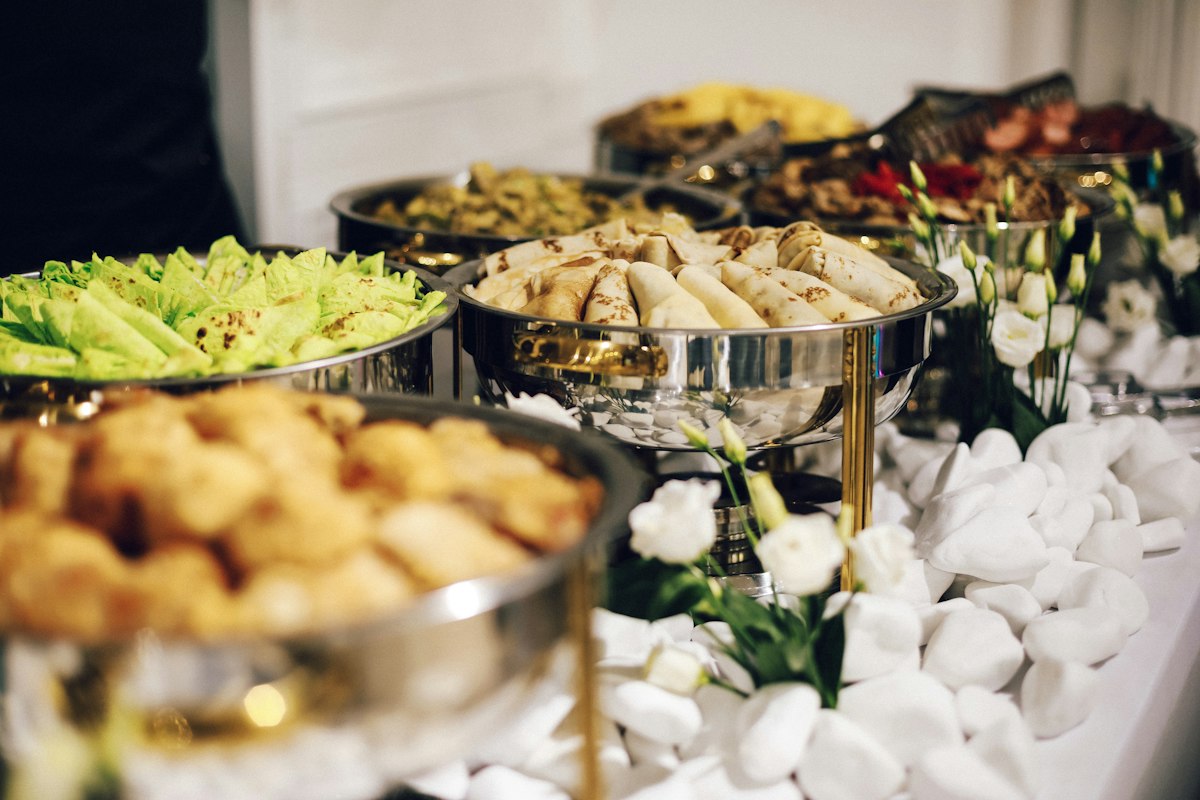
Marlina Kusuma started Dapur Nyonya Marlina out of her home kitchen in the Tembalang district of Semarang in 2016, filling boxed-lunch orders for neighborhood gatherings and community events. Nine years later, the business runs a 400-square-meter production kitchen, employs 22 cooks and kitchen assistants, and handles an average of 45 events a month — weddings, birthdays, and the annual gatherings of manufacturing companies and government offices across Central Java. Monthly revenue tops Rp 1.2 billion, with annual corporate contracts forming the backbone of that income.
The problem surfaced at a manufacturing company's annual gathering in Semarang on October 18, 2024. Dapur Nyonya Marlina's sales team had confirmed 800 portions in a face-to-face meeting with the client three weeks earlier, but that number only existed in the salesperson's personal notes. The kitchen team, which received production instructions through a separate WhatsApp group, was still working off an earlier figure of 550 portions from a conversation a month prior — a number that was never reconciled because there was no single source of truth shared between sales and kitchen. The 250-portion shortfall wasn't discovered until 5 a.m. on the day of the event, when the logistics team recounted the packed rice boxes ready for delivery. Marlina had to call three other catering vendors to buy finished food at emergency prices, spending an extra Rp 23 million in three hours, on top of rush delivery fees that were never in the original budget. The corporate client, whose contract was worth roughly Rp 480 million a year, filed a formal complaint and threatened to switch vendors for its next event.
Dapur Nyonya Marlina is not a special case. This is a common condition across thousands of catering businesses in Indonesia — from home-based operations to those already serving large corporate accounts — whose operations have grown far faster than their internal record-keeping and coordination systems. As long as orders, recipes, stock, and schedules stay scattered across people's memory, personal spreadsheets, and dozens of WhatsApp groups, an incident like this is only a matter of time.
What Is Catering Business Management Software
Catering business management software is a platform that integrates the entire catering workflow — order intake and event booking, cost-of-goods (HPP) calculation per portion, kitchen production planning, ingredient procurement and inventory, staff and cook scheduling, delivery logistics to event locations, and invoicing for corporate clients — into one connected system.
Catering is structurally different from a regular restaurant, which is why generic restaurant software (a cashier POS, a standard kitchen display system) often falls short. A restaurant serves relatively steady demand spread throughout the day — dozens of tables, hundreds of small portions, cooked on demand as customers walk in. Catering instead faces event-driven demand spikes: zero orders one day, then thousands of portions across several different events within a few hours the next. Procurement happens in large, sudden batches, while catering's raw materials — vegetables, fresh protein, prepared ingredients — have a short shelf life, so a portion-count error instantly becomes wasted food or a shortage on the day of the event. Costs must be recalculated for every single event, since per-portion HPP shifts with the menu, guest count, and delivery location, unlike a restaurant's fixed menu pricing. Finally, catering kitchen staff and servers are frequently freelance or part-time, hired according to weekly event volume rather than a fixed team working regular shifts.
Because of these structural differences, good catering software needs to unify event booking, per-portion costing, production planning, perishable inventory management, and flexible workforce scheduling — not simply record sales transactions the way an ordinary POS app does.
The Real Cost of Staying Manual
- Portion miscounts because data is scattered across WhatsApp groups — as Dapur Nyonya Marlina experienced, the final order number often lives only in a salesperson's head or a private chat, never synced with the kitchen or logistics team.
- HPP calculated roughly with rarely updated Excel formulas — ingredient prices swing weekly, but recipe and cost calculations in a spreadsheet get revised only once a month, so many events actually run at a loss without the owner realizing it.
- Perishable ingredients wasted because purchasing isn't synced with the production schedule — vegetables and fresh protein get bought on rough guesswork instead of a precise production plan, so leftover stock spoils before it can be used.
- Double-booked kitchens and equipment for different events at the same time — without a centralized production calendar, two large events can end up scheduled to use the same oven or steamer in a conflicting time slot.
- Delayed billing to corporate clients due to manual invoices and no systematic contracts — receivables pile up, cash flow stalls, and the finance team struggles to track who has paid and who hasn't.
- Freelance staff and cooks scheduled through private messages, leading to conflicts or shortages — there's no visibility into who has confirmed for which event, resulting in understaffing right on the day it matters most.
- No profitability data per event — the owner has no idea which event types or menus are actually profitable and which ones quietly eat into margin, so pricing and sales strategy run without any real data foundation.
Key Features Catering Software Must Have
- Order and event booking calendar — a single centralized source of truth for guest count, menu, date, location, and payment status, accessible to sales, kitchen, and logistics teams in real time.
- Per-portion recipe and HPP calculator — automatically computes ingredient, labor, and overhead costs per recipe, so selling price and margin per event stay accurate even as ingredient prices change weekly.
- Perishable ingredient procurement and inventory management — tracks expiry dates, applies automatic FIFO rotation, and flags low stock or near-expiry items before they turn into waste.
- Kitchen production planning — translates confirmed orders into a daily cooking task list per kitchen station, including equipment allocation so schedules across events never collide.
- Staff and cook scheduling, including freelance labor — manages fixed shifts and daily hires based on weekly event volume, complete with automatic attendance confirmation.
- Delivery logistics planning for event locations — delivery routing, fleet and refrigerated-vehicle allocation, and arrival-time estimates timed to each event's start.
- Invoicing and corporate contract management — support for payment terms, tax, monthly retainers, and automatic reminders for upcoming due dates.
- Per-event and per-menu profitability dashboard — real-time margin reporting that compares estimated cost against actuals, so profitability trends are visible over time.
Build vs Buy: Custom Software or a SaaS Vendor
Many catering owners ask: why not just use an off-the-shelf generic SaaS app instead of building something custom? The answer depends on the scale and operational complexity of the specific business.
Ready-made SaaS vendors, whether local or international, work well for small home-based catering operations with simple volume — enough to log basic orders and invoices. The advantages are clear: low upfront cost, usable within days, and no need for an in-house development team. But once a business develops real complexity — multiple outlets fed by a central kitchen, highly specific HPP calculations per recipe and local ingredient, integration with an existing accounting or ERP system, or a unique corporate contract approval flow — generic software starts forcing the business process to bend around the shape of the app, rather than the other way around.
Custom software wins precisely at that point: the HPP module can be built to match exactly how the costing team actually works, the production flow from central kitchen to multiple outlets can be mapped to real conditions on the ground, and the system can keep evolving as the business grows — without being boxed in by a foreign vendor's subscription tier limits, which may not be familiar with Indonesian catering business patterns such as event down-payment norms, local corporate payment-term practices, or seasonal spikes around Ramadan and wedding season.
A practical rule of thumb: if operations are still a single kitchen with volume under 15 events a month, a generic SaaS product or even a well-organized spreadsheet is still cost-justifiable. Once a business touches multiple outlets, a central kitchen, or more than 30 events a month with corporate clients demanding specific reporting, custom software starts delivering a far clearer ROI than the long-term SaaS licensing costs that keep ballooning with user count and transaction volume.
Cost Range and Development Timeline in Indonesia
Based on the typical pattern of catering software projects handled by software houses in Indonesia, the investment ranges roughly as follows:
- Small/home-based catering (Rp 35 million - Rp 90 million, 2-3 months) — covers order booking, a basic HPP calculator, simple inventory management, and invoicing for individual and small corporate clients. Suited to a single-kitchen operation with under 20 events a month.
- Mid-size multi-event catering (Rp 90 million - Rp 250 million, 3-6 months) — adds kitchen production planning, freelance staff scheduling, multi-location delivery logistics management, and a per-event profitability dashboard. Suited to businesses running 20-60 events a month with several regular corporate clients.
- Enterprise/multi-outlet central-kitchen catering (Rp 250 million - Rp 700 million+, 6-12 months) — covers central kitchen integration across many outlets or branches, complex corporate contract management, accounting/ERP integration, cross-branch business intelligence, and possibly a mobile app for field teams and couriers.
Beyond the initial development cost, budget for monthly hosting and maintenance in the range of Rp 1.5 million - Rp 8 million a month, depending on infrastructure scale (servers, databases, storage for menu photos and event documentation) and the level of technical support required.
Case Study
Cita Rasa Nusantara Catering, owned by Bayu Saputra in Surabaya, has operated since 2018 and, before 2023, relied on a combination of spreadsheets and WhatsApp groups to manage roughly 30 events a month. After implementing a custom catering management system in early 2023, the results were measurable within nine months:
- Ingredient waste dropped 34%, thanks to production planning that referenced confirmed portion counts directly, rather than rough estimates from sales.
- HPP calculation accuracy improved dramatically — previously off by 15-18% from real cost, now consistently within a 2% range, since ingredient prices update automatically from procurement data.
- Profit margin per event rose from an average of 9% to 21%, because the sales team could see real-time cost estimates while drafting proposals instead of guessing at a selling price.
- Quotation turnaround time for corporate clients dropped from 2 days to about 2 hours, since the HPP calculator and menu catalog are now fully integrated.
- The number of events the business could handle rose from 30 to 52 a month without adding a single full-time cook, thanks to far more efficient production and freelance staff scheduling.
Metrics to Track After Implementation
- HPP accuracy vs. actual cost — the gap between estimated cost per portion at quotation time and actual cost after the event, ideally kept under 5%.
- Perishable ingredient waste percentage — the proportion of ingredients wasted or expired relative to total purchases, tracked monthly by ingredient category.
- Profit margin per event and per menu type — to identify which menu packages or client segments are the most profitable for the business.
- Kitchen and staff capacity utilization — the ratio of kitchen hours and staff hours actually used versus maximum capacity, useful for planning additional hires or a new outlet.
- Average time from quotation to confirmed event — measures sales process efficiency and how quickly the team responds to prospective clients.
- Days sales outstanding (DSO) for corporate clients — the average time it takes for invoices to be paid, critical for protecting cash flow especially during high-volume event periods.
A catering business that keeps growing — especially one already serving corporate clients across multiple outlets — will sooner or later hit a wall running on manual, spreadsheet-and-WhatsApp workflows. AFSS builds custom catering business management systems designed around how your business actually operates, from event booking and HPP calculation to kitchen production and corporate client billing. Check our pricing or go ahead and submit your project to discuss your catering business's specific needs.
Have a similar project?
Free consultation, no commitment. Tell us what you need — we'll help you find the best solution.
Free Consultation