Sneaker Care Management Software: Fixing Damage Disputes, Queue SLAs, and Subscription Packages
Bagas Pratama started offering shoe cleaning services out of his boarding house near UGM campus in Yogyakarta back in 2019. With nothing more than brushes, specialty soap, and a simple Instagram account, he picked up students' dirty sneakers by motorbike and returned them clean two days later. Back then, every order got logged in an Instagram story and tracked through individual WhatsApp chats.
Seven years later, by mid-2026, Bagas runs KickClean Sneaker Care, a shoe cleaning and restoration chain with 5 outlets across Yogyakarta — Malioboro, Jalan Kaliurang, the Gejayan-Seturan campus area, Jalan Magelang, and Ambarukmo. Headcount has grown to 32: 20 cleaning and restoration technicians, 8 cashiers and customer service staff, and 4 admin and quality-control people. Every day, the five outlets take in 90-120 pairs of sneakers across a range of services — regular deep clean, sole unyellowing, repaint, and stitching or sole repair. KickClean also runs a monthly subscription membership with a set service quota, currently attracting around 850 active members.
The problem is that KickClean's operations never really scaled with its growth to five outlets. Intake condition got a brief note on a paper ticket with no photo, SOPs for each service varied depending on which technician handled the job, and orders had no clear queue-tracking system. It all came apart in April 2026. A customer dropped off a limited-edition sneaker worth Rp 3.5 million for a deep clean at the Seturan outlet, and when he picked it up, he found a faint scratch on the toe box he insisted wasn't there before. With no before-photo as evidence, KickClean had no way to prove whether the scratch happened during cleaning or was already there — the customer posted a video of his frustration on TikTok that racked up more than 58,000 views and triggered a wave of comments questioning KickClean's standards. That same month, exam season and the start of a new semester drove order volume sharply up, but with no queue system tracking SLA per order, 35% of all orders came back later than the promised 3-business-day turnaround, and several customers who needed shoes for specific events ended up complaining because they had no way to track their order's real-time status. The membership program had its own mess — many members were confused about how much of their quota remained, since usage was still tracked manually in separate books per outlet, leaving some feeling shortchanged when their quota "ran out" with no clear explanation.
What sneaker care management software actually is
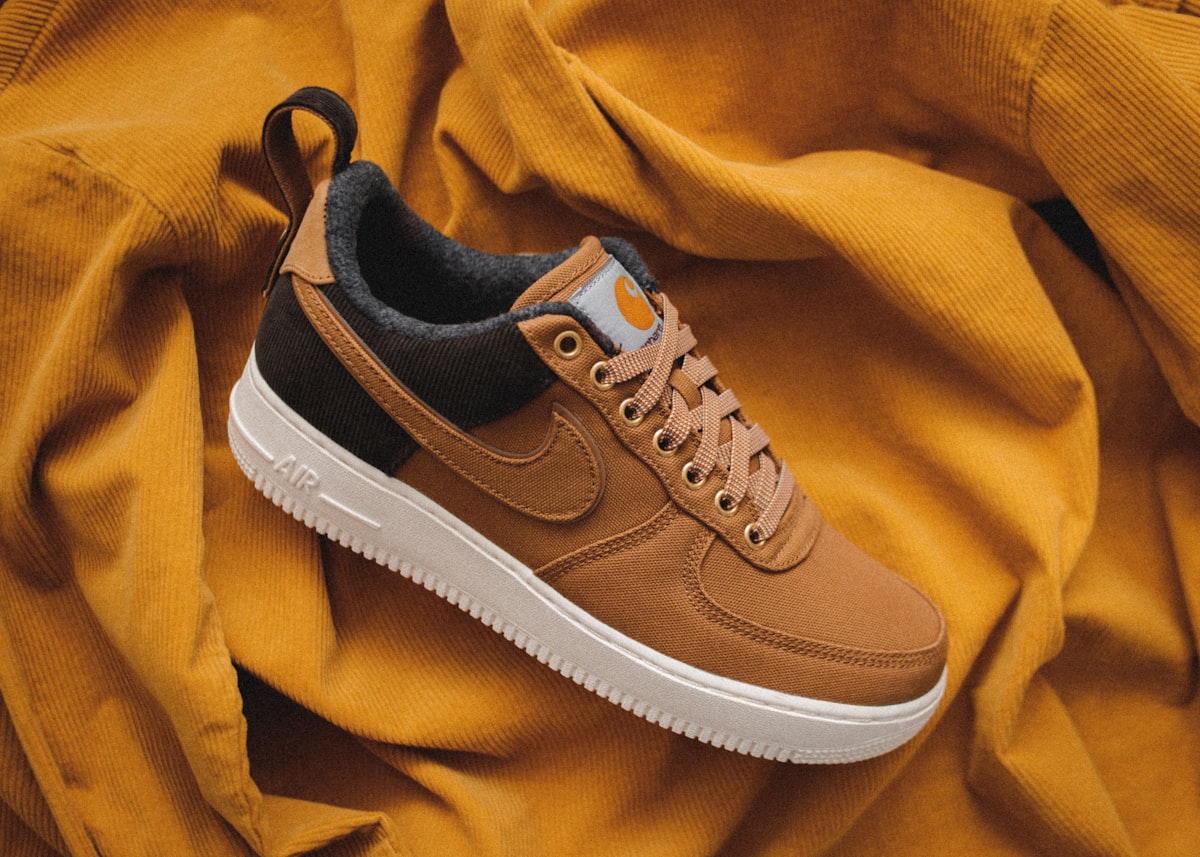
Sneaker care management software is purpose-built for shoe cleaning businesses running multiple outlets — a different tool from generic laundry apps built for clothing with a uniform process. Three things set it apart. First, it requires photo documentation of a shoe's condition at intake and at hand-off, so any damage claim can be verified against visual evidence rather than a one-sided assertion. Second, it tracks service-specific SOPs — deep clean, unyellowing, repaint, repair — complete with a step-by-step checklist technicians must work through, keeping quality consistent across technicians and outlets. Third, it includes a queue module with per-order SLAs and real-time status tracking customers can check themselves, plus subscription quota management that logs usage automatically across every outlet.
The real cost of running a sneaker care business without a centralized system
- Damage disputes with no evidence always leave the business at a disadvantage. Without before-photos, every damage claim from a customer becomes a one-sided argument that's hard to counter, and the business's reputation is on the line every time a dispute arises.
- Work quality varies wildly between technicians and outlets. Without a mandatory digital SOP, the outcome of a deep clean or repaint can differ dramatically depending on who handled it, leaving customers unsure which outlet delivers consistent results.
- Missed SLAs erode trust with customers who need their shoes on time. Without clear queue tracking, orders can slip without notice, and customers who need shoes for an important event lose faith in the promised turnaround.
- Manually managed subscription programs trigger complaints and churn. Quota tracking that isn't synced across outlets leaves members feeling cheated, and that confusion is exactly what pushes them to cancel.
- Lost customer history gets in the way of personalized service. Without a full per-customer history, staff can't remember special preferences or past issues with a particular pair, making service feel generic.
Key features a sneaker care management system needs
- Mandatory photo documentation at intake and hand-off. The system requires staff to photograph each pair from multiple angles on the way in and out, automatically saved and linked to the order number as proof of condition.
- Digital SOP checklist per service type. Every service has a standardized set of steps technicians must check off one by one, keeping quality consistent without relying on individual memory.
- Queue system with SLAs and real-time status tracking. Every order gets an estimated completion time based on service type and outlet workload, with a status customers can follow via a link or app.
- Centralized subscription quota management. Member quota usage is logged automatically and accessible from any outlet, so members can check their remaining balance anytime without confusion.
- Customer history and service preferences. The system stores the history of every pair a customer has ever had serviced, including special notes like sensitive materials or preferred care products.
- Automated order status notifications. Customers get automatic WhatsApp notifications when an order starts, finishes, and is ready for pickup, cutting the staff workload of answering manual status questions.
Off-the-shelf software or custom-built system
For a sneaker care business with 1-2 outlets and low volume, a simple POS app or even a well-structured spreadsheet may still be enough. But once a business grows the way KickClean did, with five outlets, hundreds of daily orders, and an active membership program, the need for photo documentation, standardized SOPs, and SLA tracking becomes too complex for generic POS software not built for this industry.
At that point, a custom system becomes the better fit. It can be built around KickClean's exact workflow — the SOP checklist format for each service they offer, quota rules matching their specific membership scheme, and WhatsApp notification integration that fits how Indonesian customers already communicate. The upfront investment is bigger than a generic app, but the payoff shows up quickly through fewer disputes and rebuilt customer trust.
Realistic costs and timeline in Indonesia
For a small sneaker care business with 1-3 outlets and basic needs — order logging, simple photos, notifications — custom system development typically runs Rp 40-90 million with a 2-3 month timeline. For a larger chain like KickClean, with 5 or more outlets and full requirements — mandatory photo documentation, digital SOPs per service, an SLA queue system, and cross-outlet subscription quota management — costs typically range from Rp 110-250 million with a 3-5 month timeline. Annual maintenance typically runs 15-20% of the initial development cost.
Case study: KickClean Sneaker Care, Yogyakarta
After the viral incident in April 2026, Bagas commissioned a custom sneaker care management system that went fully live in June 2026. Three months after implementation, the results were clear: damage disputes with no evidence dropped sharply, since every pair is now photographed from four angles on intake and hand-off, giving objective proof to resolve claims quickly and fairly. SLA compliance improved significantly — orders finishing within the promised window rose from 65% to 96%, thanks to a queue system that spreads workload more evenly across technicians and outlets. Complaints about subscription quotas nearly vanished once members could check their own remaining balance via automatic notifications. Overall, active membership grew 27% within six months, driven by restored trust and a more transparent service experience.
Metrics to monitor after implementation
- Share of orders completed within the promised SLA
- Number of damage disputes and resolution time with photo evidence
- SOP checklist compliance rate per technician and per outlet
- Accuracy of subscription quota tracking across outlets
- Monthly membership retention rate
Implementation challenges and how to solve them
The first challenge is technicians who feel the photo and SOP checklist process slows them down during busy hours. The fix is designing the photo and checklist flow to be as lightweight as possible in the mobile app, ideally under 30 seconds of extra work per pair, and showing concrete data that this is far less time than what gets lost handling disputes with no evidence.
The second challenge is standardizing SOPs among technicians who each have their own style built up over years. KickClean solved this by involving the most senior technician at each outlet in drafting the final SOP checklist, so the resulting standard is grounded in proven best practice rather than a rule imposed from above.
The third challenge is migrating old member data and remaining subscription quotas that had been scattered across five separate per-outlet notebooks. KickClean's team handled this with two weeks of manual reconciliation before go-live, confirming remaining quota directly with each member via WhatsApp to avoid migration errors.
Where to start
KickClean's journey from a pickup-and-delivery service run out of a boarding house to five outlets across Yogyakarta shows that growth without the right documentation system opens the door to disputes that can wreck a reputation overnight — the viral incident in April 2026 nearly undid seven years of trust Bagas had built. If your sneaker care business is showing the same symptoms — damage disputes with no evidence, SLAs slipping regularly, or subscription members confused about their quota — it's time to consider a system built specifically for the complexity of the sneaker care business. Check the pricing estimate for your needs, or go straight to submit a project for a consultation on your sneaker care management system requirements.
Have a similar project?
Free consultation, no commitment. Tell us what you need — we'll help you find the best solution.
Free Consultation
Herbal and Traditional Jamu Store Management Software: Fixing Certification, Shelf Life, and Multi-Channel Pricing
Read more
Musical Instrument Store Management Software: Fixing Rentals, Repair Costing, and Luthier Consignment
Read more