Optical Shop Management Software: Why Your Eyewear Business Needs a Custom System

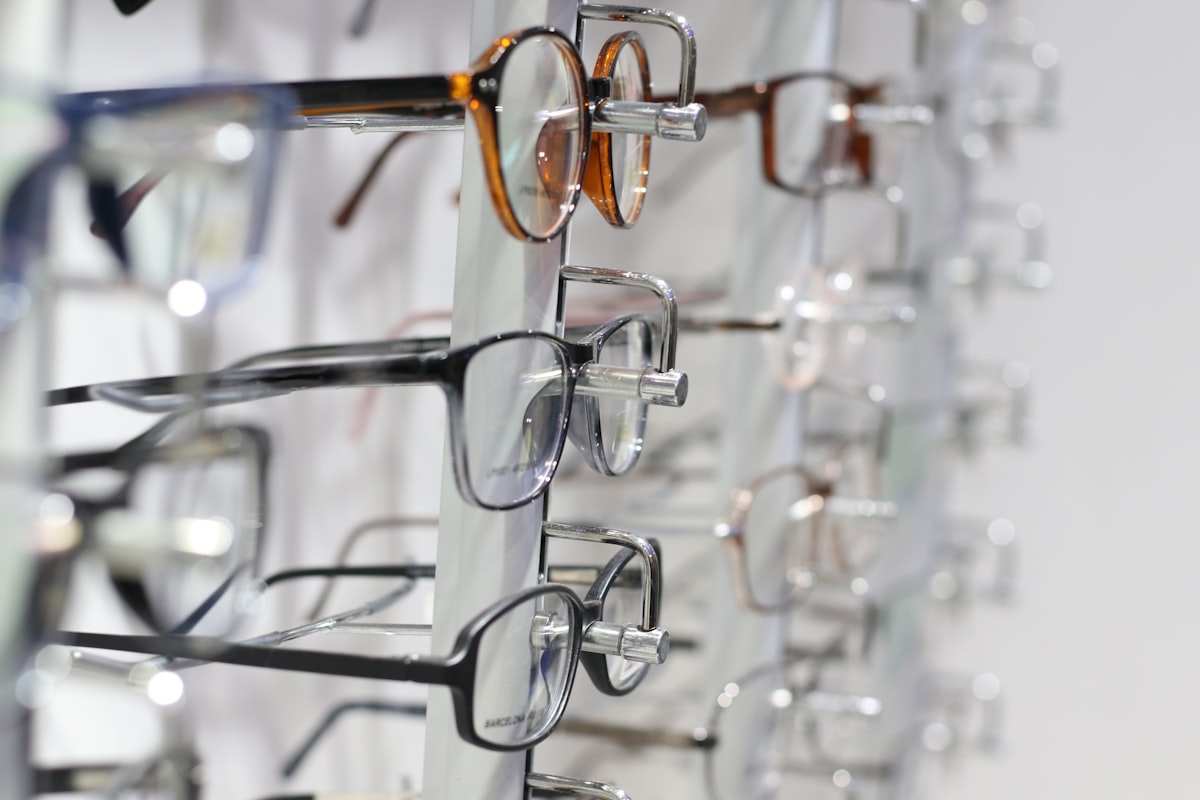
Pak Yanto Kusuma opened Optik Melati on Jalan Kawi in Malang back in 2016, starting with one small storefront and a handful of contacts at lens laboratories in Surabaya. Ten years on, the business has grown into two branches -- one in central Malang, another in Batu -- with six staff total, including one certified optometrist (refraksionis optisien, or RO) who handles daily eye exams. Between both branches, the shop serves 40 to 50 customers a day, a mix of ready-made glasses, prescription eyewear, and contact lenses.
The problem is that the entire operation still runs the same way it did on day one. Lens and frame stock is logged in a ledger and separate Excel spreadsheets for each branch, rarely synced except when someone finds spare time on a weekend. Customer prescriptions -- minus or plus power, cylinder, axis, even pupillary distance (PD) -- are handwritten on small paper cards stored in a box in the cashier's drawer. Every time a customer comes back for a check-up or a new pair of glasses, staff have to dig through that box card by card.
Things came to a head earlier this year. An elementary school student came in with her mother for a follow-up exam to update her lens power. Her old prescription card turned out to be torn, the ink smudged from rain during the wet season. The RO had to start the exam from scratch, and what should have taken 15 minutes stretched to nearly an hour while staff called the other branch to confirm her prescription history. Her mother was frustrated and later vented about it in a neighborhood WhatsApp group. In a separate incident, a custom progressive lens order sent to a partner lab in Surabaya ran three weeks late without anyone noticing, since there was no system tracking order status -- the customer, who had already paid a Rp 1.8 million deposit, nearly demanded a refund after feeling ignored.
To make matters worse, with two branches Pak Yanto has no easy way to know which high-index lenses (1.67 or 1.74) are running low at which location. More than once, the Batu branch ran out of high-minus lenses while the Malang branch sat on unused stock of the exact same item. Daily sales reports are still sent manually over WhatsApp by each cashier, and more than once the totals came out wrong simply because someone was too tired to tally everything by hand at the end of a shift.
What is an optical shop management system
An optical shop management system is a digital platform that brings an eyewear business's entire workflow -- from eye exams to retail sales to custom lens orders -- into one centralized system, replacing the mix of ledgers, paper prescription cards, spreadsheets, and WhatsApp groups that most optical shops in Indonesia still rely on to run day-to-day operations.
Concretely, it covers lens and frame inventory management by SKU with attributes specific to the industry -- size, minus or plus power, cylinder, and lens index -- a digital prescription history for every customer tracked separately for each eye along with exam dates, the ability to input exam results from a refractometer or manually from an eye doctor or optometrist, order tracking for custom lenses sent to a lab or vendor from "in production" through "ready for pickup" with production time estimates, automated reminders for follow-up exams or eyewear replacement typically recommended every one to two years, an integrated retail point-of-sale (POS) module tied directly to inventory, warranty tracking for lenses and frames per transaction, and per-branch sales reporting for shops running multiple outlets.
The real cost of running without a digital system
For most optical shops, the cost of skipping a digital system rarely shows up as a clean line item on the P&L, but it is felt every day in daily operations.
First, there is the risk of losing a customer's prescription history. Prescriptions handwritten on paper cards are prone to getting lost, torn, or mixed up between customers, especially when a whole family visits at once. This is not just an inconvenience -- glasses made to the wrong power because of a mixed-up prescription can cause headaches, dizziness, and even safety risks when worn while driving.
Second, there is inventory that is out of sync across branches. Without real-time visibility into lens stock by SKU at each location, shops routinely run into two problems at once: stockouts at one branch while the exact same item sits idle as dead capital at another.
Third, there are custom lens orders that go untracked. Lenses made to special prescriptions, especially high-minus or high-cylinder ones, are typically ordered from an external lab with a 3 to 14 business-day production time. Without a tracking system, staff often forget to follow up, and complaints arise at moments automated notifications could have prevented.
Fourth, there is lost repeat business. Prescription glasses typically need replacing every one to two years. Without automated reminders, shops lose the natural opportunity to bring past customers back in, and those customers often end up at a competing shop that happened to reach out first.
Fifth, there is inaccurate, slow reporting. Manual tallies sent over WhatsApp are prone to miscalculation, arrive late, and are hard to compare objectively across branches, making it difficult for owners to make fast decisions about restocking or promotions.
Key features you actually need
Not every optical shop management system on the market is built the same way. Before your shop commits to one, here are the features that genuinely matter:
- Lens and frame inventory by SKU. Every lens and frame is logged with attributes specific to the industry -- size, minus/plus power, cylinder, axis, index, color, and brand -- so stock can be tracked with real precision instead of being lumped into a generic "lens" or "frame" category.
- Per-customer, per-eye prescription history. Every exam is stored as a digital record with the date, right and left eye readings tracked separately, and notes from the doctor or optometrist, so when a customer comes in for a follow-up, staff can simply pull up the old record instead of starting from scratch.
- Eye exam data input or integration. Results from a refractometer can be imported automatically where the device supports it, or entered manually by the eye doctor or optometrist directly into the system, cutting the risk of transcription errors from paper to customer record.
- Custom lens order tracking with labs or vendors. Every special-prescription order is tracked in real time -- from "sent to lab" to "in production" to "ready for pickup" -- with production time estimates, so staff and customers alike know exactly where things stand without a string of phone calls.
- Automated follow-up and replacement reminders. The system sends automatic WhatsApp or SMS reminders one to two years after a customer's last purchase, driving return visits that are easy to forget when they depend purely on staff memory.
- Integrated retail sales and POS. Sales of ready-made glasses, accessories, contact lenses, and cleaning solutions are tied directly to inventory and financial reporting, with no need for double entry between the register and the stock book.
- Lens and frame warranty tracking. Every transaction automatically logs its warranty period, so when a customer comes back with a scratched lens or a broken frame, staff can check warranty validity instantly instead of digging for an old receipt.
- Per-branch sales reporting. For shops with more than one outlet, owners can monitor revenue, top-selling products, and branch performance from a single centralized dashboard, without waiting on manual tallies from each cashier.
Buy off-the-shelf software vs. build a custom system
Optical shops considering digitalization usually face a choice between off-the-shelf retail software and a custom-built system designed specifically around their own workflow.
Off-the-shelf software wins on speed of implementation and lower upfront cost, making it a reasonable fit for small, single-outlet shops with basic needs like a cash register and simple stock tracking. The problem is that most off-the-shelf tools on the market are built for generic retail, not specifically for the optical industry -- so attributes like minus/plus power and cylinder tracking per SKU, per-eye prescription history, or custom lens order tracking are often missing or have to be crammed awkwardly into free-text notes fields.
A custom system, on the other hand, is built around how an optical shop actually works: a data structure for lenses and frames that matches the industry, automated follow-up reminders, and multi-branch reporting tailored to how your business actually runs. The upfront cost is higher and the build takes longer than off-the-shelf software, but the system can grow alongside the shop -- whether that means adding new branches, adding new product lines like specialty contact lenses, or expanding integration needs over time.
As a general rule of thumb: single-outlet shops with low transaction volume can usually start with off-the-shelf software or a simple POS template, while shops with multiple branches, a high volume of custom lens orders, or a real need for automated follow-up reminders will get more value from investing in a custom system from day one.
Typical cost and timeline in Indonesia
For the Indonesian market, custom optical shop management system development typically falls into three tiers.
For a small, single-outlet shop with basic needs -- lens and frame inventory by SKU, a simple POS, and customer prescription history -- costs range from Rp 16 million to Rp 28 million, with a build time of 4-6 weeks.
For a mid-sized shop with two to three branches, higher transaction volume, and the need for fuller features such as custom lens order tracking, automated follow-up reminders, and warranty logging, costs range from Rp 32 million to Rp 50 million, with a build time of 8-10 weeks.
For a network of four or more branches that needs real-time consolidated multi-branch reporting and integration with digital eye exam equipment, costs can reach Rp 55 million to Rp 75 million, with a build time of 10-14 weeks.
These figures naturally vary depending on the number of branches, the complexity of integrating with specific refractometer models, and whether the shop needs a separate mobile app for an RO who occasionally does exams outside the shop, for example through partnership programs with schools or offices. As a general pattern, shops in larger cities such as Surabaya, Bandung, and Semarang tend to land in the mid-to-large tier, simply because branch count and custom order volume run higher than in smaller cities.
Case study: Optik Nusantara Vision, Semarang
Optik Nusantara Vision is a four-branch optical shop network in Semarang, run by Ibu Meilani Tanuwijaya since her first store opened in 2011. Before switching to a custom digital system in early 2025, all four branches struggled with problems familiar to many optical shops: high-index lens stock data that never synced across branches, leading to frequent overstock at one location and shortages at another; customer prescription history scattered across paper cards in different formats at each branch; and no easy way to compare sales performance across outlets besides waiting on a manual weekly report.
Working with a development team, Optik Nusantara Vision implemented a centralized SKU-level inventory system visible across all four branches at once, a digital per-customer, per-eye prescription history module, order tracking for custom lenses sent to their three partner labs in Semarang and Surabaya, and a consolidated per-branch sales reporting dashboard. Development took about 12 weeks and cost around Rp 63 million, including staff training across all four branches and migrating five years of customer data.
Six months after go-live, the results were substantial. Cases of glasses made to the wrong prescription due to mixed-up customer records dropped to nearly zero, since prescription history is now stored digitally and can be verified in seconds. Dead stock from overstocked high-index lenses at one branch fell by roughly 40%, since staff can now shift inventory between branches based on real-time data instead of guesswork. The rate of customers returning for follow-up exams or replacement glasses rose about 22% once automated WhatsApp reminders went into regular use. Complaints about custom lens orders running late without warning disappeared entirely, since every customer now gets periodic status notifications.
Bu Meilani says the biggest change she has felt is not just operational efficiency but customer trust -- longtime customers who had once been frustrated by lost prescriptions are coming back, confident that their records are now safe and properly kept.
Metrics to track after implementation
Once the system is live, a handful of metrics deserve regular monitoring to confirm the investment is actually paying off:
- Prescription accuracy rate, measured by the number of glasses returned due to incorrect power -- ideally close to zero.
- Average custom lens order turnaround time, from order sent to lab to ready for pickup, compared against the original estimate.
- Customer return rate for follow-up exams or replacement eyewear within a one- to two-year window, compared against the pre-system baseline.
- Variance between physical stock and system-recorded stock, as an indicator of per-branch inventory accuracy.
- Lens and frame turnover by SKU, to see which products are selling well and which need less frequent reordering.
- Each branch's contribution to total revenue, for shops with multiple outlets, so expansion or closure decisions can be based on data rather than assumption.
Implementation: common challenges and how to handle them
Migrating from manual record-keeping to a digital system is not without friction, especially at optical shops that have run the same way for years.
The first challenge is migrating old prescription data. The fix is to prioritize migrating data for customers active within the last 2-3 years first, since they are the most likely to come back for a follow-up, while older records can be entered gradually as those customers return.
The second challenge is resistance from staff and senior ROs accustomed to handwriting everything on paper cards. The most effective approach is involving them in designing the system's workflow from the start, and rolling out training branch by branch instead of forcing a complete switch overnight.
The third challenge is integrating with existing eye exam equipment. Not every refractometer supports automatic data export, so the system needs to be flexible enough to accept manual input from a doctor or optometrist without slowing down the exam process.
The fourth challenge is keeping coordination with external lens labs smooth even after the shop-side tracking system goes live. This needs upfront communication with partner labs about an agreed status-update format, whether through manual input by shop staff or a simple integration if the lab supports one.
Where to start
If your optical shop still relies on a ledger, paper prescription cards, and staff memory to manage inventory, customer history, and custom lens orders, now is the time to start mapping out what digitalization should look like -- before a mixed-up prescription or a late order with no notification turns into a much bigger problem for your shop and your customers.
The realistic first step is mapping your shop's current workflow: how many branches, how many custom lens orders per month, and which features are most urgent to digitize first. From there, our team at AFSS can help design a system that matches the scale and specific needs of your optical shop or eyewear chain.
Check our development cost ranges on the harga page, or go ahead and ajukan proyek for an initial consultation and a cost estimate tailored to your shop.
Have a similar project?
Free consultation, no commitment. Tell us what you need — we'll help you find the best solution.
Free Consultation