A conventional cash register — whether it’s still a manual notebook and calculator setup or an old standalone register — does exactly one thing: it records that a transaction happened. It has no idea which product is most profitable, can’t tell you when stock at another branch is running low, and doesn’t store customer purchase history for future promotions. In 2026, as retail and F&B competition intensifies and margins get thinner, relying on a cashier that "just records" means losing an enormous amount of information that could otherwise drive real business decisions.
A digital POS (Point of Sale) app turns the cashier from a mere transaction recorder into the operational data hub of the business — connected to inventory, financial reports, and even customer loyalty programs in real time. This article covers how modern POS works, the features that are genuinely non-negotiable, cloud vs. on-premise, custom vs. off-the-shelf, cost estimates, and a real-world case study.
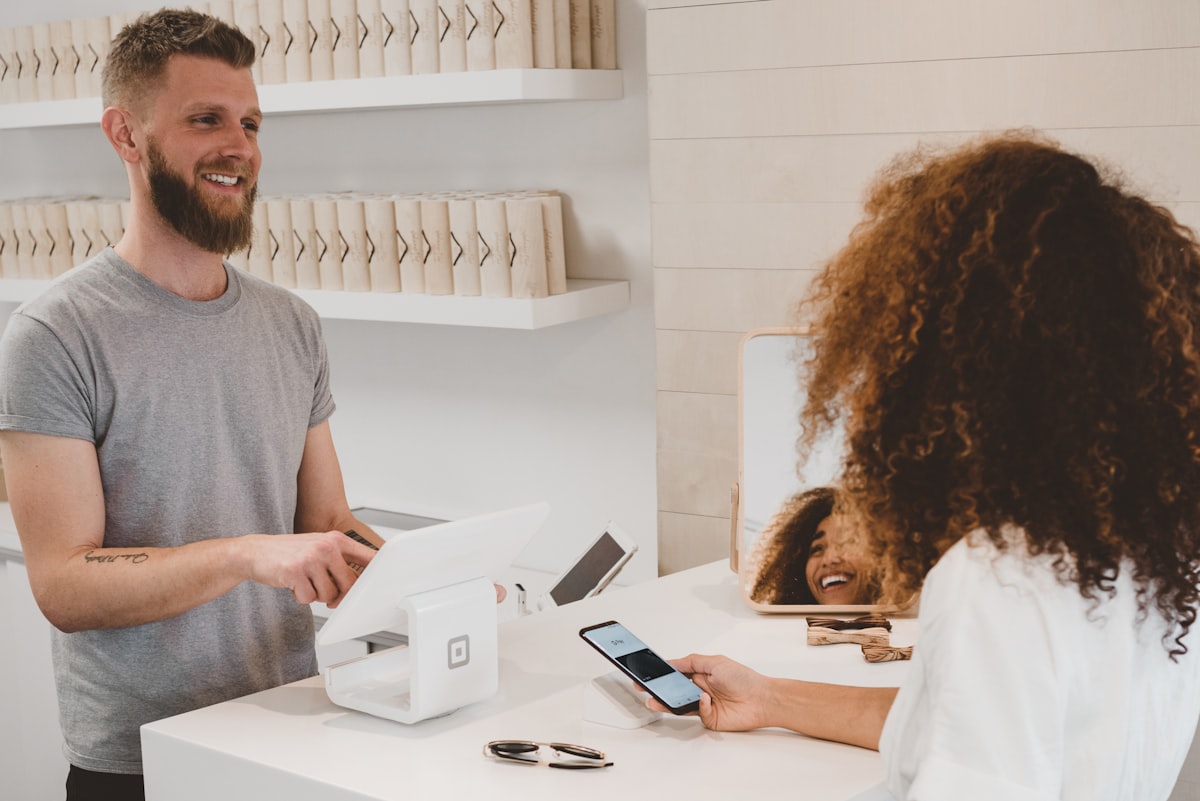
What Is a Digital POS App
A digital POS app is a software-based cashier system running on a tablet, smartphone, or dedicated device, connected to the internet to sync transaction data to a central server in real time. Unlike a traditional standalone cash register per location, digital POS lets an owner monitor every branch from a single dashboard, anytime, anywhere.
What sets modern POS apart isn’t just recording sales — it’s how it connects to everything else. The moment a transaction closes, inventory decreases automatically, sales reports update instantly, and if the customer is enrolled in a loyalty program, their points accumulate automatically — all within seconds, with no repeated manual entry.
The Real Problems With Conventional Cash Registers
Businesses still relying on manual cashiering or old registers typically face the same recurring problems every day:
- Out-of-sync inventory — the register records the sale, but stock updates happen manually later, causing constant discrepancies between records and the physical warehouse.
- Delayed sales reports — owners only learn today’s revenue after staff manually compile it at night, instead of seeing it in real time.
- No customer data — transactions close with no record of who bought what, leaving no foundation for loyalty programs or targeted promotions.
- Hard to manage multiple branches — owners with more than one store must request manual reports from each location instead of viewing everything on one screen.
- Human error prone — manual price entry and change calculation increase the risk of mistakes, especially during busy hours.
Must-Have Features of a Modern POS in 2026
1. Real-Time Inventory Sync
Every transaction automatically reduces stock in the system, keeping inventory reports accurate without manual counting — see our related guide on inventory & warehouse management apps to understand how the two connect.
2. Offline Mode
A dropped internet connection should never stop transactions. A modern POS must keep recording sales offline and sync the data automatically once the connection returns.
3. Multi-Branch Dashboard
Owners running multiple locations need to see every store’s performance at once — revenue per branch, best-selling products per location, and side-by-side branch comparisons.
4. Digital Payment Integration
QRIS, debit/credit cards, e-wallets, and bank transfers all need to work within a single transaction flow, without a separate EDC machine for each payment method.
5. Built-In Loyalty Program
Every transaction is automatically tied to a customer profile, enabling loyalty points, member discounts, and purchase history without a separate system.
6. Business Reports & Analytics
A dashboard showing best sellers, peak hours, margin per product, and weekly sales trends — data that can be used directly for restocking or promotion decisions.
7. Staff & Shift Management
Records of who’s working which register and when, with different access levels for cashiers, supervisors, and owners.
Cloud POS vs. On-Premise POS: Which Is Right for You?
Cloud-based POS stores data online, is accessible from anywhere, and typically follows a monthly subscription model. It suits fast-growing businesses, multi-branch operations, or owners who need to monitor their business while traveling.
On-premise POS stores data locally, doesn’t fully depend on internet for daily operations, but is harder to monitor remotely and usually requires a larger upfront hardware investment. For businesses in locations with unstable internet, a hybrid approach — offline-first with cloud sync — is often the most practical middle ground.
Custom POS vs. Off-the-Shelf Apps
Off-the-shelf POS apps can be a fast, affordable starting point for small businesses with standard needs. But once a business has specific operational flows — a restaurant with table management and split bills, a retailer with complex product variants (size, color, expiry batches), or a business that needs direct integration with an existing ERP system — off-the-shelf software starts feeling restrictive.
Custom POS is built around the business’s actual workflow, can integrate directly with existing accounting or ERP systems, and the code ownership stays fully with the business — no per-outlet licensing fees that keep climbing as branches expand.
Estimated Cost and Development Time
For a custom POS with core features (transactions, inventory, basic reports, multiple payment methods), development typically takes 6–10 weeks. Adding multi-branch modules, customer loyalty, and full ERP integration can extend that to 12–16 weeks. The upfront investment is larger than subscribing to off-the-shelf software, but over the long run — especially for multi-branch businesses — the total cost of ownership of a custom POS is often lower than the accumulated monthly licensing fees per outlet.
A Simple Case Study: An F&B Business With 5 Branches
Picture a coffee shop chain with 5 branches, previously running separate cash registers at each location. The owner had to call every branch manager each night to find out that day’s revenue, and often only learned a branch had run out of coffee beans after a customer complained. After switching to a custom POS app connected to one central dashboard, the owner could see revenue across all branches in real time from their phone, receive automatic alerts when stock at any branch ran low, and identify which menu items to promote based on actual sales data — not guesswork.
A Checklist for Choosing a POS Vendor or Development Partner
Choosing the right vendor or development partner matters just as much as choosing the right features. Some questions worth asking before committing:
- Does the business fully own the code and data? For custom POS, make sure there’s no lock-in clause that makes it difficult to switch development partners later.
- What does post-launch support look like? A cash register system is the backbone of daily operations — technical issues during a busy period need a fast response, not a support ticket answered days later.
- Does the vendor have specific experience in your industry? POS for a restaurant with table management and split bills is a different level of complexity from POS for a fashion retailer with size and color variants — make sure your partner understands these nuances.
- How well does the system scale as the business adds branches? Ask directly how much time and cost it takes to add a new branch to an already-running system.
- Is a pilot project available at one branch first, before rolling out across the entire store network? This reduces risk before a large investment is made.
POS Trends Worth Watching in 2026 and Beyond
Beyond core features, several trends are starting to shape where POS development is headed. Mobile-based self-checkout is gaining traction among modern retailers wanting to cut queue times without adding more cashiers. AI-powered product recommendations at the point of sale — suggesting complementary products mid-transaction — are starting to appear in businesses wanting to boost average transaction value without extra effort from staff. And predictive analytics based on historical sales patterns, similar to the approach in predictive analytics & machine learning for business, is starting to be used to automatically recommend optimal restock timing, rather than simply waiting for low-stock notifications.
Businesses that build a custom POS from the start have the advantage of adding these capabilities gradually as needs evolve, without having to migrate to a new platform every time they want to adopt the latest feature.
Frequently Asked Questions About POS Apps
Does a POS app need special hardware? Not always. Many modern POS systems run perfectly well on an ordinary tablet or smartphone, letting small businesses start without special hardware investment, then upgrade to dedicated devices as transaction volume grows.
What happens if the internet goes down during a busy period? A good POS has an offline mode that keeps recording transactions locally and syncs them automatically once the connection returns — make this a non-negotiable requirement when choosing or building a POS.
Can a POS integrate with accounting systems? Yes — this is actually one of the biggest advantages of custom POS: sales data can flow automatically into financial reports without manual reconciliation, reducing the risk of bookkeeping discrepancies.
How long does staff training take for a new POS? A POS designed with a simple interface is usually something cashiers can master in hours, not days — an important question to ask any vendor before committing.
Conclusion
A digital POS app is more than a cash register replacement — it’s the operational data foundation connecting sales, inventory, and customers in one system you can monitor anytime. For growing retail or F&B businesses, especially those managing more than one branch, investing in the right POS — custom or cloud-based — pays off immediately in operational speed and decision-making accuracy.
AFSS builds custom POS apps tailored to your retail or F&B business’s actual operational flow. Get a free consultation for your POS needs or explore our custom software development services.
Have a similar project?
Free consultation, no commitment. Tell us what you need — we'll help you find the best solution.
Free Consultation