Smart Retail & Automated Vending Machine Software in 2026: The System Behind Unattended Retail
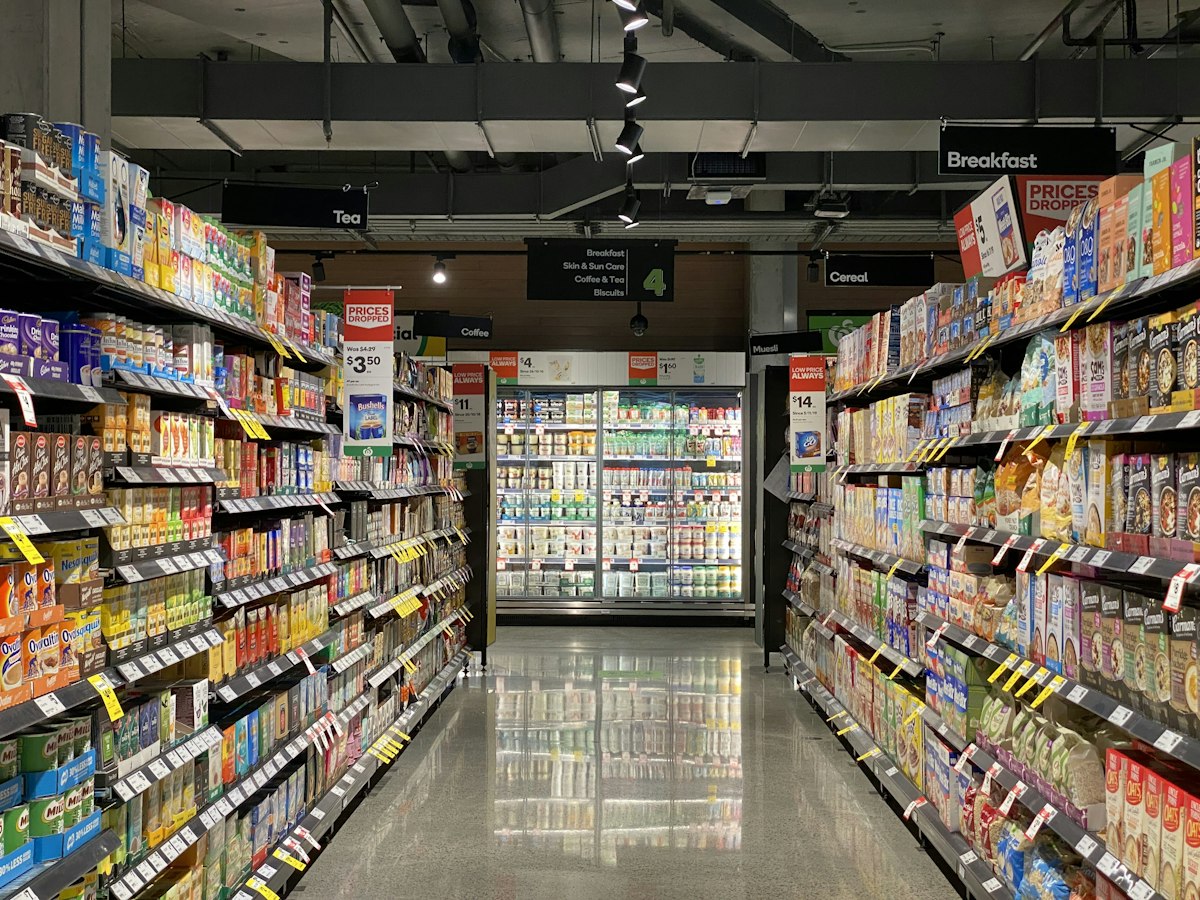
In early 2025, an operator running chilled drink and snack vending machines across a handful of office buildings in BSD City placed one of its units in the lobby of a busy coworking space. For four straight days, that machine sat empty — the isotonic drinks and canned coffee slots employees favored ran out by Monday morning, but nobody found out until the restocking team happened to pass by on Friday. The estimated lost sales from that single machine over one week came to roughly Rp3.2 million. That same day, the same team spent nearly an hour driving to another machine on their fixed restocking route in a different area — only to find it was still 80% full, because the route was set to visit every machine every three days regardless of how fast its actual stock was moving.
This is not an isolated story. It's a pattern that repeats across nearly every smart retail operator scaling up in Indonesia — growing from a handful of machines to dozens, then hundreds, spread across offices, apartments, campuses, and train stations in Jakarta, Surabaya, BSD/Tangerang, and Bandung. At a small scale, manual tracking and physical rounds still sort of work, even if inefficiently. But once the fleet grows, that old approach stops being merely inefficient and becomes a real source of leaking revenue — lost sales from unmonitored empty machines, spoiled inventory from undetected fridge failures, and failed QRIS transactions with no human on-site to help.
What Is Smart Retail & Automated Vending Machine Software
Smart retail and vending machine software is a digital system that connects every vending machine, smart fridge, or unmanned kiosk to a single centralized platform — so stock levels, transactions, temperature, and physical condition at every machine can be monitored in real time from anywhere, without anyone needing to stand in front of it every day. Each machine is fitted with sensors and IoT connectivity (usually a cellular SIM or local WiFi) that pushes per-slot stock data, door status, internal temperature, and transaction history to a central server every few minutes.
This is a world apart from the manual approach most small-to-mid operators in Indonesia still rely on: fixed rotation schedules (say, "every machine gets checked Monday-Wednesday-Friday" regardless of which ones actually need attention), manual stock checks that require physically opening each machine, and records kept on paper or spreadsheets that only get consolidated at the office once a week. With manual processes, operators are always reacting late — learning about a problem after the loss has already happened, not before. A smart retail system flips that logic: the team gets notified the moment a slot approaches empty, the moment fridge temperature crosses a safe threshold, or the moment a door fails to close properly — all before losses pile up.
The Real Cost of Running Smart Retail Without a Digital System
- Lost sales from undetected stockouts: Internal benchmarking among similar Jabodetabek operators shows machines that run out of a top-selling item (typically chilled drinks or canned coffee) go unrestocked for 2-4 days on average without monitoring, with an estimated 8-15% of monthly per-machine revenue lost to those gaps.
- Wasted restocking trips: When routes are set by fixed schedule rather than actual stock data, about 30-40% of restocking visits end up at machines that didn't actually need refilling — burning field-team time and fuel/parking costs that can add up to several million rupiah a month for an operator running dozens of sites.
- Spoiled inventory from undetected fridge failures: A smart fridge whose temperature climbs above the safe threshold for hours without anyone noticing can ruin its entire contents — a single incident like this can wipe out the value of a full machine's stock, often in the range of Rp2-5 million per occurrence.
- Cashless transactions failing with no recovery: Unattended retail depends entirely on QRIS and e-wallet payments working flawlessly; without real-time transaction monitoring and automatic retry logic, payment failures (timeouts, dropped connections, balance deducted but no product dispensed) can run 3-6% of total transactions — and every unresolved customer complaint chips away at trust in that location.
- Mismatched assortment: Without location-level sales data, operators tend to stock the same product mix everywhere — even though chilled drinks sell fastest near gyms while snacks move faster near campuses. This mismatch can leave 15-20% of slots per machine tied up in slow-moving products, locking working capital that should be funding what actually sells.
Must-Have Features in a Smart Retail Platform
- Real-time per-machine stock dashboard: See slot-level stock across every site on one screen, without opening each machine to check.
- QRIS and e-wallet payment integration with automatic reconciliation: Every cashless transaction is logged and matched against actual dispensed sales automatically, so discrepancies surface within minutes instead of at month-end.
- Multi-condition automated alerts: Instant notifications to the field team when fridge temperature rises, a door doesn't close fully, a machine jams, or a slot nears empty.
- Data-driven restocking route optimization: The system builds each day's visit order based on which machines genuinely need refilling, not a fixed rotation.
- Per-location and per-SKU sales analytics: See what actually sells where — more isotonic drinks near a gym location, more snacks near a campus — to fine-tune assortment per site.
- Remote management and kill switch: Admins can lock a machine, adjust pricing, or disable a problem slot remotely without a site visit.
- Demand forecasting: The system predicts when each slot will run dry based on historical trends, helping the restocking team plan loads before they even leave the warehouse.
- Multi-role access for field and head-office teams: Site owners, restocking staff, and central management each get appropriately scoped access, with clear activity logs for auditing.
Off-the-Shelf Vending SaaS or a Custom-Built Platform?
An off-the-shelf SaaS/hardware bundle from a vendor (usually sold together with the vending machine or smart fridge hardware itself) makes sense for operators just starting out with a dozen to twenty or thirty sites, wanting to get operational fast, without special integration needs yet. Costs are predictable as a per-machine monthly fee, and the vendor typically handles the hardware-software bundle end to end.
But once an operator starts mixing machines from multiple hardware brands, needs to integrate a specific payment gateway or bank per business agreement, needs financial reporting that plugs directly into internal accounting, or has already crossed into the hundreds of sites across multiple cities — a generic SaaS platform starts to feel rigid. The per-machine monthly fee that seemed small initially adds up significantly at scale, while the customization needed (internal loyalty system integration, multi-brand dashboards, or dynamic per-location pricing logic) is often unavailable or comes with steep add-on costs. At that point, a custom system built specifically around the operator's own fleet and payment stack is usually cheaper long-term and gives full control over data and future product direction.
Cost and Timeline Ranges in Indonesia
For operators just starting out with an off-the-shelf SaaS/hardware bundle, subscription costs run Rp150,000-Rp500,000 per machine per month depending on features and vendor, with an upfront setup fee of Rp5-20 million on top of the machine hardware itself.
For a mid-scale custom system (dozens up to around 100 machines, one or two cities), development typically runs Rp180-450 million, with a 3-5 month build covering the monitoring dashboard, payment gateway integration, alert system, and a mobile app for the restocking team.
For a large-scale custom system (hundreds of machines, multi-city, with needs like ML-driven demand forecasting, multi-tenant support for multiple brands, or internal ERP integration), costs can range from Rp500 million to over Rp1.5 billion, with a 6-10 month build depending on the complexity of integrating already-deployed hardware.
Beyond the build itself, budget an annual maintenance allowance of roughly 15-20% of the build cost — covering hosting, server monitoring, bug fixes, payment gateway regulatory adjustments, and incremental feature additions as the fleet keeps growing.
Case Study: Segar24
Segar24 is an illustrative name representing a growth pattern we've seen repeat across several similar smart fridge and vending machine clients. Segar24 launched in 2022 with 18 smart fridges stocked with healthy drinks and ready-to-eat meals across several office buildings in South Jakarta. At that small scale, the owner and two staff could still manually check stock daily and log it in a spreadsheet.
Problems surfaced once Segar24 expanded to 85 sites across Jakarta, BSD, and Bandung within 18 months. The restocking team grew from 2 to 6 people, but coordination still ran through a WhatsApp group and manual notes — so two staff would sometimes visit the same machine on the same day, while another machine went a full week untouched. Average stockout rate reached 22% of total slots per month, and at least three undetected fridge failures caused roughly Rp11 million in spoiled product losses in a single quarter.
AFSS built a centralized monitoring system for Segar24 connecting all 85 machines to one dashboard, complete with automated temperature and stock alerts, daily restocking route optimization, and QRIS integration with automatic reconciliation into internal financial reports. After 12 months of implementation, stockout rate dropped from 22% to 6%, daily restocking trips fell by 35% since routes were now driven by actual depletion data instead of a fixed schedule, and revenue per machine rose 27% on average as product mix was tuned per location based on real sales data. Spoiled-product incidents from fridge failures dropped to zero over the period, since temperature alerts now consistently preceded total failure.
Metrics to Track After Implementation
- Stockout rate per machine: Percentage of operating time a slot sits empty; ideally kept under 8%.
- Restocking trip efficiency: Ratio of visits that result in meaningful restocking versus total field visits.
- Revenue per machine per month: To spot which machines are performing well and which need a location or assortment review.
- Cashless transaction failure rate: Percentage of QRIS/e-wallet transactions that fail or need manual intervention, ideally under 1.5%.
- Alert response time: Average time from an alert being sent (temperature spike, open door, jam) to field-team action.
- Stock turnover rate per SKU per location: To keep refining assortment to match each site's actual buying pattern over time.
Where to Start
If your smart retail operation is starting to feel impossible to monitor machine by machine — whether because the fleet is growing fast or because your restocking team is increasingly "shooting in the dark" — that's a sign the manual tracking that used to be enough has run out of runway. AFSS helps vending machine and smart retail operators across Indonesian cities build monitoring and management systems sized to their actual scale, from dozens to hundreds of machines. Check pricing for a sense of the investment involved, or go ahead and submit a project to discuss your specific fleet's needs.
Have a similar project?
Free consultation, no commitment. Tell us what you need — we'll help you find the best solution.
Free Consultation