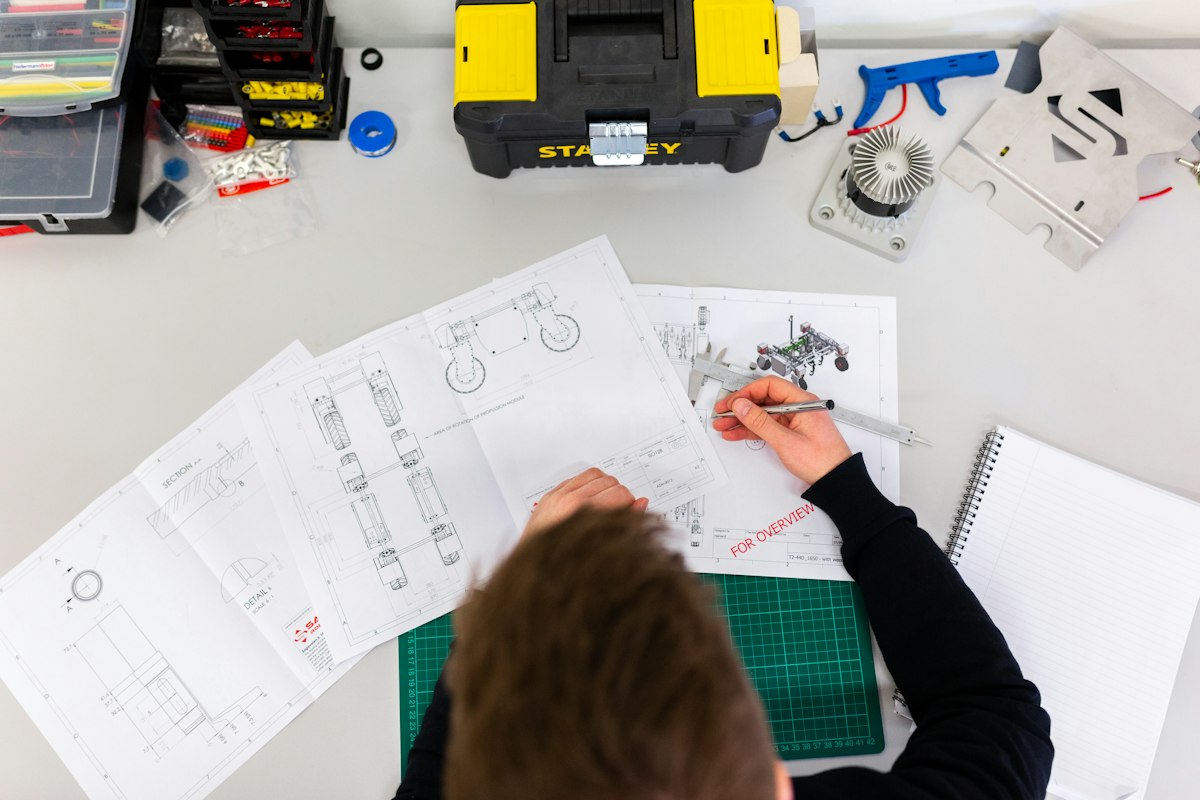
It was nine in the morning at PT Sumber Makmur Presisi, a tier-2 automotive components manufacturer in the Karawang industrial estate, when the conference room suddenly went tense. An external certification body auditor was conducting the annual ISO 9001 surveillance audit, and he had just asked for evidence that a CAPA (Corrective and Preventive Action) from a non-conformance reported three months earlier, a shaft diameter tolerance that had drifted out of the customer's specification, had actually been closed. The QA staff frantically flipped through four thick binders of handwritten NCR (Non-Conformance Report) forms, while the one spreadsheet titled "CAPA Tracking 2026 FINAL rev3" that was supposed to be the master reference had been overwritten by a night-shift operator the previous week. Approval signatures were missing, target completion dates did not match production records, and there was not a single verification photo showing the corrective machine adjustment had ever happened. The auditor issued a major non-conformance against ISO 9001 clause 10.2 on corrective action, with a 30-day deadline to submit a remediation plan or risk having the certificate suspended. For Sumber Makmur, this was not just paperwork trouble; one of their key clients, a Japanese automotive OEM, required an active ISO 9001 certificate as a supplier contract condition. Losing the certificate meant losing a contract worth billions of rupiah a year.
Stories like this are far from fictional for many Indonesian manufacturers. A quality management system still running on paper binders and spreadsheets scattered across a dozen laptops is a time bomb waiting to go off during the next audit. This article explains how a digital Quality Management System (QMS) can turn a near-disaster like the one above into a success story, which features actually matter, what realistic build costs look like in Indonesia, and which metrics to track once the system is live.
What a Digital QMS Actually Is
A Quality Management System is the framework of processes, documents, and records that ensures a product or service consistently meets required standards, whether that's ISO 9001 for general quality management, ISO 13485 for medical devices, or HACCP and BPOM requirements for food, beverage, and pharmaceutical producers. Traditionally, QMS lives in printed procedure documents, paper inspection forms, and handwritten production logbooks.
A digital QMS replaces all of that with a software platform that stores every quality document, inspection record, non-conformance report, and employee training history in a single centralized database accessible from the shop floor via tablet or phone, and from management offices via a web dashboard. Every change is logged automatically with a tamper-proof audit trail, every non-conformance follows a workflow that ensures no corrective action is ever "forgotten open," and every report can be pulled in seconds when an auditor walks in, instead of ransacking a filing cabinet.
What separates a genuinely good digital QMS from "PDFs in the cloud" is cross-departmental integration: quality control on the shop floor, quality assurance managing documents and CAPA, procurement scoring suppliers, and HR tracking operator competency certifications all feed into one connected, traceable system.
The Hidden Cost of Paper- and Excel-Based Quality Management
Many plant managers assume paper or spreadsheets are "good enough" because there's no visible software license cost. But the real cost is hidden and usually far larger. First, audit preparation time balloons. QA teams at mid-sized manufacturers typically burn two to three full weeks before every ISO audit just gathering, sorting, and photocopying documents scattered across binders and folders. That's productive time lost, not quality invested.
Second, CAPAs fall through the cracks. Without automated reminders, corrective actions that should close within 14 or 30 days are routinely forgotten for months because no single owner is clearly accountable. The same non-conformance resurfaces again and again because the root cause was never truly resolved, only patched temporarily.
Third, catastrophic data-loss risk. An overwritten spreadsheet, a crashed laptop, or paper records soaked by a leaking warehouse roof can wipe out years of quality history in an instant. In extreme cases, losing operator training records or calibration certificates for measuring equipment can cause an outright failure in a BPOM or HACCP audit, meaning a product's marketing authorization could be suspended.
Fourth, reputational cost with customers. Large multinational manufacturers, particularly in automotive and electronics, increasingly demand direct access to their suppliers' quality data through supplier quality portals. Suppliers still running manual processes will always respond slower and look less professional next to competitors already offering real-time quality dashboards.
Must-Have Features in a Digital QMS Platform
Before choosing a vendor or building your own system, make sure the platform covers seven pillars.
First, document control with full version history. Every SOP, work instruction, and quality form needs a version number, effective date, and complete revision history. When an auditor asks "which version was in effect when this batch was produced," the system must answer in seconds, not guesswork.
Second, an automated non-conformance and CAPA workflow. The moment an operator spots a defective product or process deviation, an NCR should be creatable directly from the shop floor, complete with a photo, then automatically routed to the right owner for root-cause investigation, corrective action planning, effectiveness verification, and closure, with automatic reminders when deadlines approach or are missed.
Third, supplier quality scorecards. The system should log every incoming-goods rejection from a supplier, the rejection reason, and automatically calculate a rolling defect-rate score per supplier, giving procurement objective data for contract renegotiation or supplier audits.
Fourth, digitized inspection checklists with photo evidence. Quality inspections on the production line and incoming goods inspection should be done on a tablet with a digital checklist that captures a photo as proof, not just a checkbox on paper that's easy to fake.
Fifth, a training and competency matrix. ISO 9001 and ISO 13485 both require evidence that every operator performing a critical process is trained and competent. The system should store training certificates, competency expiry dates, and automatically flag when recertification is due.
Sixth, a comprehensive audit trail for ISO, BPOM, and HACCP compliance. Every data change, who made it, when, and what was changed must be permanently logged and unalterable, satisfying the data-integrity principle that BPOM auditors scrutinize heavily in pharma and food industries.
Seventh, real-time quality dashboards. Plant management should see today's quality status, open NCR counts, CAPAs approaching deadline, and first-pass yield trends in one view, without waiting for a monthly report manually compiled by QA staff.
Build vs. Buy: Ready-Made QMS SaaS or a Custom System Integrated with ERP/MES
The next strategic question is whether to buy an off-the-shelf QMS SaaS platform or build a custom system fully integrated with the ERP and MES already running the plant. International QMS SaaS platforms popular with multinationals offer mature features and proven regulatory compliance, well suited to plants that need fast implementation and don't have highly unique processes. But per-user licensing costs in dollars can balloon significantly for plants with hundreds of operators, and integration with local ERP systems or custom production machinery is often limited.
A custom-built system integrated with existing ERP and MES has significant advantages for Indonesian manufacturers. Non-conformance data can automatically link to ERP production and inventory modules, so when a quality rejection occurs, stock levels and production schedules update automatically without manual re-entry. Long-term licensing costs are also more predictable since there's no recurring per-user dollar fee that climbs as the team grows. The trade-off is a longer initial development timeline and the need for an internal team or development partner who understands the plant's specific processes.
For most mid-sized Indonesian manufacturers, a hybrid approach often makes the most sense: start with a custom-built core QMS module integrated with ERP for the most critical processes like CAPA and document control, while keeping the door open to add further modules as compliance needs grow.
Realistic Cost Ranges in Indonesia
Digital QMS development costs in Indonesia vary depending on scale and integration depth. For an MVP tier covering basic document control, digital NCR forms, and a simple CAPA workflow for a single plant with a few dozen users, custom development typically runs Rp150 million to Rp280 million (roughly USD 9,500 to USD 17,500), with a development timeline of about 2.5 to 4 months.
For a mid-tier build adding supplier quality scorecards, digital inspections with photo evidence, a training matrix, and real-time quality dashboards integrated with existing ERP, costs range from Rp350 million to Rp650 million (roughly USD 22,000 to USD 41,000), with a 5 to 8 month development timeline.
For an enterprise tier covering multi-plant deployment, full integration with MES and shop-floor SCADA systems, full 21 CFR Part 11 compliance for pharmaceutical producers or comprehensive HACCP compliance for F&B, plus predictive analytics modules to catch quality trends before they become major problems, costs range from Rp900 million to over Rp2 billion (roughly USD 57,000 to USD 125,000 and up), with a 9 to 14 month timeline depending on integration complexity.
Monthly operating costs post-launch, covering cloud hosting, server maintenance, and technical support, typically run Rp8 million to Rp35 million per month (roughly USD 500 to USD 2,200) depending on user scale and data volume.
Case Study: PT Cipta Pangan Nusantara's Transformation
PT Cipta Pangan Nusantara, a frozen processed food manufacturer serving modern retail and export markets, faced a situation similar to Sumber Makmur above, but around HACCP and ISO 22000 certification. Before digitizing, their annual HACCP audit preparation took an average of 18 full working days involving three QA staff, average CAPA closure time ran 45 days against an internal target of 21 days, and the customer complaint rate related to quality issues sat at 3.2 complaints per 10,000 units shipped per month.
After implementing a custom digital QMS integrated with their production ERP over a six-month development period, results after one year of operation showed dramatic change. Audit preparation time dropped to 3 working days since all documents and records could be pulled automatically from the system. Average CAPA closure time fell to 16 days, beating their own internal target, thanks to automated reminders and management escalation as deadlines approached. The customer complaint rate dropped to 0.9 complaints per 10,000 units, a reduction of more than 70 percent, because non-conformance root causes were actually resolved instead of being temporarily patched. Their initial investment of roughly Rp480 million paid back in under 14 months from QA staff time savings and reduced product return claims alone.
Metrics to Track After Launching a Digital QMS
Launching the system is only the beginning. Four core metrics should be monitored regularly via dashboard to ensure the investment is actually paying off. Average CAPA closure time, measured from the date a non-conformance is reported to when the corrective action is verified effective, should trend steadily downward. First-pass yield, the percentage of products passing quality inspection on the first attempt without rework, is a strong overall indicator of production process health. The number of audit findings per year, from both internal and external certification body audits, should trend downward as the system matures. Finally, supplier defect rate should be tracked quarterly to confirm the supplier quality program is actually driving improvement, not just logging problems without real follow-through.
If your plant still depends on paper binders and Excel files that get lost or overwritten, the risk Sumber Makmur Presisi faced at the start of this article could hit your business the next time an audit rolls around. AFSS helps Indonesian manufacturers design and build digital QMS systems tailored to your specific industry, whether ISO 9001, ISO 13485, or HACCP, fully integrated with the ERP and MES you already run. Check our pricing for an investment estimate that fits your plant's scale, or go ahead and submit a project to discuss your digital quality system needs with our team.
Have a similar project?
Free consultation, no commitment. Tell us what you need — we'll help you find the best solution.
Free Consultation
E-Procurement Systems: The Complete Guide to Digital Purchasing for Indonesian Businesses
Read more
E-Invoicing & Digital Tax Compliance Software: The Coretax Integration Playbook for Indonesian Businesses
Read more