When people hear the word "blockchain," their mind immediately jumps to Bitcoin or crypto speculation. Yet blockchain technology and the Web3 ecosystem built on top of it hold far greater potential for the business world — especially in sectors long plagued by problems of trust, transparency, and inefficiency.
In Indonesia, adoption of this technology is still at an early stage. But businesses that start understanding it now will have a significant edge over the next two to three years. This article covers what Web3 is, its real benefits for business, and what you need to prepare.
What Are Web3 and Blockchain, Really?
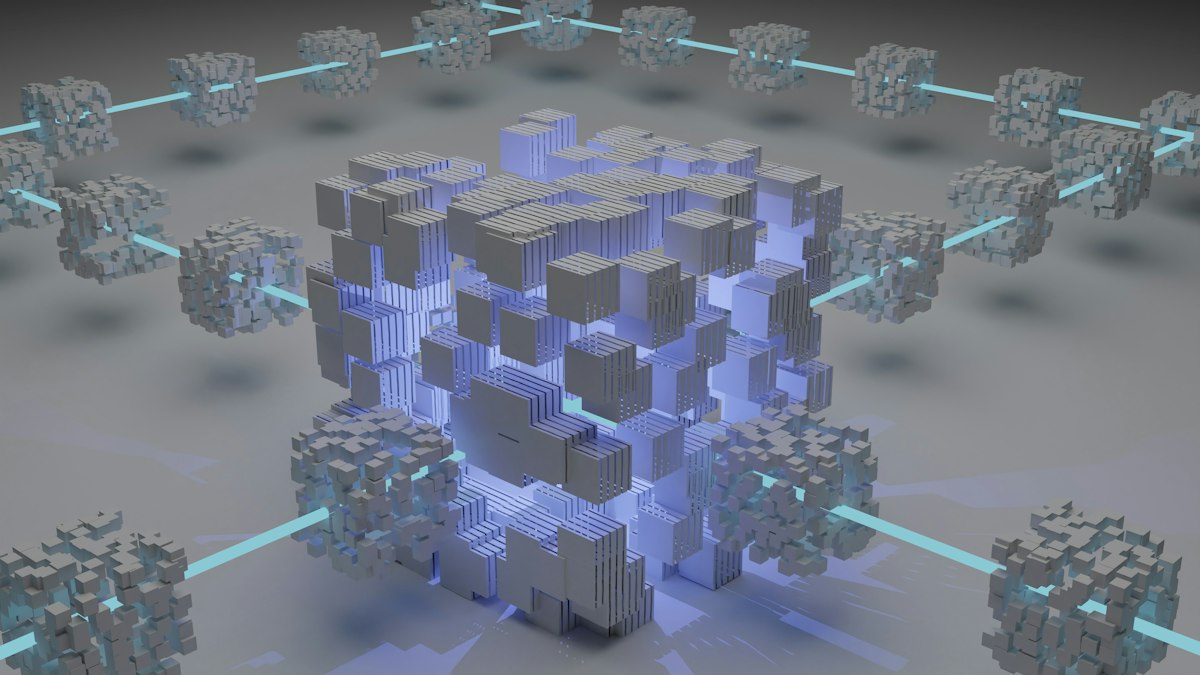
Blockchain is a distributed database that stores data in blocks cryptographically linked to each other. No single entity controls the data — everything is recorded transparently and is nearly impossible to manipulate.
Web3 is the vision of a third-generation internet built on blockchain: users own their own data, transactions happen between parties without intermediaries, and digital assets are truly owned by their holders.
The difference from Web2 (the internet we know today): in Web2, your data sits on Google's, Meta's, or a marketplace's servers — they're the ones in control. In Web3, ownership and control rest with the user.
Why Does This Matter for Business?
This technology isn't about crypto. It's about building systems that are more efficient, transparent, and trustworthy. Here are the business areas most affected:
1. Supply Chain and Logistics
Indonesia is an archipelago nation with complex supply chains. Blockchain allows every point in the supply chain — from farmers, warehouses, distributors, to consumers — to record data in real time in a way that can't be manipulated.
A real-world example: a palm oil company can prove to international buyers that its product is sourced from plantations meeting environmental standards — without needing an expensive third-party audit. Every document, every movement of goods, is recorded on the blockchain and can be verified by anyone.
Direct benefits:
- Speed: Documents that used to take days to verify can now be instant
- Trust: International buyers can be more confident about product authenticity
- Cost efficiency: Reduce reliance on auditors and notaries for verification
2. Smart Contracts for Business Automation
A smart contract is program code that runs automatically on the blockchain when certain conditions are met — without needing human intervention or an intermediary institution.
Imagine a business cooperation agreement where payment happens automatically once a project milestone is reached and verified. Or automatic escrow for a property transaction that releases funds only once all legal documents are complete.
Indonesian businesses that can benefit from smart contracts include:
- Contractors and property developers: Automatic milestone-based escrow
- Freelance platforms: Automatic payment once a client approves the work
- Insurance: Automatic claims based on verified data (e.g. weather data for agricultural insurance)
- Cooperatives and fintech: Transparent loan and profit-sharing management
3. Asset Tokenization
Tokenization is the process of converting ownership of a physical asset (property, securities, commodities, artwork) into a digital token on the blockchain. This opens up fractionalization — a property worth Rp 5B could be owned by 500 people, each holding Rp 10M worth.
In Indonesia, this is relevant for:
- Property: Property investment with smaller capital, more liquid
- Agriculture: Farmers can "tokenize" their harvest to raise capital from investors
- SMEs: Crowdfunding with transparency over how the capital is used
OJK (Indonesia's Financial Services Authority) is developing regulations for these digital assets — businesses preparing now will have a first-mover advantage.
4. Digital Identity Management
One of the biggest problems in the digital era is identity verification. Every time you sign up for a new service, you hand over your ID card, photo, and personal data — which is then stored on that company's server. If the server is breached, your data leaks with it.
Web3 offers Self-Sovereign Identity (SSI): you store your own credentials in a digital wallet and share them selectively only with parties who need them — without data being stored on a third-party server.
For fintech, e-KYC, banking, or platforms requiring user verification, this can dramatically cut compliance costs.

Adoption Challenges in Indonesia
That's not to say there are no obstacles. There are several real challenges to address:
Still-Evolving Regulation
OJK and Bank Indonesia are actively developing regulations for crypto assets and blockchain. Regulatory uncertainty keeps many businesses in wait-and-see mode. However, this also means there's still room to help shape the industry from within.
Infrastructure and Digital Literacy
Not all business partners or customers have sufficient understanding or infrastructure to interact with blockchain-based systems. Mass adoption requires significant education.
Energy and Transaction Costs
Some blockchains (especially Proof-of-Work ones) are energy-intensive. Modern solutions like Ethereum (which has switched to Proof-of-Stake) or layer-2 blockchains like Polygon are already far more efficient — but choosing the right technology remains crucial.
Smart Contract Security
A smart contract written with bugs can be exploited. A code audit by a competent third party isn't optional — it's mandatory before deploying to production.
Practical Steps for Businesses Ready to Start
There's no need to go "all in" on blockchain right away. A more sensible, phased approach exists:
Stage 1 — Internal Education: Make sure decision-makers understand the basics of blockchain and the use cases relevant to your industry. Don't let strategic decisions be made by people who don't understand the technology.
Stage 2 — Identify Use Cases: Ask: where does our business have a problem with trust, transparency, or bureaucratic inefficiency? That's where blockchain is most relevant.
Stage 3 — Proof of Concept: Start with a small experiment — for example, a proof of concept for one part of the supply chain, or a simple smart contract to automate one business process.
Stage 4 — Choose the Right Technology: Not every blockchain suits every use case. Hyperledger Fabric is suitable for enterprise private blockchains. Ethereum or Polygon for public applications. Consult with an experienced technical team.
Stage 5 — Watch the Regulations: Follow developments in OJK and Bank Indonesia regulation. If your business involves tradeable tokens, consult a fintech legal expert.
Web3 Isn't a Replacement, It's a Complement
It's important to understand: Web3 doesn't replace existing systems. Your ERP, website, and business applications are still needed. Blockchain is an additional layer that solves specific problems: trust between parties without an intermediary, data transparency that can't be manipulated, and contract-based automation that can be verified.
The most successful businesses in the Web3 era aren't the ones that "pivot to crypto" — they're the ones that correctly identify exactly where this technology solves a real problem for them, then wisely integrate it into their existing digital ecosystem.
Conclusion
Web3 and blockchain offer real opportunities for Indonesian businesses: more transparent supply chains, more efficient contract automation, asset tokenization that opens up investment access, and more secure identity management. The challenges are real — regulation, infrastructure, and literacy — but they're not insurmountable.
Businesses that start understanding and experimenting with this technology today will be at the front of the line when mass adoption happens. AFSS has a team that understands blockchain and Web3-based system development — discuss your idea with us and we'll help evaluate whether this is the right solution for your business.
Have a similar project?
Free consultation, no commitment. Tell us what you need — we'll help you find the best solution.
Free Consultation