AgriTech App Development: Smart Farming & Digital Agriculture Supply Chain Software
At five in the morning in Kediri, East Java, Pak Ridwan is already standing at the edge of his rice field, calling five different middlemen one by one, just to find out who might offer a fair price for his harvest that day. He runs Koperasi Tani Sumber Makmur, a farmer cooperative overseeing more than 800 rice and horticulture farmers across three sub-districts. Every harvest season the story repeats itself: price information is scattered and unreliable, pickup trucks arrive late because there is no clear schedule, and roughly 15-20% of the chili and tomato harvest rots in the warehouse before it can be sold, simply because there is no cold storage or proper inventory tracking. The handwritten ledger the cooperative has relied on for years can never answer simple questions: how much was harvested this week, which farmers have been paid, and what margin the cooperative actually kept after logistics costs.
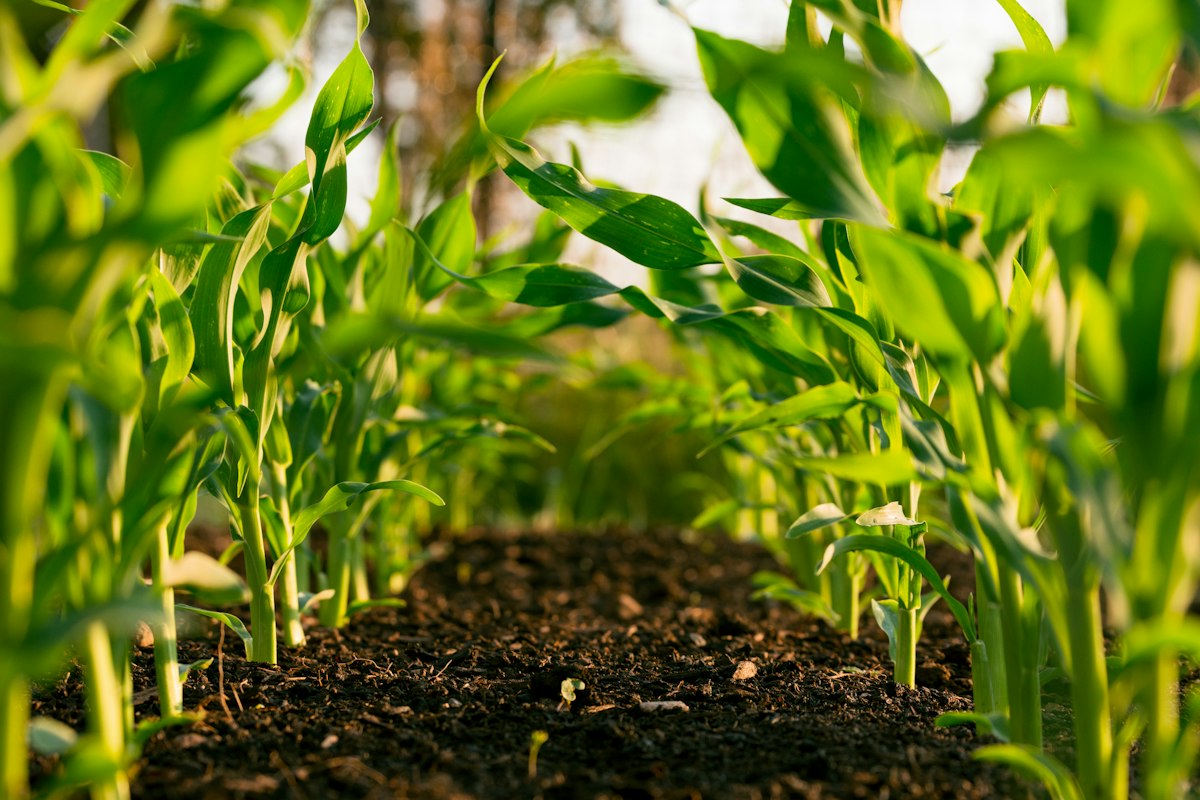
Pak Ridwan's story is not an exception. He represents thousands of farmer cooperatives, farming groups, and mid-sized agribusinesses across Indonesia that still run on phone calls, WhatsApp groups, and manual notebooks to manage a supply chain that is actually quite complex — spanning fields, harvest collection, warehousing, cold transport, and buyers in distant cities. This is exactly where a smart farming and digital agriculture supply chain app stops being a nice-to-have and becomes a necessity.
What Is an AgriTech App for the Agricultural Supply Chain?
An agritech app is an integrated digital system that connects every link in the farming chain on one platform: farmers in the field, cooperative or agribusiness staff in the office, logistics partners on the road, and buyers in the market or modern retail. Unlike a simple record-keeping app, a mature smart farming system typically integrates field sensor data (soil moisture, rainfall, temperature), cultivation activity logging, real-time harvest tracking, a digital marketplace that connects farmers directly with buyers without a long chain of middlemen, and a logistics and cold-chain module that ensures the harvest arrives at its destination in good condition. All of this data flows into a single dashboard accessible to cooperative management, agricultural extension officers, and investors or funding partners who want visibility into supply chain performance.
For Indonesian agribusinesses and agri-startups, a system like this is not just about operational efficiency — it is about competitiveness. Institutional buyers — modern retailers, exporters, food processing companies — increasingly require traceability of agricultural products before committing to large-volume transactions. Without a digital system, cooperatives and agribusinesses will keep losing ground to competitors who already have clean data and auditable processes.
The Real Cost of Not Having a Digital System
Many cooperative managers treat a digital app as an optional expense that can be postponed. In reality, without the right system, the losses that accumulate are far larger than they appear, hidden across several different line items.
- Harvest loss from poor coordination — Without accurate harvest timing and warehouse capacity forecasts, produce piles up without adequate storage. Field research across various horticulture hubs shows post-harvest losses can reach 15-30% for perishable commodities like chilies, tomatoes, and leafy vegetables.
- Price information asymmetry that hurts farmers — When farmers have no access to real-time market prices, middlemen have room to push prices well below fair market value, sometimes by 20-40% compared to what the end buyer actually pays.
- Cold chain spoilage — Without temperature monitoring during transport, fresh produce like vegetables, fruit, and seafood can spoil en route with no one aware of the cause until goods arrive in unsellable condition.
- Payment errors and disputes with farmers — Manual bookkeeping is prone to miscounting volume, quality grade, and deductions, which erodes farmer trust in the cooperative and can push farmers toward middlemen who are seen as more "certain," even at lower prices.
- Lost access to institutional buyers — Modern retail, hotels, restaurants, and exporters increasingly demand traceability reports and certification. Without digital data, cooperatives are automatically shut out of higher-value, more stable contract opportunities.
- Planting decisions that aren't data-driven — Without a clean history of yields and weather data, next season's planting patterns are often based on habit rather than analysis, keeping the risk of crop failure or unsold surplus persistently high.
- Bloated logistics costs — Without optimized delivery routes and schedules, trucks often run half-empty or take inefficient routes, driving up transport cost per kilogram of harvest more than necessary.
Added together, these losses can eat up 20-35% of a cooperative's potential revenue in a single growing season — a figure far larger than the cost of building the right digital system.
Must-Have Features for a Smart Farming & Supply Chain App
An effective agritech app doesn't need to be complex from day one, but its architecture needs to be designed to grow. Here are the core modules that should exist either at launch or on the near-term roadmap:
- Soil & weather IoT sensor integration — Soil moisture, temperature, rainfall, and light intensity sensors that send data directly to the app, helping farmers determine the right time to plant, irrigate, and fertilize instead of relying purely on guesswork and habit.
- Harvest & yield tracking — Digital logging of plot size, planting date, expected yield, and actual harvest per plot, giving the cooperative historical data to forecast next season's output more accurately.
- Farmer-buyer digital marketplace — A feature that connects farmers directly with buyers, from traditional markets to modern retail and exporters, complete with transparent pricing information and a fair bidding or offer system.
- Logistics & cold-chain management — A module for fleet tracking, scheduling harvest pickup from field to warehouse, and real-time temperature monitoring during distribution for commodities that require a cold chain.
- Farmer digital wallet & payments — Automatic, transparent payment to a farmer's bank account or digital wallet as soon as a transaction closes, reducing the delays and payment disputes common under manual systems.
- Traceability & certification — Recording a product's journey from field to buyer, including fertilizer and pesticide usage data, essential for meeting export standards and modern retail demand for accountable sourcing.
- Analytics dashboard for cooperative management — A visual summary of total harvest, sales performance, loss rates, and the performance of individual farmer groups, enabling faster, data-driven decisions.
- Farmer extension & communication module — Notifications and educational content (best cultivation practices, pest alerts, fertilization schedules) sent directly to farmers' phones, replacing information that used to get lost in crowded WhatsApp groups.
Not all of these features need to be built at once. A realistic approach is to start with harvest logging, the marketplace, and digital payments as the core system, then add IoT and cold-chain integration once transaction volume and operational needs grow.
Build vs Buy: Custom Development vs Off-the-Shelf Software
The question that comes up most often from cooperative managers and agribusiness owners is: is it better to buy off-the-shelf software or build a custom system? The answer depends on supply chain complexity and long-term growth plans.
Off-the-shelf software (generic agritech SaaS) suits small cooperatives with simple business processes and limited early-stage budgets. Its advantages are lower upfront cost and immediate usability. But the drawbacks are real too: ongoing monthly subscription costs, limited ability to adapt workflows to local farmer habits, dependency on a third-party provider for sensitive farmer and transaction data, and difficulty integrating with other systems like a cooperative's ERP or accounting software.
A custom system, on the other hand, allows workflows to be designed around how farmers and cooperative staff actually operate in the field — supporting local commodity names, the units farmers actually use (sacks, bundles, stacks), and payment approval flows that match the cooperative's organizational structure. A custom system also gives full ownership of farmer and transaction data, increasingly important given how sensitive agricultural data is and the potential for future partnerships with funders or investors. The upfront investment is larger, but over a 2-3 year horizon, the total cost of ownership of a custom system is often lower than the accumulated cost of SaaS subscriptions, especially as the number of farmers and transaction volume keeps growing.
Practical recommendation: cooperatives or agribusinesses with fewer than 200 farmers and simple business processes can start with off-the-shelf software to validate needs. But once operations scale past hundreds of farmers, multiple commodity types, and integration needs with logistics partners or institutional buyers, building a custom system becomes the far more sensible long-term choice.
Cost & Timeline Estimates
Custom agritech app development costs in Indonesia vary widely depending on feature scope and integration complexity. Here's a general reference range:
For an MVP (minimum viable product) covering harvest logging, a basic farmer-buyer marketplace, and a simple payment module, estimated costs range from Rp 150 million – Rp 350 million, with development taking 3-5 months. A mid-tier version that adds basic IoT sensor integration, an analytics dashboard, and a logistics module runs Rp 400 million – Rp 800 million, with development taking 6-9 months. An enterprise system covering full cold-chain integration, export-grade traceability, multi-warehouse support, and integration with the cooperative's ERP or accounting system can reach Rp 900 million – Rp 2 billion, with development taking 9-14 months.
Beyond initial development, it's important to budget for ongoing maintenance and enhancement — typically 15-20% of the initial build cost per year — covering bug fixes, feature adjustments, and added server capacity as the user base grows. The factors that most affect cost are the number of third-party integrations (payment gateways, IoT sensors, third-party logistics systems), the complexity of the traceability module needed for export certification, and whether the app needs to run offline-first, since many farming regions in Indonesia still have limited internet connectivity.
Case Study: Koperasi Kopi Gayo Bersatu
Koperasi Kopi Gayo Bersatu, based in the Gayo highlands of Aceh, oversees 450 arabica coffee farmers spread across five villages. Before adopting a digital system, the cooperative faced classic problems: manual harvest records that often didn't match between field notes and warehouse logs, payment turnaround to farmers that stretched to 3-4 weeks after harvest was delivered, and difficulty meeting traceability requirements from European export buyers who required origin data down to the individual farm plot.
In early 2025, the cooperative built a custom agritech app in partnership with a software development team, focusing on three core modules: digital harvest logging tied to farm plot GPS locations, a digital wallet for farmer payments, and a traceability module that automatically generates origin reports for every exported coffee batch. Full implementation took about 7 months, including training farmers and cooperative staff to use the app on basic smartphones.
A year after launch, post-harvest losses from storage errors and collection delays fell from around 18% to 6%. Payment time to farmers, previously 3-4 weeks, now averages just 3-5 business days after harvest verification. Average member farmer income rose about 22% in a single season, largely from cutting out the middleman layer and gaining direct access to more transparent export pricing. The cooperative also secured two new export contracts totaling 40 tons per year, deals it previously couldn't fulfill due to lacking adequate traceability data. On the internal operations side, the time cooperative staff needed to compile monthly harvest reports dropped from an average of 3 full working days to under 2 hours, thanks to the automated dashboard.
Metrics to Track After Launch
Building the app is only the first step. Long-term success depends on consistently monitoring metrics once the system is live:
- Farmer adoption rate — the percentage of active farmers regularly using the app relative to total cooperative membership.
- Post-harvest loss rate — the percentage of harvest lost or spoiled before sale, compared to the pre-digitalization baseline.
- Payment cycle time — the average time between harvest delivery and payment received by the farmer.
- Marketplace transaction volume — the number and value of transactions completed through the platform versus traditional sales channels.
- Traceability compliance rate — the percentage of product batches with complete, audit-ready origin data for institutional buyers.
- Logistics efficiency — transport cost per kilogram of harvest and fleet utilization rate.
- Farmer satisfaction and retention — measured through periodic surveys and the rate at which farmers keep selling through the cooperative season after season.
Time to Build a Fairer, More Efficient Agricultural Supply Chain
Digitizing the agricultural supply chain is no longer a technology experiment — it is an urgent necessity for farmer cooperatives, agribusinesses, and agri-startups that want to survive and grow amid tightening market competition and rising traceability demands from institutional buyers and export markets alike. Every month without the right system means recurring harvest losses, farmers shortchanged by price information asymmetry, and high-value contract opportunities slipping away.
The AFSS team has experience building custom agritech apps for farmer cooperatives, agribusinesses, and agricultural startups across Indonesia, from simple MVPs to enterprise systems with full IoT and cold-chain integration. Check our pricing for an investment range that fits the scale of your operation, or go ahead and submit a project to discuss your cooperative's or agribusiness's specific needs with our team.
Have a similar project?
Free consultation, no commitment. Tell us what you need — we'll help you find the best solution.
Free Consultation