Field Service Management App: The Complete Guide for Indonesian Service Businesses
At seven in the morning, the office of CoolTech Servis in Kebon Jeruk, Jakarta, is already buzzing with phones that never stop ringing. Pak Hendra, the dispatcher, sits in front of a large whiteboard covered in marker scrawl — technician names, customer addresses, appointment times — all written by hand, erased, and rewritten every time the schedule shifts. He calls each of his 35 AC technicians spread across Greater Jakarta one by one to tell them where to go that day. A few technicians have already headed in the wrong direction, two show up without the spare parts they need because there is no service history for the customer's unit, and a corporate client in BSD calls in furious because the technician promised at 9 a.m. only shows up at 1 p.m. with no warning at all. At month's end, the finance team struggles to reconcile how many spare parts were actually used versus what the warehouse records show, because technician reports are still paper receipts photographed and sent through WhatsApp — some lost, some illegible.
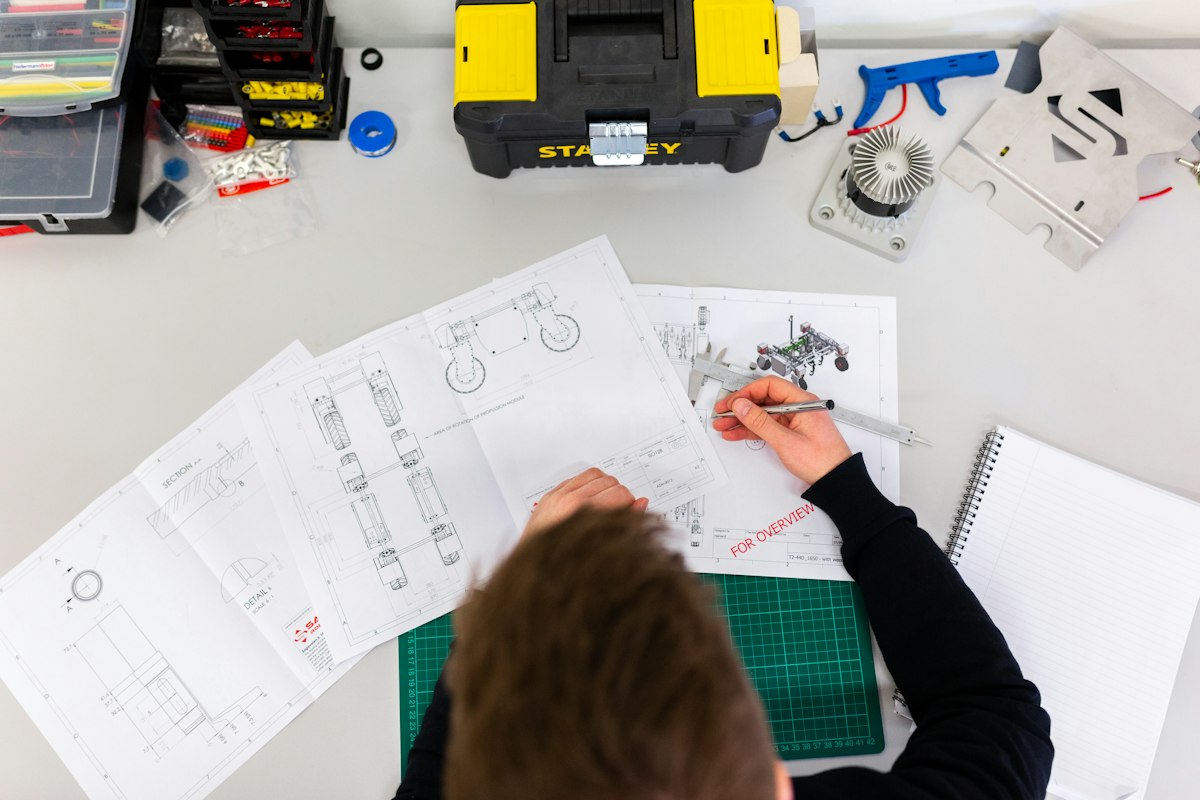
Stories like CoolTech Servis are common across Indonesian companies that depend on field technician teams — AC service, home internet installation, elevator maintenance, appliance repair, or industrial equipment upkeep. As long as operations run on phone calls, WhatsApp groups, and spreadsheets, a company keeps bleeding time, money, and customer trust without ever fully seeing how much is leaking out. This is where a field service management (FSM) app becomes a sound investment, not just a digital nice-to-have.
What Is a Field Service Management App?
A field service management app is a digital system that connects three parties in a single workflow: the office dispatcher or admin team, technicians working out in the field, and the customers waiting for service. Instead of relying on phone calls and paper, the entire process — from an incoming service request, scheduling, technician assignment, navigation to the site, the actual job, spare parts logging, all the way to billing — runs on one integrated platform accessible through a mobile app for technicians and a web dashboard for admins and management.
Unlike a generic CRM or ticketing tool, an FSM app is purpose-built for work that happens outside the office: it includes GPS and mapping components, an offline mode because technicians often work in building basements or low-signal areas, spare parts inventory management across multiple locations (central warehouse, technician vehicles, customer sites), and digital proof of work such as before/after photos and electronic customer signatures.
The Real Cost of Not Having the Right System
Many field service business owners think their manual system "still works fine," but the cost leakage is real and happens every single day.
- Dispatcher time wasted on manual coordination. A single dispatcher can spend 3-4 hours a day just calling technicians one by one — time that could go toward more strategic work like negotiating maintenance contracts or following up on sales leads.
- Inefficient travel routes. Without location-based route optimization, technicians can lose 1-2 extra hours a day stuck in traffic heading to a site that could have been visited earlier or combined with a nearby job, especially in dense cities like Jakarta, Surabaya, or Bandung.
- Spare parts lost or unrecorded. Without real-time inventory tracking, companies often repurchase components that are actually already sitting in the warehouse, or lose millions of rupiah worth of parts every month because there's no clear audit trail.
- Delayed billing from manual job reports. Paper receipts photographed and sent via chat often arrive late to the finance team, stretching the invoicing cycle by 1-2 weeks and disrupting cash flow.
- Disappointed customers due to zero visibility. Modern customers are used to real-time notifications from ride-hailing apps and e-commerce; when a service company can't give an accurate arrival estimate, trust erodes and negative reviews pile up.
- Difficulty measuring technician productivity. Without centralized data, management has no way of knowing which technicians are genuinely productive, which are chronically late, and which need more training — HR decisions end up based on gut feeling instead of data.
- Compliance and documentation risk. For work requiring certification (elevator maintenance or electrical installation, for example), weak digital documentation makes it hard to prove compliance during audits or contest disputed warranty claims.
Add it all up and these small leaks can reach the equivalent of tens of millions of rupiah per month for a company running 20-50 technicians — not counting the invisible cost of reputation damage and customers defecting to competitors.
Must-Have Features in a Field Service Management App
A solid FSM app needs, at minimum, the following modules to genuinely fix field operations rather than just digitally repainting the old process.
- Automated scheduling & dispatch. A visual calendar of every technician, drag-and-drop job assignment, and ideally a recommendation engine that suggests the best technician based on location, skillset, and current workload.
- GPS tracking & route optimization. Admins see every technician's real-time position on a map, while technicians get the fastest route and the most efficient visit order, cutting travel time and fuel costs.
- Digital work orders & e-signature. Every job carries full context — unit history, customer complaint, a work checklist — that technicians fill out directly from their phone, complete with before/after photos and a customer signature as proof of completion.
- Spare parts & inventory management. Stock tracking across the central warehouse and each technician's vehicle, with automatic low-stock alerts and automatic deductions whenever a part is used on a job.
- Offline mode for low-signal areas. Technicians can still fill out work orders, take photos, and capture customer signatures even in a building basement or a rural area with no signal; data syncs automatically once connectivity returns.
- Automated customer notifications. Automated SMS or WhatsApp messages with estimated arrival time, schedule confirmations, and a real-time tracking link — the same experience customers already expect from ride-hailing apps.
- Analytics dashboard & reporting. Management can monitor KPIs like completed jobs per technician per day, average response time, customer satisfaction, and margin per job in real time.
- Billing & payment integration. Once a job is finished and signed off by the customer, an invoice can be generated automatically and synced with accounting systems or local payment gateways like Midtrans or Xendit.
- Contract & recurring maintenance management. For customers on a recurring service contract (quarterly building AC maintenance, for example), the system automatically schedules the next visit without anyone needing to remember manually.
Build vs Buy: Custom vs Off-the-Shelf
A common question is whether to use an off-the-shelf FSM app (like Jobber, ServiceTitan, or a local product) or build a custom system.
Off-the-shelf apps win on speed of implementation — you can be up and running within days — and they suit small businesses with standard processes that don't differ much from typical field service operations. But the downsides are real too: per-technician monthly licensing fees that keep climbing as the team grows, features that often don't match Indonesia-specific workflows (integration with e-Faktur, the local WhatsApp Business API, or QRIS payments, for instance), and dependence on a foreign vendor whose support is slow to respond to complaints in Indonesian.
A custom app, on the other hand, is built around the company's specific workflow — internal approval structures, report formats tailored to management's needs, and direct integration with whatever accounting or ERP system is already in use. The upfront cost is higher than subscribing to an off-the-shelf tool, but over a 2-3 year horizon, especially for companies with more than 20 technicians, the total cost of ownership for a custom app is often lower because there's no recurring per-user licensing fee that keeps rising, and the company retains full control of its data along with the ability to keep evolving features as the business grows.
Practical recommendation: if your technician team is still under 10 people and business processes are still fairly standard, an off-the-shelf app can be a good starting point to validate your needs. But once the team grows past 15-20 technicians, or the business process develops its own quirks (complex maintenance contracts, multiple branches, or specific integration needs), investing in a custom app usually pays off more in the long run.
Cost & Timeline Estimates
For Indonesian companies considering a custom FSM app, here's a realistic breakdown by project scale:
Basic scale (MVP) — covers scheduling, dispatch, digital work orders, basic GPS tracking, and a mobile app for technicians (Android) plus a simple admin web dashboard. Estimated cost ranges from Rp 80 million to Rp 150 million, with a development timeline of 2-3 months.
Mid-tier scale — adds spare parts inventory management, full offline mode, automated WhatsApp/SMS customer notifications, billing integration, and deeper analytics dashboards. Estimated cost of Rp 150 million to Rp 350 million, timeline of 3-5 months.
Enterprise scale — includes everything above plus ERP/accounting integration, multi-branch or multi-region management, automated recurring maintenance contracts, both iOS and Android apps, and compliance reporting features for regulated industries (elevators or electrical installation, for example). Estimated cost of Rp 350 million to Rp 700 million and up, timeline of 5-9 months.
Beyond the initial development cost, it's important to budget for annual maintenance and support at around 15-20% of the development cost, covering bug fixes, mobile OS updates, and feature adjustments as the business evolves. Server hosting and third-party API costs (maps, SMS gateway, payment gateway) typically run Rp 2 million to Rp 8 million per month depending on usage scale.
Case Study: The Transformation of CoolTech Servis
Back to Pak Hendra's story at the start of this article — six months after CoolTech Servis launched a custom field service management app built with a development team, the results were significant enough to serve as a real-world example.
Before implementation, each technician averaged only 3.2 jobs per day, with much of the time lost to inefficient travel and waiting for instructions over the phone. The average response time from an incoming customer complaint to a technician arriving on-site was 4.5 hours, with wide variance depending on how quickly the dispatcher could reach the right technician. The customer complaint rate related to delays reached 18% of total monthly jobs, and unrecorded spare parts leakage was estimated at Rp 12 million per month.
Six months after adopting the new app with automated dispatch, GPS tracking, and real-time customer notifications, the average jobs per technician per day rose to 5.1 — a productivity increase of roughly 59%. Average response time dropped to 2.1 hours because the system automatically assigned the nearest available technician. Delay-related complaints fell to 6% of total jobs, and spare parts leakage dropped dramatically to under Rp 2 million per month thanks to accurate inventory tracking. The billing cycle, which previously averaged 12 business days after job completion, shrank to 2 days because invoices are generated automatically the moment a customer signs the digital work order.
On the business side, CoolTech Servis managed to onboard roughly 40% more recurring maintenance contract customers with nearly the same technician headcount, thanks to far more efficient routing and scheduling. Their custom app investment of roughly Rp 220 million reached break-even in about 8 months, calculated from operational cost savings plus the additional revenue from that extra capacity.
Metrics to Track After Launch
Once the app goes live, monitor these metrics regularly to make sure the investment is actually delivering results:
- Completed jobs per technician per day — the primary indicator of field productivity.
- Average response time — from incoming service request to technician arrival on-site.
- First-time fix rate — the percentage of jobs completed in a single visit without needing a return trip.
- Arrival time estimate accuracy — how close the system's estimate lands to the actual arrival time.
- Spare parts shrinkage or stock discrepancy — compared before and after implementation.
- Billing cycle time — from job completion to invoice payment.
- Customer satisfaction score (CSAT/NPS) — collected automatically via a short survey after each job.
- Technician adoption rate — how consistently technicians actually use the app instead of reverting to the old manual way.
Time to Digitize Your Field Operations
If your business is still running on phone calls, whiteboards, and WhatsApp groups to manage a field technician team, chances are you're losing money and customers every day without fully realizing it. A field service management app built around your actual business workflow — not a generic template — can transform how your team operates, boost technician productivity, and give customers a far better experience through the transparency they receive.
The AFSS team regularly builds custom field service management apps for businesses across Indonesia, from AC and electronics service to internet installation and elevator or industrial machine maintenance. Check our pricing for a project sized to your business, or go ahead and submit a project to discuss your field technician team's specific needs with our team.
Have a similar project?
Free consultation, no commitment. Tell us what you need — we'll help you find the best solution.
Free Consultation