Barbershop Chain Management Software: A System for Modern Grooming Businesses
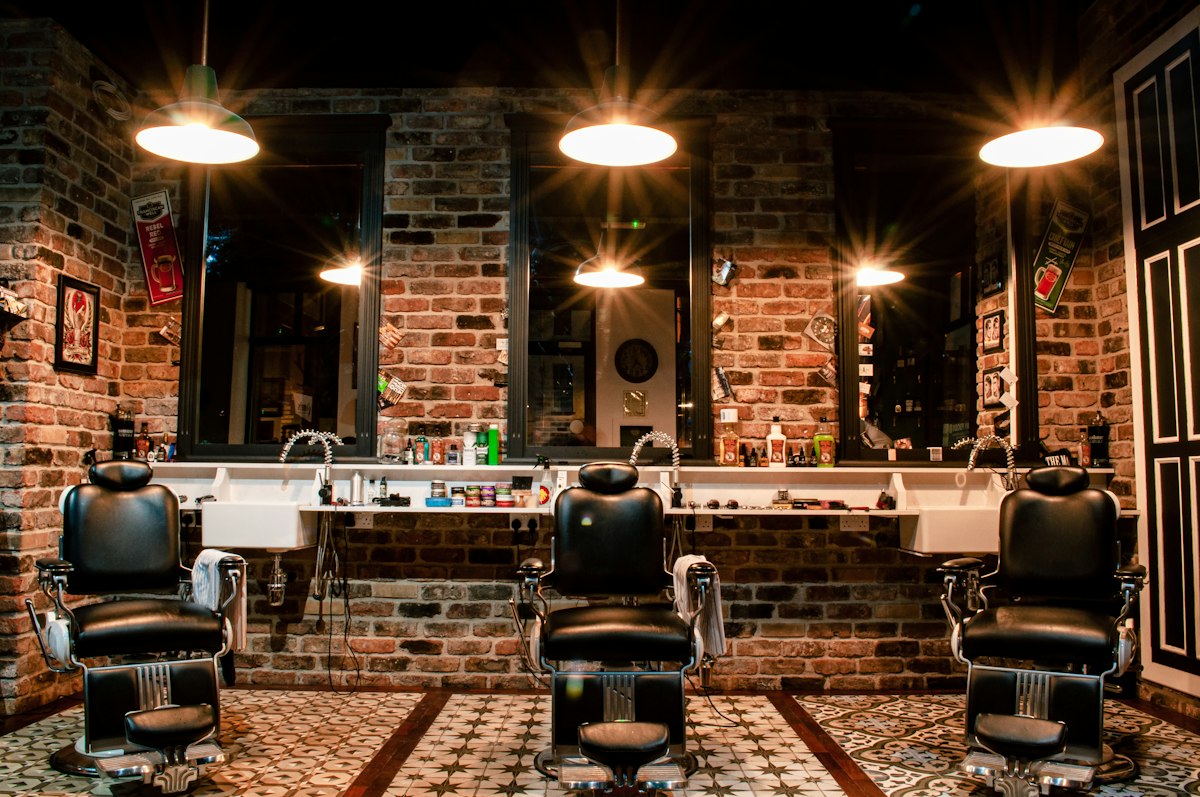
Reza Pratama opened the first branch of Kapster Nusantara Barbershop in the Harapan Indah area of Bekasi at the end of 2018. His starting capital back then was just two secondhand cutting chairs, one split air conditioner, and a senior capster named Bayu whom he convinced to leave his previous barbershop with a promise of a fairer commission scheme. Eight years later, Kapster Nusantara has grown to 5 outlets spread across Bekasi, East Jakarta, and Tangerang, with a total of 22 capsters working under a mix of percentage commission and booth-rental arrangements depending on the outlet and each capster's seniority. Every day, an average of 180-220 customers visit across all outlets, most of them walk-ins with no appointment, while others book through WhatsApp or Instagram DMs to each branch's admin.
The real crisis hit in mid-March 2026. Bayu, the senior capster who had been with Reza for eight years since the very first outlet, checked his monthly commission slip and found a figure he believed was short by Rp 1,150,000 compared to his own calculation. It turned out the outlet admins were each using differently formatted Excel spreadsheets, and that month a double-counting error occurred between service commission and the commission from retail product sales (pomade and hair oil) that Bayu had sold directly to his own customers. Bayu threatened to leave for a competing barbershop and vented in a WhatsApp group for capsters across Bekasi, which turned Kapster Nusantara's name into unwelcome gossip for several days. Reza finally realized that with 22 capsters, 5 outlets, and three different payment schemes, relying on manual spreadsheets was no longer sustainable.
What Is Barbershop Chain Management Software
Barbershop chain management software is a system built specifically for the operations of men's grooming chains, not just a point-of-sale app or a generic salon system stretched to "sort of work" for a barbershop. The difference sits at the core of its logic: the system understands that a single outlet can have one capster paid on a percentage commission, another paying fixed monthly booth rental, and a third on a hybrid of both — all at the same location, on the same day. Generic beauty-salon software usually assumes every staff member is paid the same way, and has no concept of a walk-in queue blending with booked appointment slots, even though that hybrid flow is exactly what defines barbershop operations in Indonesia — most customers still show up without an appointment, while busier customers book ahead through an app or WhatsApp. Good barbershop management software also treats retail product sales like pomade and hair oil as an integral part of the service transaction, not a separate module that has to be reconciled by hand at month-end.
The Real Cost of Running a Barbershop Without a Centralized System
Commission disputes that erode capster trust. When commissions are calculated manually in Excel sheets formatted differently at every outlet, an error like the one Bayu experienced is only a matter of time, and every mistake chips away at capsters' trust in management — even though loyal, skilled capsters are a barbershop's most valuable asset, far more valuable than a nice interior.
Walk-in versus booking queue conflicts that frustrate customers. Without a system that merges both queue types in real time, receptionists often struggle to decide who should be served next, and customers who booked via WhatsApp sometimes get skipped by walk-ins simply because the admin forgot to check the chat during a rush.
Retail stock that is out of sync with service sales. Pomade, hair oil, and other styling products are often sold directly by capsters to customers as an upsell, but when stock records are kept separate from the service POS, owners only discover a best-seller is out of stock after a customer complains, or never realize which product is actually the most profitable.
Memberships and subscription packages that lapse without any reminder. Many modern barbershops sell subscription packages (say, one haircut a month plus a free wash), but without a system that automatically reminds members when to renew, renewal rates stay low and the recurring revenue that should be a reliable pillar quietly leaks away unnoticed.
Multi-outlet performance reports that arrive late and inaccurate. Reza has to wait for each outlet manager to send a manual report at month-end just to know which outlets are profitable and which are not, when decisions like adding a capster or closing an underperforming outlet should be made much faster with real-time data.
Key Features You Need
Automatic per-capster commission and booth-rental calculation, supporting percentage commission, fixed booth rental, and hybrid schemes, with a clear breakdown between service commission and retail product commission so disputes like Bayu's never happen again.
A hybrid walk-in and booking queue display that merges both lanes into a single real-time screen, so receptionists and capsters know exactly who is next without checking a separate WhatsApp thread mid-haircut.
Membership and subscription package management with automatic WhatsApp or SMS reminders before a plan expires, plus tracking of how many visits a member has already used.
Retail product POS integrated with the service POS, so when a capster sells pomade or hair oil, it is automatically logged as that capster's extra commission and the stock is deducted in real time from the central inventory system.
A multi-outlet performance dashboard showing revenue, customer count, and each capster's productivity per branch in real time, so the owner can compare which outlets need attention without waiting for a month-end report.
Capster scheduling and attendance tied directly to the booking system, so customers can only book their favorite capster during hours he is actually present, and the system automatically blocks slots when a capster is on leave.
Customer visit history and preferences, recording favorite haircut styles, preferred capster, and usual products purchased, so service feels personal even when a customer visits a different outlet within the same chain.
Buy an Off-the-Shelf App or Build a Custom System
For a barbershop with one or two outlets and a simple commission scheme, a ready-made SaaS app can be a reasonable choice because upfront cost is low and it can be used immediately without waiting for development. But once capster payment schemes start to vary — some on commission, some on booth rental, some hybrid — and the number of outlets grows, generic apps usually start forcing the owner to adapt the business to the software's limitations rather than the other way around. Many barbershop owners end up keeping an extra spreadsheet outside the SaaS app just to cover gaps in missing features, which brings back the exact double-bookkeeping problem they were trying to escape.
A custom system allows the commission logic, hybrid queue structure, and membership scheme to be designed to match a specific barbershop's business model exactly, including unique rules like extra incentives for a capster who successfully sells a membership package, or special discounts for customers loyal for more than a year. The upfront cost is indeed higher than a monthly SaaS subscription, but for a barbershop chain planning to keep opening new outlets, this investment typically pays for itself through operational efficiency and fewer commission disputes within one to two years — not counting the reputational value of never again having a commission dispute go viral in a capster community WhatsApp group.
Realistic Costs and Timelines in Indonesia
For a barbershop with 1-3 outlets and basic needs (booking, queue management, POS, simple commissions), custom development costs in Indonesia typically range from Rp 40-90 million with a 2-3 month build time. For a larger chain with 4 or more outlets, complex commission schemes, full membership management, and a multi-outlet dashboard, costs range from Rp 120-300 million with a 4-6 month build time, depending on the number of integrations needed such as payment gateways, WhatsApp Business API, and capster attendance systems. A reasonable annual maintenance fee sits around 15-20% of the initial development cost, covering feature updates, bug fixes, and routine technical support.
Case Study: BroCut Barbershop, Surabaya
BroCut Barbershop in Surabaya, with 4 outlets and 18 capsters, faced similar problems before adopting a custom system in early 2025. Before implementation, average walk-in wait time reached 35 minutes because there was no cross-chair queue visibility, and commission disputes occurred an average of 3-4 times a month across all outlets. After six months on the centralized management system, average wait time dropped to 14 minutes thanks to a transparent hybrid queue display, commission disputes fell to nearly zero because of an automatic breakdown both sides could check anytime, membership renewal rates climbed from 52% to 79% thanks to automatic reminders, and combined revenue across the four outlets rose about 23% over the same period, driven largely by better-tracked retail sales and bookings that no longer clashed with the walk-in queue.
Metrics to Monitor After Implementation
- Average customer wait time from check-in to service start, broken down by outlet and peak hour.
- Membership renewal rate compared before and after automatic reminders were turned on.
- Retail product sales contribution to total revenue and to each capster's commission.
- Number and value of commission disputes reported by capsters per month, ideally trending toward zero.
- Productivity per capster, measured by customers served and revenue per working hour, to compare performance across outlets.
Implementation Challenges and How to Solve Them
The first challenge that almost always appears is capster resistance to digital commission tracking, especially from senior capsters accustomed to manual systems who suspect a new system will "spy" on their earnings or reduce their working flexibility. The way to address this is to involve senior capsters like Bayu from the system design stage onward, showing them directly how automatic commission breakdowns actually protect them from the kind of miscalculation that happened before, and giving them access to check their own commission slips anytime through the app instead of waiting for an admin to compile numbers at month-end.
The second challenge is migrating loyal customers accustomed to walk-in visits toward a system that encourages digital booking, since some customers — especially older ones — find online booking more of a hassle than simply showing up. The solution is not to force everyone to book, but to keep the walk-in lane fully intact while having the queue system display real-time wait-time estimates at the outlet entrance and via WhatsApp, so walk-in customers still feel served transparently without needing to install any app on their phone.
The third challenge is the rollout sequence across multiple outlets, since deploying a new system at all five outlets simultaneously carries high risk if there are bugs or configuration errors not yet discovered. A safer approach is to pick one pilot outlet with moderate transaction volume for 4-6 weeks, gather feedback from the admins and capsters there, fix whatever needs fixing, and only then roll out to the remaining outlets in stages, with a two-to-three-week gap between waves so the support team has time to handle issues on the ground.
Where to Start
If Kapster Nusantara Barbershop could turn a commission dispute that nearly drove away its most senior capster into a system trusted by everyone involved, the same turnaround is possible for your barbershop business, whatever number of outlets and capsters you have today. Check a pricing estimate for your needs, or go straight to submit a project for a consultation on your barbershop management system requirements.
Have a similar project?
Free consultation, no commitment. Tell us what you need — we'll help you find the best solution.
Free Consultation