Camera Rental Management Software: Stop Double-Bookings and Damage Disputes
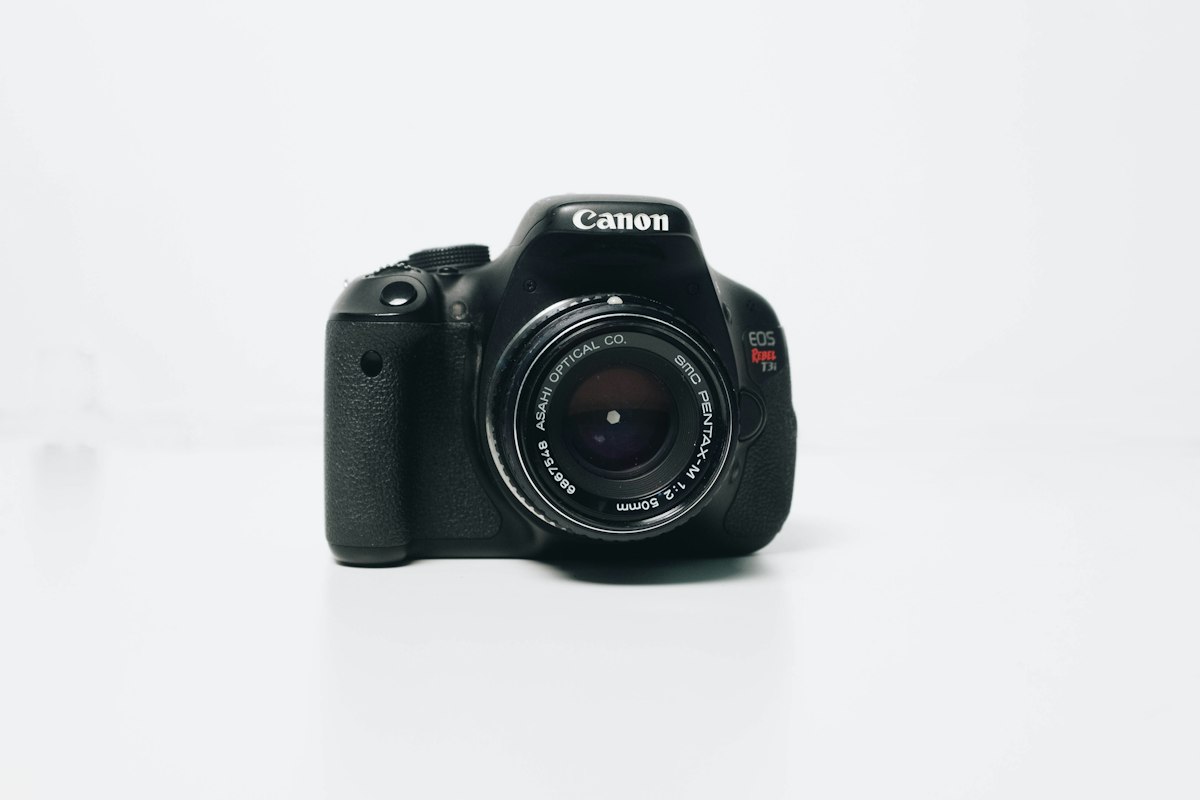
Reza Pratama opened LensaKita Rental in Bandung in early 2018, starting with two mirrorless bodies, four lenses, and a lighting kit bought with savings from his freelance event photography work. Operations back then were dead simple: customers reached him on his personal WhatsApp, wired a deposit to his personal bank account, and came by the boarding house room he used as an improvised warehouse to pick up gear. Everything was logged in a notebook, later moved into an Excel spreadsheet once he upgraded his laptop in year two.
Eight years later, in mid-2026, LensaKita Rental looks nothing like that. It now runs three physical outlets — Bandung as the headquarters, South Jakarta, and Yogyakarta — plus an online booking service with pickup and delivery available in five major cities. Inventory has grown to 850 units: mirrorless and DSLR bodies, dozens of lens variants from wide to telephoto, drones, gimbals, lighting kits, and accessories like tripods and sliders. Reza now employs 14 staff, including three booking admins, four maintenance technicians, and field teams at each outlet. Monthly transactions run around 600 bookings, with monthly revenue well into the hundreds of millions of rupiah. But behind that growth, the actual record-keeping had barely evolved since 2019: each outlet ran its own WhatsApp booking group, and admin staff manually reconciled everything into one shared spreadsheet at the end of each day.
The breaking point came on Saturday, July 18, 2026. A single Sony 24-70mm GM lens — the most requested unit during wedding season — turned out to be booked twice for the same date by two different photographers: once through the Bandung outlet, and once through an online booking routed to the Jakarta admin. The Jakarta admin had confirmed availability based on a spreadsheet that hadn't yet reflected the Bandung transaction from earlier that morning. The conflict wasn't discovered until 6 a.m. on the wedding day itself, when both photographers showed up to collect the same unit. One client had to settle for a lower-quality backup lens, LensaKita paid Rp 3.5 million in compensation, and a negative review about the incident sat on their Google Maps listing for months. Two weeks later, another problem surfaced: a DJI drone was returned with a hairline crack in its gimbal that only became apparent three days later, when the next renter's unit failed to fly stably. With no documented condition record from the earlier handover, LensaKita had no evidence to bill the suspected culprit Rp 12 million in repair costs — the loss was absorbed entirely by the business.
What is camera rental management software
Camera rental management software is a system purpose-built for photography and videography equipment rental businesses, distinct from generic rental or POS software that typically tracks stock only at the category or SKU level. The core difference comes down to three things: first, serialized unit tracking — every camera body, lens, or drone has its own serial number and its own condition history, rather than being counted as simply '1 of 5 available units.' Second, a real-time booking calendar per physical unit, so the system knows exactly which serial-numbered unit is with which customer and when it's due back, and will never offer it to another customer for an overlapping date. Third, an integrated deposit and ID (KTP) verification workflow, so every transaction leaves a clear trail of who rented what, how much deposit was held, and what documents were verified before the gear left the warehouse.
The real cost of running a camera rental business without a centralized system
- Double-booking of physical units. When availability is tracked in separate spreadsheets per outlet or purely in an admin's memory, two customers can end up booking the exact same serial-numbered unit for the same date without anyone noticing until the day arrives.
- Damage and loss disputes with no documented history. Without photos and condition notes captured at pickup and return, it's nearly impossible to prove when and who caused damage — businesses often end up absorbing repair costs that should have been billable to the renter.
- Deposit and ID-verification gaps. Manual deposit and KTP tracking in notebooks or chat threads leaves the business exposed to no-shows, falsified information, and deposits that are either forgotten to be refunded or never fully charged when damage occurs.
- Missed maintenance and calibration. Without automated per-unit schedules, sensor cleaning or gimbal calibration can slip for months until the equipment fails mid-rental.
- No visibility into unit-level profitability. Rental owners often have no clear picture of which lenses or cameras actually generate profit and which ones cost more in upkeep than they earn in rental income.
Key features you need
- Serialized per-unit inventory — every piece of equipment has its own profile, complete with serial number, purchase date, and a historical condition log from every rental cycle.
- Real-time booking calendar per physical unit — the system automatically locks a specific unit the moment it's booked, making it impossible for two customers to be assigned the same serial-numbered unit on overlapping dates, across outlets and online channels alike.
- Digital deposit and KTP verification with an e-signature rental agreement — customer onboarding becomes standardized, documented, and auditable at any time.
- Photo-documented condition reports at check-in and check-out — every handover is photographed and logged, giving the business objective evidence in the event of a damage claim.
- Automatic damage-cost billing tied to a repair-cost reference table, so staff don't have to negotiate pricing ad hoc every time a claim comes up.
- Maintenance and calibration scheduling per unit — the system automatically flags when a sensor needs cleaning or a gimbal needs calibration, based on actual usage rather than just calendar dates.
- Profitability dashboard per unit and category — owners can see exactly which lenses or cameras are most profitable and which should be sold off or upgraded.
Off-the-shelf SaaS vs custom-built system
For a very small camera rental operation with a single location and only a few dozen units, a generic off-the-shelf rental SaaS product can be perfectly adequate — the cost is low and it's ready to use without a lengthy development process. But once a business grows to hundreds of units each with its own condition history, multiple pickup points, and a need for documentation that can hold up in a dispute, generic software tends to hit a wall because it only manages stock at the category level, not per physical unit with a serial number.
That's the point where a custom-built system starts to make more sense. A purpose-built system can be tailored exactly to camera rental workflows — how the booking calendar locks specific units, the format of condition reports designed to hold up as dispute evidence, and integration with a KTP verification process that fits local regulatory expectations. The upfront investment is larger than subscribing to a SaaS product, but over the long run a custom system spares the business from the recurring losses caused by double-bookings and unresolved damage disputes.
Realistic costs and timeline in Indonesia
For a small camera rental operation — a single outlet, under 150 units, basic needs like a booking calendar and deposit tracking — custom development typically runs Rp 50-110 million with a 2-3 month timeline. For a larger operation — multiple outlets, 500-plus units, with full condition-documentation workflows, automatic damage billing, and a profitability dashboard — costs typically run Rp 150-350 million with a 4-6 month timeline, depending on payment integration complexity and how many outlets need to stay synchronized. Annual maintenance generally runs 15-20% of the initial development cost, covering system updates, bug fixes, and feature adjustments as the business grows.
Case study: BidikFrame Rental, Surabaya
BidikFrame Rental in Surabaya faced problems similar to LensaKita's before adopting a custom camera rental management system in early 2026. Within the first six months of use, physical-unit double-booking incidents dropped from an average of 4 per month to zero, thanks to a per-unit calendar that automatically locked availability across every booking channel. Unresolved damage disputes dropped from 7 cases to just 1 over the same period, thanks to photo-documented condition reports at every handover. Monthly revenue rose about 22% as the team could confidently accept more bookings without fear of conflicts, while average unit utilization climbed from 41% to 58% thanks to better visibility into which units were sitting idle and needed promotion.
Metrics to monitor after implementation
- Number of double-booking incidents per month
- Number and value of unresolved damage disputes
- Average utilization rate per unit and per equipment category
- Average time from damage claim to completed billing
- Percentage of units with on-time maintenance and calibration
Implementation challenges and how to solve them
The first challenge that almost always surfaces is staff resistance to mandatory photo documentation at every handover, since it's seen as slowing down the process and adding extra work. The solution is to show the impact directly through data — how much in repair costs was successfully recovered from damage claims thanks to condition photos, compared to losses previously absorbed for lack of evidence. Once staff see the concrete benefit, compliance tends to improve on its own.
The second challenge is migrating serial numbers and condition history for hundreds of existing units, which are often scattered across spreadsheets and manual notes with inconsistent formats. An effective solution is a phased migration by equipment category — starting with cameras and lenses first since they carry the highest value, then accessories — while physically re-verifying each unit during the migration process.
The third challenge is rolling out the system across multiple pickup points without disrupting active bookings. The solution is running the old and new systems in parallel for 2-4 weeks at one pilot outlet before expanding to the others, giving the team time to adapt and letting bugs get fixed before the system rolls out fully across the outlet network.
Where to start
LensaKita Rental's story shows that rapid growth in a camera rental business can become a liability if the record-keeping system doesn't grow alongside it — one double-booked lens on a busy wedding weekend is enough to damage a reputation built over years. The right camera rental management system isn't just about efficiency; it's about protecting assets worth hundreds of millions of rupiah and the trust customers place in you for their most important moments. Check pricing estimates on pricing for your needs, or go straight to submit a project to consult on the requirements for your camera rental management system.
Have a similar project?
Free consultation, no commitment. Tell us what you need — we'll help you find the best solution.
Free Consultation