CNC and Precision Machining Job Shop Management Software: A Complete Guide
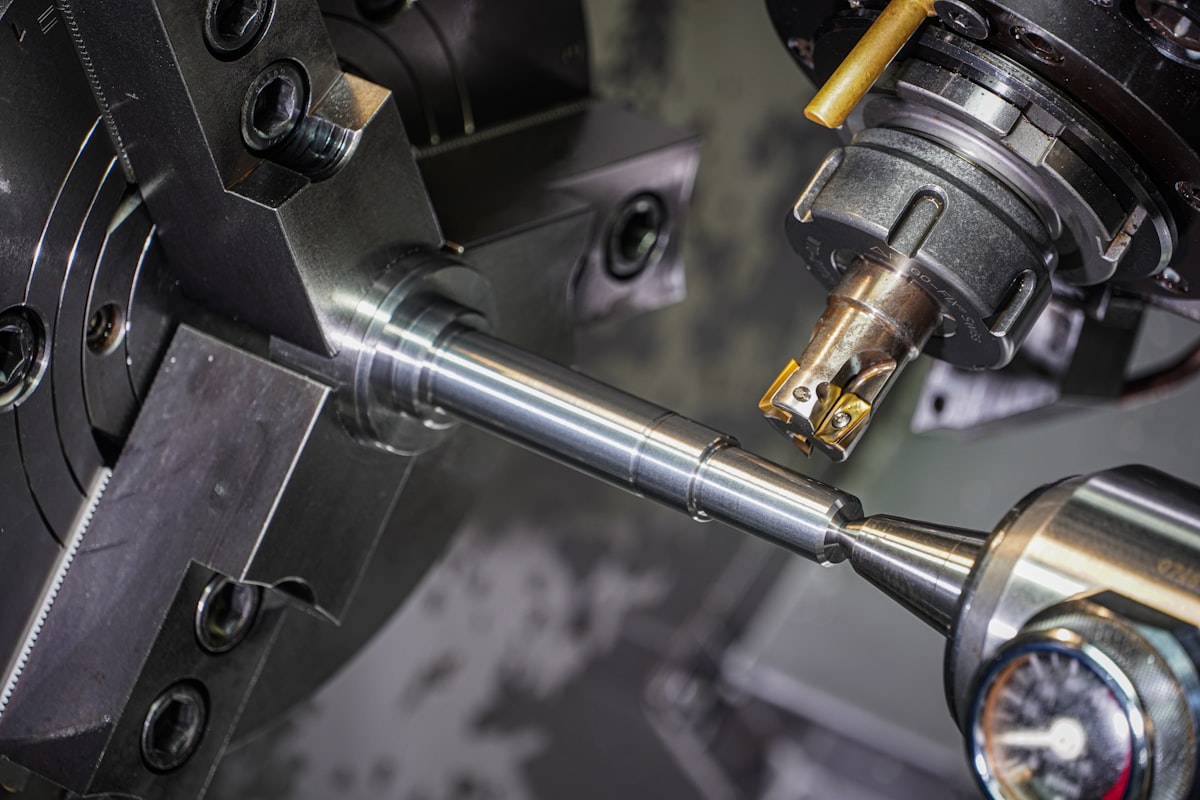
Mr. Agus Prasetyo founded Presisi Jaya Machining in the East Karawang industrial area back in 2013, starting with two manual lathes and one used CNC lathe he bought at an auction from a shuttered factory. Thirteen years later, his workshop runs 7 CNC machines — 4 CNC lathes and 3 CNC milling machines — with 9 operators working two shifts to serve automotive, heavy equipment, and electronics component clients around Karawang, Cikarang, and Bekasi. Every day, orders come in as PDF technical drawings, CAD files, or even hand-drawn sketches from clients who need a precision part reverse-engineered and remade. All of it was logged on paper job cards pinned to a whiteboard near the workshop entrance, with operators recording their own hours and material usage in personal notebooks.
A major incident happened in early March 2026. Presisi Jaya received an order from PT Mitra Otomotif Indonesia for 50 precision shafts with a ±0.02mm tolerance, made from CuZn39Pb3 brass, destined for their actuator assembly line. Because the operator who usually handled the CNC program for that job type was on leave, a substitute operator re-entered the tool offsets from an old note that turned out to no longer match the machine being used. The batch of 50 units was finished in three days, but final inspection revealed the actual tolerance had drifted to ±0.08mm — four times looser than spec. The entire batch was rejected by PT Mitra Otomotif Indonesia. Brass material losses alone came to roughly Rp 18 million, not counting the wasted machine hours and operator hours, plus a forced two-week rescheduling of the production queue since other jobs had already piled up. Pak Agus only then realized there was no system anywhere that logged machine settings history per job, QC history per batch, or an automatic alert when a new operator used parameters that deviated from that job's standard.
What is CNC and precision machining job shop management software
CNC and precision machining job shop management software is a system built specifically for precision job shop operations — workshops that take custom orders from a range of industrial clients to be turned or milled on CNC lathes and mills, under tight dimensional tolerances. This is fundamentally different from generic manufacturing ERP, which is usually designed for mass production with fixed bills of material and repeating production runs. A precision machining job shop faces the opposite situation: every job order has its own specification, material, CNC program, and tolerance, often in small quantities (sometimes just a single unit), with tight deadlines. The right system for this context needs to calculate accurate per-job costs from the unique combination of material, machine hours, and operator hours for each order, manage scheduling across many machines at once so no two urgent jobs collide on the same machine, track raw material usage and yield down to the level of each bar or sheet of steel, aluminum, or brass, and store quality inspection and tolerance records for every job as proof of compliance for industrial clients who typically have their own QC standards.
The real cost of running a machining workshop without a centralized system
Without a centralized system, hidden costs pile up across many points of a machining workshop's operations:
- Job costing errors from untracked material usage. Uncounted offcuts of steel or brass mean job orders get priced too low, and the workshop only realizes it lost money after the job is done and the material is already gone.
- Machine schedule conflicts that leave two urgent jobs competing for the same CNC machine, forcing one client to wait with no clear timeline, or forcing sudden overtime that inflates operator costs.
- Lost or inconsistent QC and tolerance records, so when a client complains about an off-spec dimension, the workshop has no inspection evidence to trace where the error occurred — machine setup, material, or operator error.
- Gaps in tracking from quotation to invoice, where a quote already sent to a client isn't automatically linked to the work order and invoice, leading to price discrepancies between what was agreed and what's billed, or delayed invoices waiting on manual reconciliation.
- Manual, inaccurate operator hour tracking, since operators log their own hours in separate notebooks, turning per-job labor cost calculations into rough guesses rather than defensible figures usable for client billing or productivity evaluation.
Key features that are non-negotiable
An effective CNC and precision machining job shop management system needs to include:
- A per-job costing engine that combines material cost (based on actual weight/length consumed), machine-hour cost (based on each machine's hourly rate), and operator-hour cost (based on actual worked time), so every job order's selling price is accurate and defensible.
- A multi-machine scheduling and utilization dashboard that shows the real-time status of every CNC lathe and mill, letting production planners assign new jobs to the soonest-available machine without colliding with jobs already in progress.
- Raw material usage and yield tracking for steel, aluminum, brass, and other stock, down to the level of individual bars or sheets, including leftover offcuts still usable for future jobs, so no material goes to waste unrecorded.
- Per-job QC and tolerance inspection records with the ability to attach photos of measurement results, data from tools like micrometers or CMMs, and notes on any deviation from spec, so every batch has an audit trail that can be shown to industrial clients.
- An integrated quotation-to-work-order-to-invoice pipeline, where a client-approved quote automatically becomes a work order with the same specifications, and once the job is finished it converts straight into an invoice without re-entering data.
- Operator productivity tracking that logs actual hours worked per job, on-time completion rates, and reject or rework rates per operator, as an objective basis for performance evaluation.
- Job order history and fast reordering for repeat clients, so when a long-time client orders the same component again, the workshop can pull the specification, CNC program, and price straight from job history instead of re-estimating from scratch.
Buy off-the-shelf software or build a custom system
Generic manufacturing software sold as an off-the-shelf product is usually built for mass production or standardized processes defined by the vendor, so it often lacks the specific module for combining material-machine-operator costing that sits at the heart of precision job shop operations. Workshops that try to use generic software usually end up patching the missing features with separate spreadsheets for QC tracking or machine utilization, which just creates duplicate data sources and makes reconciliation harder. Monthly licensing costs for off-the-shelf software are also often billed per user or per module, which can get expensive for a workshop with many operators but a lean management structure.
A custom system lets the workshop design workflows that match actual conditions on the shop floor — from quotation formats matching each industrial client's own standards, to a costing structure that reflects varying machine and operator rates, to QC report formats tailored to whatever standard a particular automotive or heavy equipment client requires. The upfront investment is indeed larger than subscribing to off-the-shelf software, but for a workshop with stable job order volume that plans to add machine capacity over the coming years, a custom system is cheaper in the long run since there's no per-user licensing cost that keeps climbing as the team grows, and the system can evolve alongside actual needs without being boxed in by vendor limitations.
Cost and timeline ranges in Indonesia
For a small machining workshop with 3 to 8 CNC machines, custom system development costs in Indonesia typically range from Rp 70 million to Rp 160 million, with a build time of 3 to 5 months depending on the complexity of the QC module and integration with measurement tools already in use. For a larger precision machining shop with 10 or more machines serving multiple industrial clients with differing QC standards at once, costs rise to Rp 200 million to Rp 450 million with a build time of 5 to 8 months, given the added complexity of multi-machine scheduling modules and the more detailed reporting needed for client audits. Annual maintenance typically runs 15 to 20 percent of the initial investment, covering system updates, technical support, and feature adjustments as the business grows.
Case study: Cipta Presisi Mandiri, Sidoarjo
Cipta Presisi Mandiri, a precision machining workshop in Sidoarjo running 11 CNC lathes and mills, implemented a custom job shop management system in mid-2024 after facing problems similar to Presisi Jaya's — repeatedly miscosted job orders and frequently colliding machine schedules. Before implementation, average machine utilization sat at just 58 percent because manual scheduling kept leaving idle slots unfilled. A year after the new system went live, machine utilization climbed to 79 percent, since production planners could see open slots across all machines in real time and fill them with the next job in queue.
Job order costing accuracy, which had previously drifted 15 to 20 percent from initial estimates due to poorly tracked material usage, improved to under a 4 percent variance once the system began logging material consumption automatically per job. The time from a client's quote request to a sent quotation, which previously averaged 3 business days because it had to be calculated manually by an estimator, shrank to under 6 hours once the system pulled material and machine rate data automatically. The rate of jobs rejected by clients over tolerance issues dropped from 6 percent to under 1.5 percent within nine months of making per-job QC records mandatory before shipment.
Metrics to track after implementation
Once the system is live, the following metrics are worth monitoring regularly to confirm the investment is delivering real results:
- Weekly utilization rate for each individual CNC machine, to spot underused machines or emerging bottlenecks.
- The variance between estimated job order cost and actual cost after completion, as an indicator of costing accuracy over time.
- The rate of jobs rejected or requiring rework due to tolerance or quality issues, broken down by operator and by material type.
- Average time from quotation sent to client approval, and from work order completion to invoice issuance.
- Operator productivity per shift, compared against standard hour estimates for that job type.
Implementation challenges and how to handle them
One of the biggest challenges is operator resistance to digital time logging on the shop floor. Operators used to recording their own hours in personal notebooks often perceive a digital system as unnecessary extra surveillance. An effective approach is involving senior operators from the workflow design stage, explaining that accurate hour data actually protects them from unfounded accusations of slow work, and choosing simple input devices like tablets with large buttons mounted near each machine, rather than complicated digital forms.
A second challenge is migrating years of paper job cards into a digital system. Many workshops have archives of job cards and QC notes from long-standing clients that remain relevant for pricing references and repeat job specifications. A realistic migration is usually done in phases, starting with active clients with the highest order volume, while older archives stay on hand as reference to be manually entered whenever that client reorders.
A third challenge is integrating with existing CNC machine data and CAM files. Many workshops already have a library of CNC programs and CAM files for frequently repeated jobs, and the new system needs to link these files to job order records without forcing operators to reprogram from scratch. The usual solution is a centralized file storage module tied to each job order, so operators can simply pull a previously proven CAM file when a similar job comes in.
Where to start
For CNC and precision machining workshop owners still relying on paper job cards and manual notes, the first step is mapping out where cost leaks happen most often — whether in material costing, machine schedule conflicts, or lost QC records — so the system built actually solves real operational problems rather than just following a digitization trend. Check a pricing estimate for your needs, or go straight to submit a project for a consultation on your CNC and precision machining job shop management system needs.
Have a similar project?
Free consultation, no commitment. Tell us what you need — we'll help you find the best solution.
Free Consultation