Coffee Shop Management Software: Standardizing Recipes and Stock Across Outlets
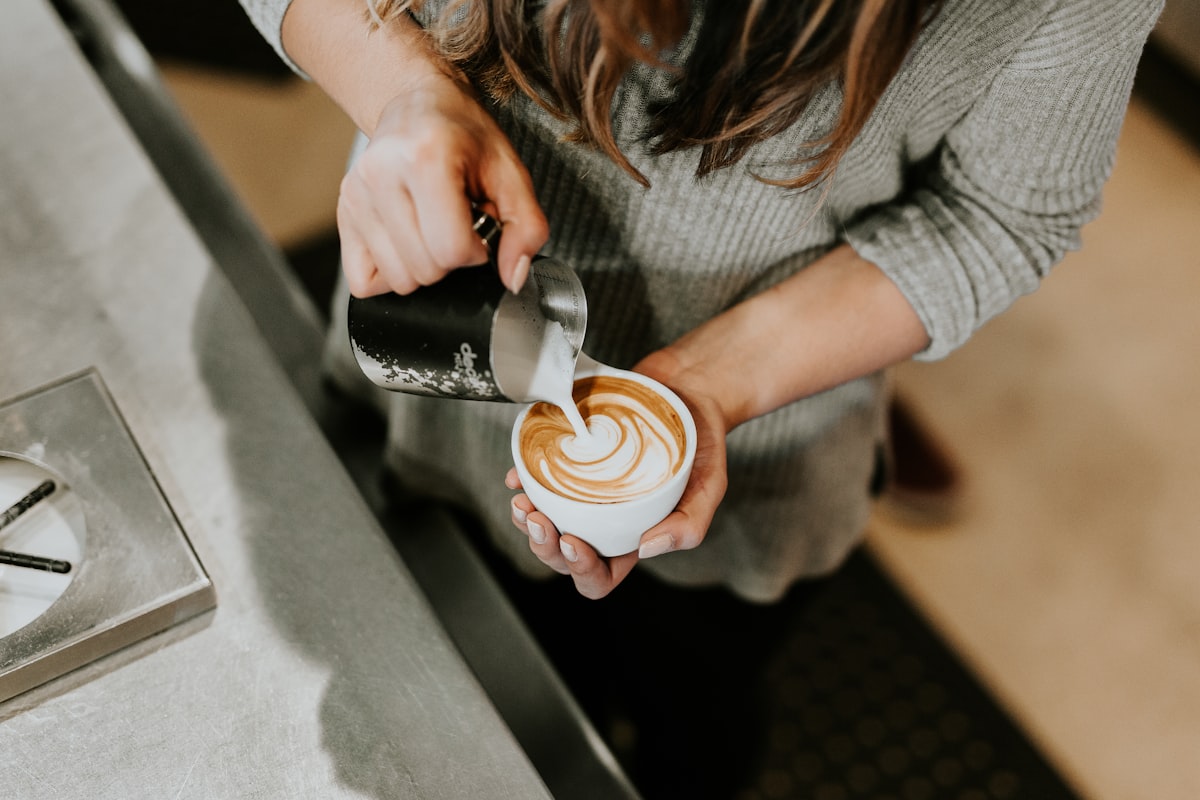
Bayu Saputra opened the first outlet of Kopi Tepian near Universitas Brawijaya in Malang in early 2019. With a secondhand espresso machine, one grinder, and three handmade wooden tables, he spent months perfecting a brown sugar coffee milk recipe until the taste was consistent every time it was brewed. Seven years later, Kopi Tepian has grown into 12 outlets spread across Malang, Batu, and Surabaya, employing 54 baristas and serving more than 3,200 cups of coffee every day. Each outlet has a laminated recipe sheet taped near the espresso machine, and stock counts for coffee beans, milk, and syrup are recorded by hand in a notebook by each outlet manager every night before closing.
A serious problem surfaced on Saturday night, February 14, 2026. A customer named Rani posted a TikTok video comparing two cups of brown sugar coffee milk she bought from the Kopi Tepian outlets on Soekarno-Hatta Street and in Dinoyo on the same day. The color, syrup thickness, and sweetness were noticeably different; one cup was overly sweet, the other nearly flavorless. The video was watched more than 610,000 times within three days and filled with comments like 'so Kopi Tepian isn't actually consistent' and 'which branch should I even buy from to get the same taste'. Bayu only then realized that each outlet manager had developed their own habit of measuring the brown sugar syrup, because the only recipe reference was a photo shared in an internal WhatsApp group, not a standardized guide with auditable gram measurements. Two weeks after the video went viral, he also discovered that the Dinoyo outlet had run out of fresh milk during a busy weekend rush because there was no cross-outlet stock visibility, forcing the team to quietly substitute regular UHT milk without telling customers.
What is coffee shop management software
Coffee shop management software is a system built specifically to run the operations of a multi-outlet coffee chain, covering everything from recipes and coffee beans to customer loyalty, inside one centralized platform. It differs from a generic point-of-sale app or the kitchen display systems used by restaurants because coffee shops have very specific operational needs: every drink is built from a recipe with precise measurements (grams of beans, milliliters of milk, syrup pumps), raw materials like coffee beans carry a roast date that affects flavor and must be used within a defined window, and the profit margin per cup is thin enough that a small measurement error can eat directly into profit. A coffee shop management system brings together four pillars: digital recipe management with automatic cost calculation, tracking of coffee beans and supporting ingredients by roast batch, customer loyalty and membership programs, and a sales dashboard that monitors every outlet and every menu item in real time. Generic FnB ERP software usually stops at basic raw-material stock modules and standard sales reports, without understanding concepts like roast date, extraction ratio, or barista tip pooling that are part of daily life at a coffee chain.
The real cost of running a coffee chain without a centralized system
- Recipes that are not standardized across outlets make drinks taste different from branch to branch, as Kopi Tepian experienced, and can damage brand reputation within days through social media.
- Coffee beans, milk, and syrup that expire or spoil before being used within their roast date or use-by window create waste that eats directly into the already thin margin per cup.
- No real-time stock visibility across outlets makes it hard for outlet managers to know when to reorder, leading to frequent stockouts during busy weekend rushes.
- Manual tracking of loyalty points on paper stamp cards or spreadsheets makes it hard to track customers, hard to measure promotion effectiveness, and easy to abuse.
- Manually calculating barista shifts and tips at the end of the month sparks disputes, especially when a tip pool has to be split among many staff working different hours.
Key features a coffee shop system needs
- Standardized digital recipe cards for every menu item, complete with gram/ml measurements, plating photos, and automatic cost-of-goods calculation per cup.
- Roast batch tracking for coffee beans, including roast date, optimal use-by date, and origin information to protect flavor consistency.
- Real-time multi-outlet inventory synchronization, so outlet managers and head office can see milk, syrup, and bean stock across every branch from a single screen.
- Loyalty and membership app integration with automatic point accrual, membership tiers, and purchase history stored in one customer profile.
- Barista shift scheduling with an automatic tip pooling module that splits tips transparently based on hours worked or individual contribution.
- Sales dashboards broken down by outlet and by drink SKU, so management can compare menu and branch performance in a single view.
- Automatic low-stock alerts and reorder suggestions based on each outlet's historical consumption patterns.
Buy an off-the-shelf app or build a custom system
Off-the-shelf coffee shop SaaS apps on the market generally offer basic POS and inventory modules at a relatively affordable monthly subscription, which works well for a new coffee shop with one or two outlets. The advantage is being able to start immediately without any development time, but the drawbacks become clear once the business develops its own distinctive recipe and roasting characteristics: features like roast-batch tracking tied to specific roast dates, tip pooling schemes adapted to how Indonesian coffee shop teams actually work, or loyalty integrations built around a brand's own point scheme are rarely available in standard packages, and customization requests are usually declined or charged at a price that no longer makes sense.
A custom system becomes the more sensible choice once a coffee chain already has more than five outlets or plans to expand quickly, because recipes, flavor standards, and barista workflows can be built exactly around the brand's specific needs instead of being squeezed into someone else's software limitations. A custom system also allows direct integration with cash registers, digital scales at the brewing station, and a loyalty app carrying the brand's own logo, making the customer experience feel more premium and consistent with brand identity. The upfront investment is admittedly larger than a SaaS subscription, but over the long run the cost per outlet actually decreases because it isn't tied to a recurring per-outlet subscription fee that keeps growing with every new branch.
Cost range and timeline in Indonesia
For a small coffee chain with 2 to 5 outlets, custom system development generally ranges from Rp 60 million to Rp 140 million, with a build time of 3 to 4 months covering recipe management, inventory, and a basic sales dashboard. For a larger coffee chain with 10 or more outlets, including a mobile loyalty module, barista tip pooling, and full multi-outlet integration, the cost range is Rp 180 million to Rp 400 million with a build time of 5 to 7 months. Annual maintenance typically runs 15 to 20 percent of the total development cost, covering system updates, technical support, and feature adjustments as the number of outlets grows.
Case study: Kopi Alun-Alun, Solo
Kopi Alun-Alun is a Solo-based coffee chain that began building a custom management system in mid-2024 after running into problems similar to Kopi Tepian's. Before implementation, this 8-outlet chain received an average of 14 flavor-inconsistency complaints per month through social media and delivery apps, raw material waste reached 11 percent of total monthly purchases, and loyalty point redemption stood at only 9 percent because customers found it inconvenient to carry a paper stamp card. Eight months after rolling out the new system, with digital recipe cards, roast batch tracking, and a mobile loyalty app, flavor-inconsistency complaints dropped to an average of 3 per month, raw material waste fell to 4 percent, loyalty point redemption rose to 34 percent, and combined monthly revenue across all outlets grew 22 percent thanks to a more active loyalty program and more efficient daily operations.
Metrics to monitor after implementation
- Raw material waste percentage (coffee beans, milk, syrup) relative to total monthly purchases per outlet.
- Recipe consistency, measured by the number of flavor complaints received through social media or customer service.
- Loyalty point redemption rate and repeat visit frequency among members within a 30-day window.
- Average cost of goods sold (COGS) per cup compared against the margin target set by management.
- Average order fulfillment time per outlet during peak hours compared to off-peak hours.
Implementation challenges and how to address them
The first challenge that almost always comes up is barista resistance to recipes that are suddenly standardized in strict detail, since many senior baristas feel their creativity and hard-earned instincts are being overridden by rigid digital measurements. The way to address this is to involve senior baristas from every outlet in building the digital recipe cards from the very beginning, turning them into internal trainers for other outlets, so standardization feels like a collective achievement rather than a rule imposed from head office.
The second challenge is migrating loyal customers from paper stamp cards to a new digital loyalty app, since many longtime customers are already comfortable with the old system and reluctant to download something new. The solution is to run a one- to two-month transition period where both systems operate in parallel, offer extra incentives such as bonus points for customers who migrate early, and train cashiers to actively offer app sign-up during transactions.
The third challenge is rolling the new system out to new outlets without disrupting the daily operations of outlets that are already running smoothly. A proven approach is a phased, outlet-by-outlet rollout, starting with one pilot outlet for two weeks to catch and fix technical issues before expanding further, along with a dedicated support team on standby during the first days of launch at every new outlet.
Where to start
Standardized recipes, disciplined ingredient tracking, and a well-managed loyalty program are no longer just nice-to-haves for a coffee chain; they are the foundation that determines whether a business can grow without losing flavor quality and customer trust. Check the estimated pricing for your needs, or go straight to submit a project for a consultation on your coffee shop management system needs.
Have a similar project?
Free consultation, no commitment. Tell us what you need — we'll help you find the best solution.
Free Consultation