Dental Clinic Management Software: Digital Odontograms to BPJS Claims

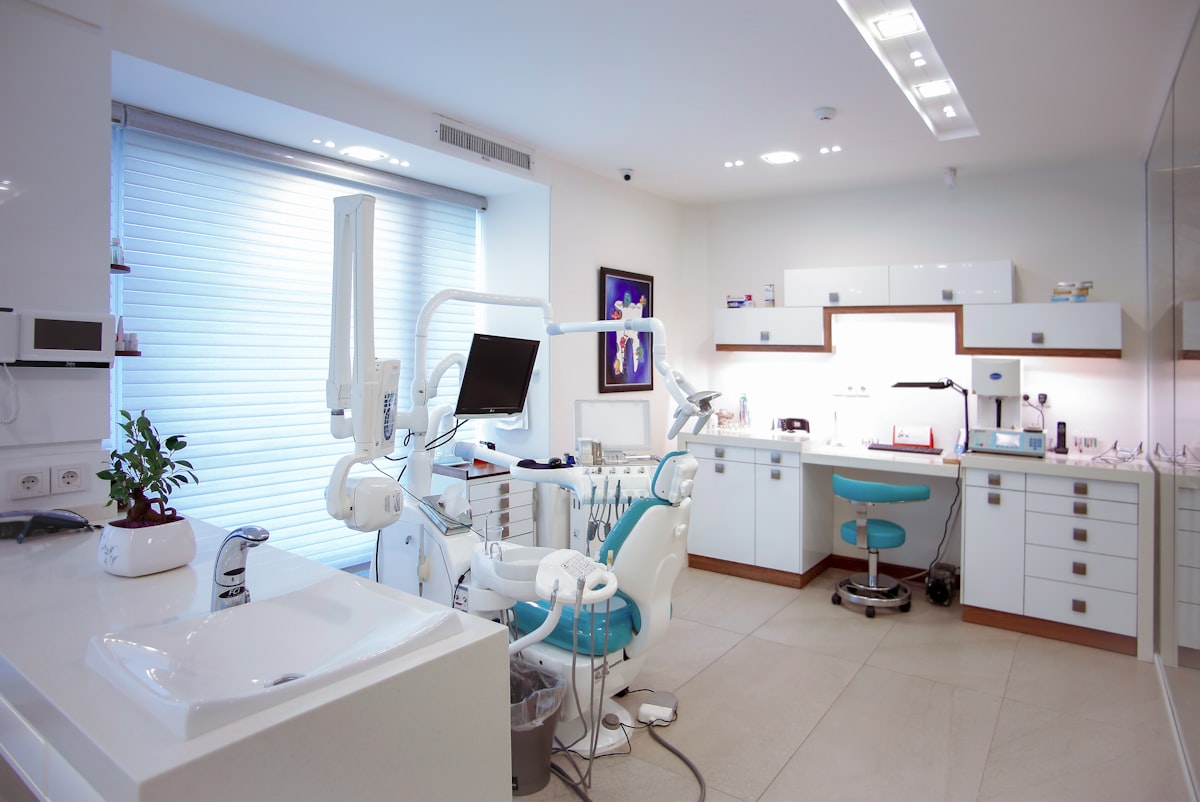
Dr. Wulan Kartika opened Senyum Ceria Dental Clinic in the Dago area of Bandung back in 2016. Eight years on, the clinic now runs with 4 full-time dentists, 2 part-time specialists, and 4 dental chairs that stay booked from 9 a.m. to 8 p.m. most days. Every patient has a paper chart with a hand-drawn odontogram — a map of all 32 teeth marked with symbols for fillings, cavities, extractions, and treatment plans. The charts sit in filing cabinets organized by medical record number, and every receptionist has to dig one out manually before a patient even sits down in the chair.
The real trouble surfaced with a patient we'll call Mr. Hendra. In early 2026, he came in for his third session of root canal treatment on a lower right molar. The dentist who had treated him before was on leave, and the substitute dentist only had access to a paper chart whose odontogram hadn't been updated since the first session — notes from the second session about canal cleaning and the intracanal medication used were scribbled on a separate sheet tucked into a different folder. The substitute nearly administered the wrong medication because there was no clear record of what had already been placed, and the mistake was only caught after the receptionist spent 20 minutes digging through files while the patient waited in the chair. The incident triggered a complaint, and billing staff also mischarged the visit because the procedure codes logged for the second and third sessions didn't match. Dr. Wulan ended up personally stepping in to calm the patient down and offered a discount as an apology — something that should never have been necessary if the full treatment history had lived in one place any dentist on duty that day could pull up.
What is dental clinic management software
Dental clinic management software is a digital system that brings together dental records, per-dentist and per-chair scheduling, treatment history across visits, dental lab documentation, and insurance/BPJS claims into one shared database. What sets it apart from general clinic software is a digital odontogram module that maps the condition of each of the 32 teeth visually and interactively, instead of relying on plain text notes. The old way — paper charts, a manual appointment book, and a separate spreadsheet for billing — scatters information across too many places, making it easy to lose records, misread handwriting, or end up with two dentists working from different versions of the same patient's history.
The real cost of running a dental clinic without a centralized system
- Odontograms that don't match between dentists — when Dentist A logs tooth conditions with different shorthand than Dentist B, a third dentist treating the same patient can misread the chart and repeat an examination that was already done, wasting time on what should have been a quick visit.
- Double-booked dental chairs — a manual per-dentist appointment book doesn't show which chair is actually free, so two patients show up for the same chair at once and one ends up waiting more than 30 minutes, triggering complaints and a schedule that slips all day.
- Multi-session treatment plans falling through the cracks — procedures like root canals, orthodontic adjustments, or staged denture fittings need 3 to 8 visits; without centralized tracking, it's easy to lose track of which session was completed and what was done, exactly as happened with Mr. Hendra.
- Lost revenue from patients who never come back — without automatic recall reminders, the clinic has no way of knowing which patients are due for a six-month checkup, so routine scaling and cleaning visits that should be recurring revenue simply never get followed up on.
- BPJS/insurance claims rejected or delayed — incomplete procedure documentation or mismatched treatment codes get claims bounced by verifiers, forcing the clinic to resubmit and slowing down cash flow for months.
Key features a dental clinic management app must have
- Digital per-tooth odontogram — an interactive map of all 32 teeth (or a child's dentition) that can be clicked tooth-by-tooth to log condition, treatment history, and photo attachments, so every dentist reads exactly the same data.
- Per-dental-chair scheduling — a calendar that shows chair and dentist availability simultaneously, with estimated procedure duration built in, so no two patients ever get booked into the same chair.
- Multi-session treatment plan tracking — a single treatment plan (say, a 3-session root canal or an 18-month orthodontic case) is tracked as one continuous flow with a status per session, so a substitute dentist knows exactly where things left off.
- Dental lab work order tracking — the status of crowns, veneers, or dentures sent to an external lab (shipped, in progress, ready for fitting) is visible in real time, so front-desk staff don't have to call the lab every day to check.
- BPJS and insurance claim documentation — structured forms and procedure codes that match verification standards, with a per-patient claim history so admin staff aren't retyping the same data for every submission.
- Patient recall and checkup reminders — automatic WhatsApp/SMS notifications for patients due for a six-month checkup or the next step in a treatment plan, keeping recurring revenue steady.
- Photo and x-ray attachments per visit — each visit can store intraoral photos and x-rays linked directly to the relevant tooth on the odontogram, making it easy to compare conditions over time.
Buy an off-the-shelf app or build a custom system
An off-the-shelf SaaS app suits a single dental clinic with standard workflows and a tight budget — it's a monthly subscription, quick to set up, but the odontogram and BPJS claim formats usually follow a generic template that may not fit a clinic's actual workflow or a multi-branch network. Customization on ready-made apps is often limited to display settings rather than business logic, like custom multi-session treatment plan rules or integration with a specific lab partner.
A custom system makes more sense once a clinic has its own odontogram conventions, works with several dental labs that each use different formats, or is planning to open new branches soon and needs patient records and treatment history accessible across locations in real time. The upfront investment is larger than a SaaS subscription, but the clinic owns its own patient data outright, isn't locked into rising annual subscription fees, and the system can grow alongside the clinic — adding an in-house pharmacy module or a payment integration, for instance, without waiting on a third-party vendor's roadmap.
Realistic cost and timeline ranges in Indonesia
For a small-to-mid-sized dental clinic with 2-6 chairs, a custom system with digital odontogram, per-chair scheduling, and BPJS documentation modules typically runs Rp 70-180 million with a 3-5 month build time. For a multi-branch dental network with automated external lab integration and centralized multi-branch reporting, the range climbs to Rp 200-480 million with a 5-8 month build time, depending on the number of branches and integration complexity. Beyond the initial build, budget roughly 15-20% of the project value per year for maintenance — security updates, adjustments for changing BPJS regulations, and ongoing technical support.
Case study: Prima Dental Clinic, Surabaya
Prima Dental Clinic in Surabaya, with 3 branches and 9 dentists, moved from a mix of paper charts and spreadsheets to a custom dental clinic management system in mid-2025. Before implementation, the average wait time for rescheduling a follow-up session was 4 business days because staff had to check manually with each branch, and the first-submission BPJS claim rejection rate sat around 22%. Six months after the system went fully live across all three branches, rescheduling time dropped to under 1 day thanks to treatment plan data and chair availability being visible across branches in real time, and the BPJS rejection rate fell to 6% because the system standardizes procedure documentation automatically. Recall visits for routine scaling also rose 35%, driven by automatic WhatsApp reminders that previously never ran consistently. Clinic management also noted that coordination with all three partner dental labs became far smoother, since the status of crown and denture work orders could be monitored from a single dashboard instead of a round of morning phone calls.
Metrics to track after implementation
- First-submission BPJS/insurance claim rejection rate — target under 10% within the first 3 months post-implementation.
- Average rescheduling time for follow-up sessions — ideally under 1 business day for clinics with more than one branch.
- Patient recall/routine checkup return rate — compare how many patients return on schedule before and after automatic reminders go live.
- Average patient waiting-room time — a drop here signals chair scheduling has gotten more accurate.
- Average dental lab work order turnaround — from ordering a crown or denture to it being ready for fitting, as a measure of coordination efficiency with lab partners.
Implementation challenges and how to handle them
The first challenge is migrating years of paper charts into digital odontograms. The fix is a phased migration: start with active patients currently mid-treatment-plan, then digitize older patient archives in parallel rather than halting clinic operations for a mass data-entry push.
The second challenge is pushback from senior dentists who've charted odontograms with their own hand-drawn shorthand for decades. The solution is involving senior dentists early in designing the digital odontogram so the symbols and workflow stay as close as possible to what they're used to, plus short per-shift training sessions instead of one mass training that disrupts the whole practice schedule.
The third challenge is keeping claim documentation formats aligned with BPJS rules that change fairly often. The solution is choosing a vendor or development team that provides ongoing maintenance support rather than a one-time handoff, so claim format changes can be adjusted quickly without the clinic having to brief a new developer from scratch every time regulations shift.
Where to start
A dental clinic still relying on paper charts and a manual appointment book keeps losing time and revenue to problems a proper system can prevent — from consistent odontograms and conflict-free chair scheduling to BPJS claims that get rejected far less often. Check a pricing estimate for your needs, or go straight to submit a project for a consultation on what your dental clinic system actually needs.
Have a similar project?
Free consultation, no commitment. Tell us what you need — we'll help you find the best solution.
Free Consultation