Senior Care Facility Management App: Medication Schedules, Care Plans, and Family Communication
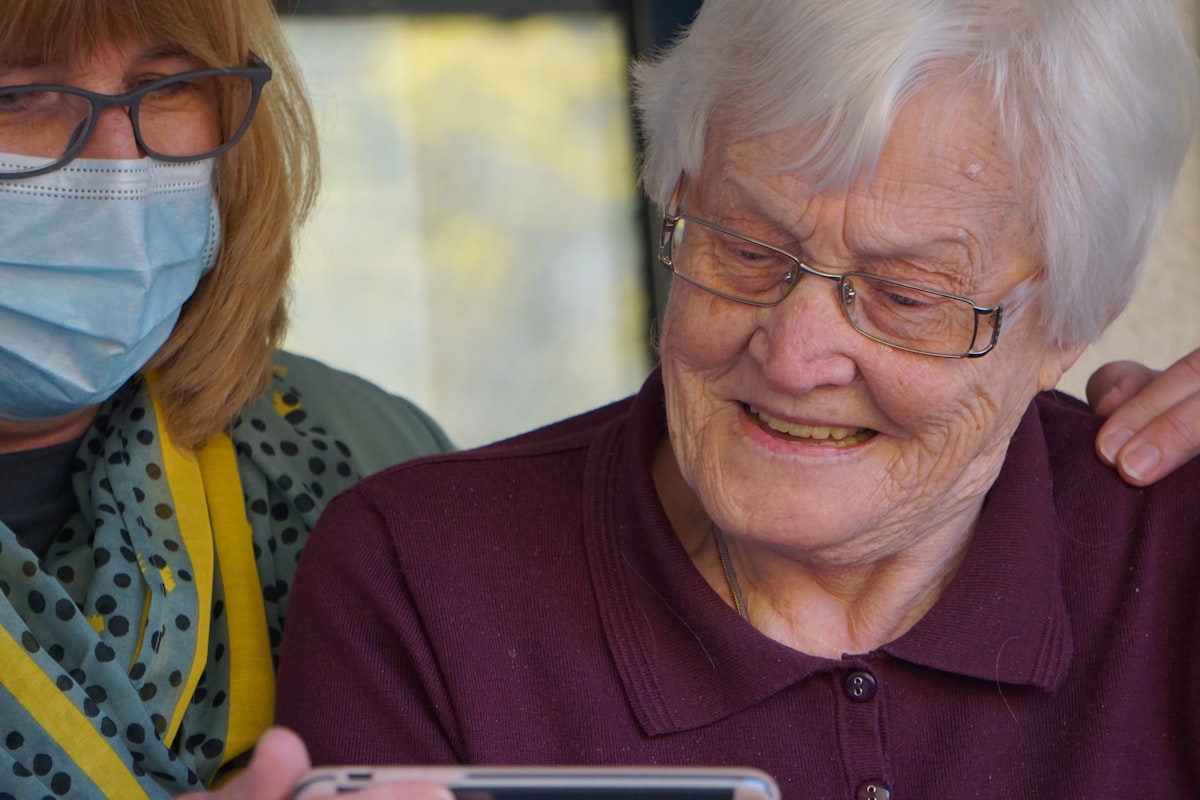
Ibu Yuliana Setiawan has managed Panti Wreda Wredatama Sentosa, a senior care facility in Malang, for eight years, home to 42 elderly residents who receive daily care. For all that time, the facility ran on the same routine: paper medication cards hung on the wall beside each bed, marked by hand every time a nurse administered a dose. Shift handovers happened verbally while re-reading those cards, backed up by a thick handwritten logbook. Updates for families went out over WhatsApp, sent by whichever caregiver happened to have a free moment in between a packed shift. Monthly billing was compiled at month end by two admin staff who took turns opening the same Excel spreadsheet, cross-checking notes on extra medication, doctor visits, and physiotherapy sessions scattered across different paper sources.
The problem became painfully real one night last March. Bapak Hartono, 82, who lives with diabetes and hypertension, was scheduled for his six o'clock evening medication. The day nurse scrawled a rushed note on his medication card because she had to rush off to help another resident who had fallen. The night nurse coming on shift read that note and assumed the evening dose had already been given, when it had not. Two days later, Bapak Hartono's blood sugar spiked dangerously and he had to be rushed to the hospital, at a treatment cost of around Rp 8.5 million. What hurt the family even more was that they did not learn about it from the facility at all, but from a neighbor who happened to visit and noticed his room was empty. The family was furious, threatening to move Bapak Hartono to another facility, which would have meant losing roughly Rp 6 million per month in revenue for Wredatama Sentosa, and demanded a written explanation for the incident. In the middle of that anger, another error surfaced: that month's invoice had been wrong, charging the family twice for an extra physiotherapy session worth Rp 1.2 million, because two admin staff had logged it separately on different worksheets without coordinating with each other. This situation is common at mid-size senior care facilities across Indonesia that still rely on paper medication cards, WhatsApp groups, and manual spreadsheets to run daily operations.
What is a senior care facility management app
A senior care facility management app is a centralized system that digitizes the entire elderly care cycle in one platform: daily care schedules per resident, medication administration records, a family communication portal, staff shift scheduling, and monthly billing. Instead of data scattered across paper cards, logbooks, WhatsApp chats, and different Excel files, everything lives in one place that staff can access according to their role, anytime, from any device.
The difference from the manual approach Wredatama Sentosa was running lies in verification and the audit trail. Where a paper card only relies on handwriting that can be smudged or misread, a digital system records exactly who administered each dose, when, and its status, complete with an automatic alert if a dose has not been logged as the scheduled time approaches. Had this system already been in place that night, the app would have sent a warning the moment the six o'clock dose passed without a confirmed entry, well before Bapak Hartono's condition worsened two days later.
The real cost of running a senior care facility without a centralized system
- Safety risk from manual record-keeping errors. Smudged handwriting, rushed verbal handovers, and the absence of double verification turn missed or duplicate doses into a daily risk that can be fatal for elderly residents with chronic conditions.
- Families lose trust due to a lack of real-time information. When updates only go out whenever a staff member happens to have time, families often learn about a change in health condition too late, exactly what happened to Bapak Hartono's family.
- Caregiver-to-resident ratios go unmonitored. Without a scheduling system that accounts for workload, one shift can end up understaffed while another is overstaffed, raising the risk of caregiver fatigue and lowering the quality of care.
- Recurring billing errors damage cash flow and reputation. Logging extra services across many scattered paper sources makes duplication or forgotten charges routine, as seen in the Rp 1.2 million double-billing case at Wredatama Sentosa.
- Admin and senior caregiver time gets consumed by manual reconciliation. At the end of every month, two admin staff can spend three to four full days just cross-checking paper notes, time that should have gone toward attending to residents.
Key features every senior care facility app needs
- Digital daily care schedule per resident. Covering medication times, vital sign checks such as blood pressure, blood sugar, and temperature, and dietary restrictions, all organized automatically and clearly visible to the caregiver on duty for each shift.
- Digital medication administration record. Every dose is logged with a timestamp and the name of the caregiver who administered it, backed by double verification or code scanning so no dose is ever missed or given twice, the way it nearly happened with Bapak Hartono.
- Family communication portal. Families can log into the app or receive notifications containing condition updates, photos of daily activities, and health reports for their resident, so they no longer depend on whichever staff member happens to have time to send a WhatsApp message.
- Staff shift scheduling with caregiver-to-resident ratio calculation. The system automatically flags when a shift is understaffed relative to the number of residents that need attention, helping facility managers arrange schedules fairly and safely.
- Automated monthly billing per resident with itemized services. Every cost, from the base fee to extra medication, physiotherapy, and doctor visits, is logged automatically as the service is delivered, so the end-of-month invoice is accurate without manual reconciliation.
- Centralized medical records and health history. Allergy history, diagnoses, and doctor's notes are stored neatly and can be accessed instantly during an emergency, without digging through a physical folder.
- Automatic notifications for emergencies and missed doses. If a medication schedule passes without confirmation, or a vital sign falls outside the normal range, the system immediately sends an alert to the on-duty caregiver and shift supervisor.
Buy an off-the-shelf app or build a custom system
For small senior care facilities with fewer than twenty residents and a fairly standard care workflow, a ready-made subscription app is often enough. Basic features like medication schedules, daily notes, and family notifications are usually already available at an affordable monthly cost, without needing to invest in development from scratch.
But for mid-size to large facilities like Wredatama Sentosa, with dozens of residents, medical protocols that vary from one resident to another, a need to integrate with referral hospital systems or BPJS, and specific reporting requirements for families and regulators, a custom system becomes the more sensible choice. A custom system can be tailored to the facility's unique workflow, number of branches, and internal policies that a generic app cannot always accommodate.
Cost range and development timeline in Indonesia
Generic subscription apps are typically priced around Rp 500 thousand to Rp 2 million per month, depending on the number of residents managed. For mid-scale custom development, costs range from Rp 80 million to Rp 150 million with a development time of three to five months. For large-scale senior care facilities or networks with multiple branches, custom costs can reach Rp 200 million to Rp 400 million with a development time of five to eight months, depending on integration complexity and the number of modules. Beyond the initial development cost, budget for annual maintenance of around 15 to 20 percent of the project value for system updates, bug fixes, and ongoing technical support.
Case study: Panti Sejahtera Abadi
As an illustration, imagine Panti Sejahtera Abadi, a fictional composite senior care facility with 50 residents facing problems similar to Wredatama Sentosa's. Before implementing a centralized system, late or missed medication doses were recorded at around 12 incidents per month, the average response time for family updates was two days, and billing errors were found in nearly one out of every ten monthly invoices. Six months after implementing a custom senior care management system, missed-dose incidents dropped to fewer than two per month, family updates were delivered within an average of two hours thanks to automatic notifications, and billing errors dropped to near zero because every service was logged automatically as it was delivered. Surveyed family satisfaction rose significantly, and there were no more threats of resident relocation over communication issues.
Metrics to monitor after implementation
- On-time medication compliance rate, ideally above 98 percent of all scheduled doses.
- Response time for condition updates to families, targeted at under a few hours for any significant change in condition.
- Caregiver-to-resident ratio per shift, monitored to stay within safety standards, especially on night shifts prone to understaffing.
- Monthly billing accuracy, measured by the percentage of invoices that need revision after being sent to families.
- Resident retention and family satisfaction rate, as an indicator of long-term trust in the facility.
Implementation challenges and how to solve them
The first challenge usually comes from staff resistance, especially senior caregivers who have spent years used to paper cards and find a digital system burdensome. The solution is to choose an extremely simple interface that resembles the workflow they already know, paired with phased training and hands-on support during the first few weeks, rather than a single one-off training session at the start.
The second challenge is migrating years of old health history scattered across paper folders and notebooks. Migration should be done in phases, starting with residents who have the most complex and highest-risk medical conditions, while still running the old system as a backup until the team is confident the digital data is complete and accurate.
The third challenge is family adoption of the communication portal, especially since families of elderly residents may also not be very familiar with new apps. Offering WhatsApp notifications as a bridge alongside the main portal or app helps speed up adoption without forcing families to learn a new platform from scratch.
Where to start
An incident like the one Bapak Hartono and his family went through is not a rare occurrence, but a risk that keeps lurking as long as a senior care facility still relies on paper medication cards and communication scattered across informal channels. The first step a facility operator can take is to count it themselves: how many times in the last six months has a medication dose been late, how many family complaints about a lack of information, or how many billing errors needed revision. That number is usually higher than realized, and every incident carries risk to both resident safety and family trust that is hard to win back.
AFSS builds custom senior care facility management systems tailored to each facility's workflow, resident count, and specific needs, not a generic template forced to fit. See pricing for an investment overview, or go ahead and submit a project to discuss your facility's needs.
Have a similar project?
Free consultation, no commitment. Tell us what you need — we'll help you find the best solution.
Free Consultation
Refillable Water Depot Management Software: Solving Deposit Gallons, Subscriptions, and Delivery Routes
Read more
Garment Production Management App: Tracking Konveksi Output from Cutting to Quality Control
Read more