Digital Livestock Management App: Custom Software for Cattle, Goat, and Layer Chicken Farms
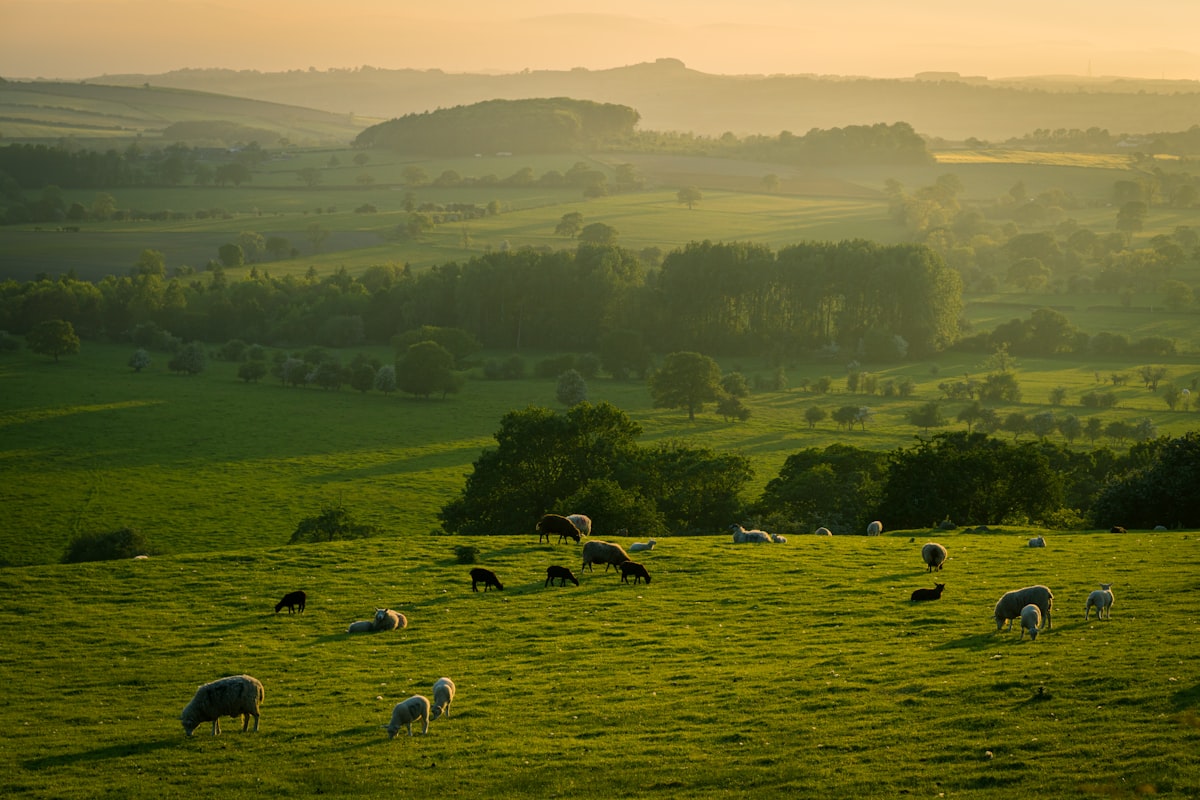
Mr. Slamet Riyadi runs a mixed beef and dairy cattle operation called Sumber Makmur Farm in Ampel, Boyolali, Central Java. With around 210 head of cattle spread across five barns, the business he started back in 2009 had grown into one of the largest beef cattle suppliers in his district. Then, in early 2023, a Foot and Mouth Disease (FMD) outbreak swept through his barns undetected for almost three weeks. The reason was simple: each barn kept its own handwritten health log, written by a different barn worker, and nobody reported early symptoms to Slamet in any systematic way. By the time the outbreak was finally noticed, 14 breeding cows had to be culled, a direct loss of roughly Rp 210 million. Add a two-week quarantine that halted all sales, and the additional loss reached about Rp 45 million. The total loss in that single month nearly wiped out a full year's profit margin. That was when Slamet realized the real problem was not his farm itself, it was how he recorded and monitored the condition of his livestock.
What is a digital livestock management application
A digital livestock management application is software built specifically to run the day-to-day operations of a mid-sized cattle, goat, or layer chicken farm's own herd. Unlike generic smart farming apps, which are mostly built for crop and horticulture operations, this kind of system revolves around living animals: individual identity, health history, reproductive cycles, feed consumption, and production output like milk or eggs. It is also distinct from pet shop or grooming apps that handle consumer transactions, and from veterinary clinic record systems that manage patients belonging to many different owners. A livestock management application serves the farm owner's internal needs only, tracking the health, productivity, and cost-efficiency of the animals that make up the farm's core asset, so decisions like when to call the vet, when a cow is ready to be bred again, or which animal is eating disproportionately more feed can be made from data rather than a barn worker's memory or guesswork.
The real cost of running a farm without a centralized system
- Disease outbreaks caught too late. Without centralized per-animal health records, early symptoms of contagious diseases like FMD, Newcastle Disease in poultry, or mastitis in dairy cows often go unnoticed until they have already spread through the herd, exactly what happened to Slamet.
- Unmeasured feed waste. Without tracking feed consumption per barn or per animal, farm owners have no visibility into which group has the worst feed conversion ratio, letting feed cost, usually the largest line item in farm operations, quietly balloon.
- Reproductive cycles slipping. Without properly logged mating and pregnancy dates, calving intervals can stretch by months, directly cutting the number of offspring produced each year.
- Production data that simply disappears. Daily milk or egg volumes recorded only on paper are easily lost or damaged, leaving owners unable to evaluate productivity trends over time or compare performance across barns.
- Missed vaccination and vet visit schedules. Manual reminders are easy to forget amid daily farm chores, so animals miss vaccinations or illnesses are not treated until they have worsened, raising both mortality risk and emergency treatment costs.
Key features every livestock management application needs
- Digital per-animal records. Every animal gets a full digital profile with an ID tag or RFID number, breed, birth date, weight history, and complete health records that can be looked up at any time.
- Feed consumption and cost tracking. The system logs the type and quantity of feed given per barn or per animal, then automatically calculates daily feed cost and feed conversion ratio to reveal how efficient each group really is.
- Reproductive cycle and breeding management. This feature logs mating dates, pregnancy check results, expected calving dates, and lineage history, complete with automatic notifications as calving approaches.
- Milk or egg production logging. Barn staff simply enter daily production volumes through a mobile app, and the system automatically renders productivity trend charts per animal, per barn, or across the whole farm.
- Early mortality and disease outbreak detection. The system triggers automatic alerts when a suspicious pattern emerges, for example a sudden drop in milk output across several animals at once, so preventive action can be taken before it spreads.
- Vet visit scheduling integration. The scheduling module connects directly to health records, so a visiting veterinarian can immediately review complete history, and the next vaccination date is automatically queued.
- Analytics dashboard and cost reports. Owners can see operating cost per kilogram of meat or per liter of milk, profit margin per barn, and projected feed needs for the coming month, all in a single view.
Buying an off-the-shelf app or building a custom system
There are a handful of ready-made livestock management apps on the market, usually sold on a monthly subscription with generic features built for an average farm in another country. The problem is that barn structure, animal type, breeding patterns, and workflow vary enormously between farms in Indonesia, a dairy operation has completely different needs from a layer chicken farm or an Etawa goat farm. Off-the-shelf apps also rarely connect directly to local dairy cooperatives, slaughterhouses, or the reporting formats required by regional livestock offices. A custom system lets the data structure match exactly the number of barns, mixed animal types, and existing barn-worker workflows, including offline mode for barn locations with weak internet signal, a very common situation on rural farms. For mid-to-large farms whose herd keeps growing and whose processes keep getting more complex, investing in a custom system is usually more cost-effective long term than continually paying monthly licenses for features that mostly go unused, especially since livestock data is one of the farm's most valuable assets and should be fully owned by the farmer rather than sitting on a third-party server that access could be restricted to at any time.
Cost and timeline ranges in Indonesia
As a general illustration, not a fixed price list, custom livestock management application development for small-to-medium scale, around 50 to 300 animals with health records, feed tracking, breeding, and basic production modules, typically runs Rp 45 million to Rp 90 million, with a build time of around 2 to 3 months. For large-scale farms with multiple barn locations, thousands of animals, RFID/IoT integration for automatic weighing, and connections to existing ERP or accounting systems, the budget can rise to a range of Rp 150 million to Rp 350 million or more, with a build time of 4 to 6 months depending on integration complexity. Cost is also shaped by whether the farm needs a separate mobile app for field workers, a separate dashboard for owners and investors, and how much custom reporting the local livestock office or cooperative partner requires. AFSS always recommends an initial consultation session to map out requirements before providing a more precise cost estimate, since every farm has a different combination of animal types and workflows.
Case study: Tani Makmur Sejahtera Farm
As an illustration, let's look at a composite case that reflects a pattern AFSS commonly sees: Tani Makmur Sejahtera Farm, a mixed dairy and beef cattle operation with 260 animals in Cepogo, Boyolali. Before going digital, this farm routinely lost around 8 to 10 animals a year to diseases caught too late, with feed conversion ratio never consistently measured. After a three-month implementation of a custom livestock management application, the farm began recording health, feed, and milk production digitally through a mobile app used by barn staff every morning and evening. Within the first eight months of use, the mortality rate dropped from around 4.2 percent to 1.8 percent per year thanks to earlier disease detection, while feed conversion ratio improved by roughly 12 percent once the owner could identify which barns were wasting the most feed. Average calving interval also shortened from 14 months to about 12.5 months as breeding schedules became easier to track. These figures are illustrative, meant to show potential impact, and actual results still depend on each farm's specific conditions.
Metrics to monitor after implementation
- Feed conversion ratio per barn and per animal type
- Annual mortality rate compared to the period before implementation
- Average calving interval for cattle, or laying cycle for layer chickens
- Operating cost per kilogram of meat, per liter of milk, or per egg
- Vaccination and vet visit schedule compliance rate (percentage of schedules met on time)
Implementation challenges and how to solve them
The first challenge that comes up almost every time is resistance from barn workers who have spent decades recording everything by hand in a notebook. The solution is not to force a sudden overhaul, but to design a mobile app interface simple enough that logging feed or daily production takes just a few taps, paired with hands-on training right there in the barn during the first few weeks, rather than classroom training disconnected from their day-to-day work context.
The second challenge is field conditions that are unfriendly to technology: wet or dirty hands during milking, weak internet signal at many rural barn locations, and limited devices. An effective solution is a mobile app with full offline mode that stores data locally and syncs automatically once signal is available, plus support for barcode or RFID tag scanning so staff never have to manually type an animal's name or number every time.
The third challenge is integrating with external parties like dairy cooperatives, slaughterhouses, or the reporting formats required by the local livestock office, each of which uses a different data format. The solution is designing the system with flexible data export capability (Excel, PDF, or API) from the start of development, so the farm never has to enter the same data twice into different systems, and compliance reports for the livestock office can be generated automatically from data that is already logged daily.
Where to start
If your farm still relies on notebooks and a barn worker's memory to track hundreds of animals, the risk Slamet faced, an outbreak caught too late, invisible feed waste, breeding cycles slipping, could happen at any time without warning. The most sensible first step is to map out your current barn processes: how many barns, how many animals, what types of livestock, and which parts of the operation most often cause losses because data is scattered. From there, the AFSS team can help design a system that fits the scale and specific needs of your farm. Check a price estimate for your needs, or go straight to submitting a project for a consultation on your system requirements.
Have a similar project?
Free consultation, no commitment. Tell us what you need — we'll help you find the best solution.
Free Consultation