Sneaker Store Management Software: Solve Size Matrix & Consignment Chaos
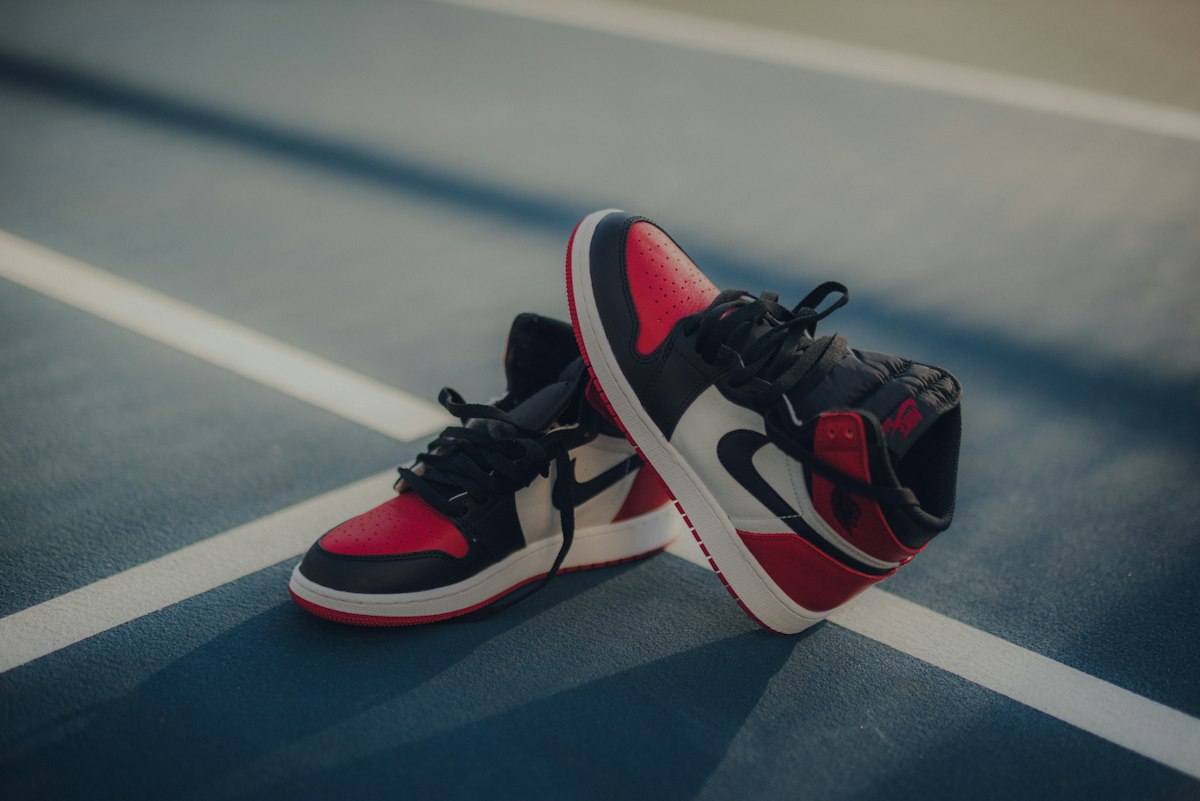
Rangga Saputra still remembers his boarding-house room in Dipatiukur, Bandung, back in early 2019. Fresh out of university, he started selling three pairs of preloved sneakers borrowed from a friend through a personal Instagram account called @kickradar.id. His only capital was a decent phone camera and the stubbornness to build something from nothing. Within less than a year that account had grown past 8,000 followers, and Rangga opened his first physical store, Kick Radar, in the Dago area of Bandung in late 2019 — selling a mix of new limited-release sneakers and preloved pairs taken in on consignment from fellow collectors.
Seven years later, by mid-2026, Kick Radar looks nothing like that boarding-house side hustle. Rangga now runs three physical outlets — Bandung, Jakarta (Kemang), and Surabaya — plus three active online channels: Instagram, WhatsApp Business, and marketplaces (Shopee and Tokopedia). The team has grown to 18 staff, including four admins dedicated to the online channels. The catalog covers roughly 2,100 active shoe models, and since each model carries an average of 5-6 size variants, that translates into more than 11,000 SKU-size combinations that need their stock tracked individually, every single day. About 30% of the 7,800 pairs circulating across all channels are preloved items taken on consignment from around 140 active consignors — individual collectors who hand over their sneakers to be sold under a revenue-share arrangement. Kick Radar's monthly revenue now sits at roughly Rp 2.1 billion across about 1,350 transactions a month.
Everything looked fine until March 14, 2026. That day, Kick Radar launched a limited collaboration drop — a Nike Dunk Low x local Bandung artist release — through a raffle for 25 available pairs. The problem was that the Instagram admin and the in-store cashiers were both accepting orders against the exact same stock pool, tracked in one spreadsheet that had to be updated manually and often lagged behind between teams. The result: 34 orders got confirmed against a stock of just 25 pairs — nine buyers had to be refunded, totaling Rp 27 million, and one of them posted a complaint thread on X that racked up more than 45,000 views in two days. That same week, a consignor named Pak Hendra disputed the payout on his preloved Air Jordan 1, which had sold for Rp 4.5 million — he believed the split was 85:15, but staff had calculated it off an outdated sticky note that read 80:20, a Rp 225,000 gap that turned into a long-running drama in the consignors' WhatsApp group. On top of that, a customer who ordered a preloved Air Jordan 1 in size 42 for Rp 3.8 million received a size 41 instead, because two different size rows had been squeezed into a single Excel cell. Rangga realized the spreadsheets that had carried his business this far simply couldn't hold the complexity of a sneaker operation this size anymore.
What is sneaker store management software
Sneaker store management software is a system purpose-built to handle the specific complexity of a sneaker retail business — not a generic POS that just logs "stock in, stock out." The difference comes down to three fundamentals. First, size-matrix inventory, where a single shoe model (one SKU) is broken into a dozen or more size variants, each with its own stock count, price, and sales history. Second, an authentication or legit-check workflow that documents the verification process for every preloved pair before it reaches a buyer, complete with detailed photos and the name of the staff member who checked it. Third, consignment payout logic that automatically calculates the revenue split owed to each consignor, based on commission terms that can vary by person or by item category. Generic POS platforms simply weren't built for any of these three things, so a sneaker store that forces itself onto standard POS usually ends up patching the gaps with spreadsheets — which is exactly where Rangga's troubles started.
The real cost of running a sneaker store without a centralized system
- Size-matrix stock errors — A single model with six size variants crammed into one Excel row makes it easy for staff to grab the wrong size, exactly what happened when Kick Radar shipped a size 41 to a customer who ordered a 42.
- Cross-channel overselling — Without real-time stock sync between the physical store, Instagram, WhatsApp, and marketplaces, the same pair can get "sold twice," as in the collaboration drop that oversold by 9 pairs and led to Rp 27 million in refunds.
- Consignment payout disputes — Revenue-share terms tracked manually on paper or in chat threads drift and get forgotten, sparking disputes with consignors like the Rp 225,000 discrepancy that caused a standoff with Pak Hendra.
- Counterfeit risk without a documented authentication process — Without a consistent legit-check record (photos, checklist, inspector name) for every preloved pair, a store is exposed to fakes slipping through verification and damaging its reputation.
- Lost insight into which SKUs and sizes actually sell — Without centralized data, owners struggle to know which sizes of a given model move fastest, so restocking decisions miss the mark and capital piles up in sizes nobody wants.
Key features you need in sneaker store management software
- Size-matrix inventory per SKU — every shoe model automatically breaks down into size variants, each with its own stock, selling price, and history, instead of one blended number.
- Real-time cross-channel stock sync — the moment a pair sells in-store, its stock updates instantly across Instagram, WhatsApp Business, and marketplaces with no manual lag.
- Consignment intake with automatic payout-split calculation — the system logs each consignor's revenue-share terms when the item comes in, then calculates the payout automatically the moment it sells.
- Authentication/legit-check record per pair — every preloved shoe carries a full verification history with detailed photos (box, insole, stitching) and the name of the staff member who checked it, stored permanently.
- Drop and raffle queue management — for hyped limited releases, the system caps orders to actual available stock and runs a transparent, automatic winner draw.
- Price-history tracking for resale items — logs secondary-market price fluctuations by model and size, helping set competitive, fair selling prices.
- Sales dashboard by brand, model, and size — gives owners a clear picture of which SKUs and sizes actually move, so restocking decisions are data-driven instead of guesswork.
Off-the-shelf software vs custom-built system
For a small, single-location sneaker store with inventory that isn't too complicated yet, an off-the-shelf POS is genuinely enough — it's cheap, quick to set up, and covers the basics like sales logging and daily cash reports. The trouble starts once a business develops the characteristics Kick Radar now has: many size variants per model, consignment from dozens or hundreds of individuals, sales running across more than one channel at once, and a documented authentication process needed for preloved goods. Most off-the-shelf software on the market is built for generic retail (fashion, electronics, F&B), so concepts like "one SKU with a size matrix" or "automatic consignment payouts" usually have to be worked around clumsily, if they can be worked around at all.
That's the point where a custom system starts making more business sense. A system built specifically around a sneaker store's workflow can match exactly how Kick Radar operates: different commission terms per consignor, a legit-check process that follows the store's own internal SOP, and integrations to the channels the store actually uses rather than whatever a vendor happens to offer. The upfront investment is bigger than subscribing to generic software, but for a store moving billions of rupiah a month with proven risks of overselling and payout disputes, the long-term cost of operational mistakes is usually far higher than the cost of building the right system from the start.
Realistic costs and timeline in Indonesia
For a small sneaker store — one or two outlets or channels, with basic needs like size-matrix inventory and simple stock sync — custom development typically runs Rp 45-95 million with a 2-3 month timeline. For a larger operation like Kick Radar, with multiple outlets, a full consignment module, drop/raffle management, and documented legit-check workflows, the range is Rp 130-320 million over 4-6 months, depending on the complexity of marketplace integrations and the number of channels connected. Beyond initial development, annual maintenance typically runs about 15-20% of the development cost, covering bug fixes, small adjustments, and ongoing technical support.
Case study: Kick Radar, Bandung
After seven months on a custom sneaker store management system, Kick Radar recorded significant changes. Oversell incidents on drops and raffles dropped from an average of 2-3 per month to nearly zero, since stock across channels now syncs in real time and raffle quotas lock automatically once stock runs out. Consignment payout disputes, which used to surface 4-5 times a month, fell to fewer than one per month, since revenue-share terms are logged clearly from the moment an item comes in and consignors can track their own item's status through a simple portal. Size-matrix stock accuracy rose from about 78% (measured through monthly physical counts) to 98%. On the business side, monthly revenue grew roughly 22% over the same period, driven largely by restored customer trust and the team's newfound confidence to launch drops more aggressively without fear of overselling.
Metrics to monitor after implementation
- Size-matrix stock accuracy compared to physical stock counts
- Number of oversell incidents per month on drops and raffles
- Average time to complete a consignment payout after an item sells
- Percentage of preloved pairs with a complete legit-check record
- Sales contribution by channel (in-store, Instagram, WhatsApp, marketplace)
Implementation challenges and how to solve them
The first challenge is usually staff resistance to photographing every consignment pair for the authentication record — it's seen as tedious and slows down intake. The fix is to keep the photo workflow as simple as possible (four standard shots, for instance: box, insole, sole, and stitching) directly from a mobile app, plus showing staff how this documentation actually protects them if a dispute with a consignor arises later.
The second challenge is migrating existing size-matrix stock data, which is usually scattered across inconsistent spreadsheets from outlet to outlet. The way around it is to run a thorough physical stock count before migration and treat that count as the clean starting point, rather than forcing an automatic migration from old data that's already inaccurate.
The third challenge is rolling out across multiple channels at once, which risks confusing both staff and customers if done all at the same time. A phased rollout works best — starting with one outlet and one online channel for 2-4 weeks to confirm the workflow is stable, then expanding to the remaining outlets and channels one at a time.
Where to start
Kick Radar's story shows that spreadsheets and manual notes can carry a business a long way, but once a sneaker store's scale involves thousands of size combinations, hundreds of consignors, and multiple sales channels at once, a more structured system stops being a luxury and becomes what keeps customer and consignor trust intact. If your store is starting to show the same symptoms Rangga faced, it might be time to consider a system built specifically around how a sneaker business actually operates. Check pricing estimates on pricing for your needs, or go straight to submit a project to consult on the requirements for your sneaker store management system.
Have a similar project?
Free consultation, no commitment. Tell us what you need — we'll help you find the best solution.
Free Consultation