Internet Café and PS Rental Management Software: Automated Hourly Billing, Member Balances, and Peak-Hour Booking
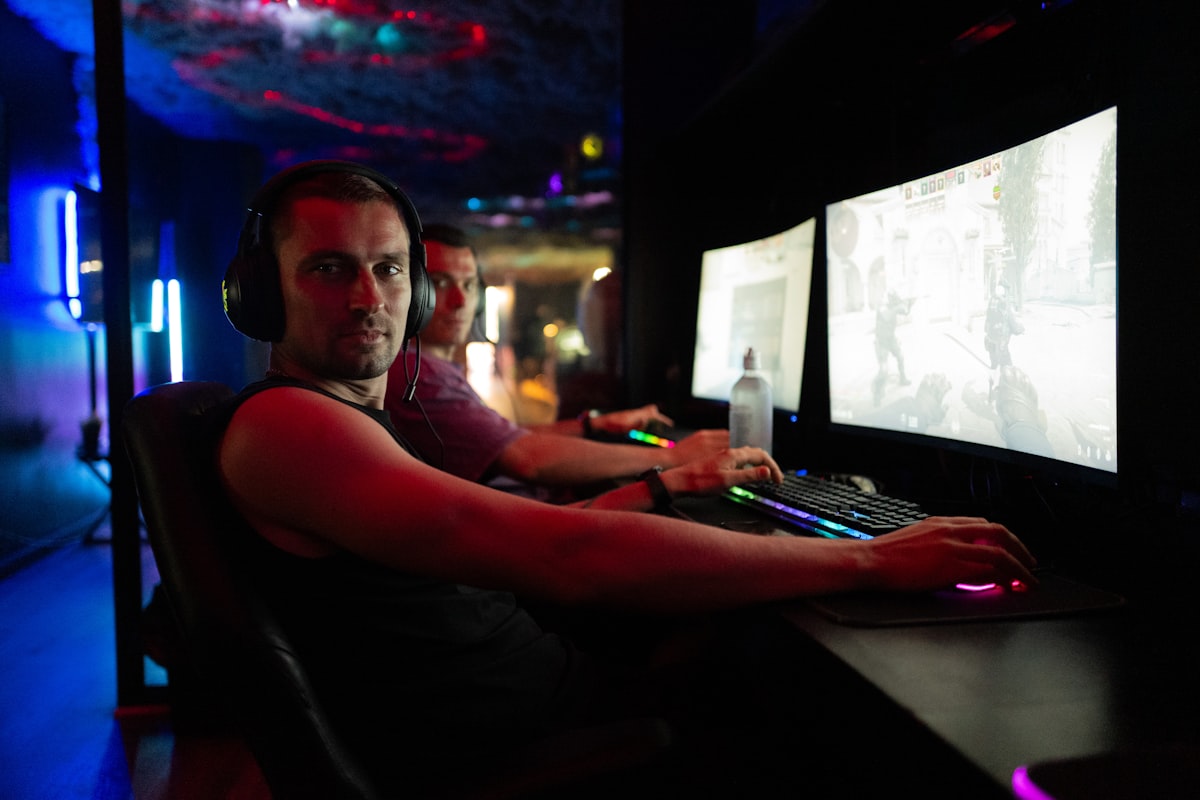
Pak Dimas runs OctaGaming Center in Malang, a hybrid gaming lounge with 24 PC units and 10 PlayStation booths open from 10 a.m. to 2 a.m. Every booth relies on a physical stopwatch or wall clock that shift operators log manually into a ledger every time a customer starts and ends a session. Snack and drink orders from the lobby's mini café are written on separate paper slips, then manually merged with the play-time bill when the customer checks out at the register. Loyal members' prepaid top-up balances are also tracked in a small notebook kept in the cash drawer.
The problem became undeniable one packed Sunday night, when eight of the ten PS booths were occupied and two shift operators were logging into the same ledger. One booth that started at 8 p.m. never had its start time recorded because that booth's slip got mixed up with the neighboring table's, which had just finished. That customer played until 2 a.m., nearly six hours, but at checkout the cashier only found a note showing a midnight start time, so the bill covered just two hours worth about Rp 30,000 instead of the roughly Rp 90,000 it should have been. That same night, a member complained that a Rp 150,000 top-up from the previous week never showed up in the notebook because the cashier who took it had already changed shifts and forgot to hand it over, and the dispute played out in front of other customers while the checkout line grew.
What is internet café and gaming rental center management software
Internet café and PS rental management software connects per-unit or per-booth timers, prepaid member balances, café sales, and peak-hour booking into one shared database, so every unit knows exactly when a session started, what hourly rate applies, and how much balance a customer has left in real time. The manual approach with stopwatches and paper logs depends entirely on operator memory and discipline, and once two booths get logged on the same slip or a shift changes mid-session on a busy night, recording errors become almost unavoidable. With a centralized system, an operator simply taps start on that unit's screen, the timer runs automatically on the server, and the bill assembles itself when the session ends, no manual reconciliation between play-time notes and café receipts required.
The real cost of running a gaming center without a centralized system
- Revenue leakage from inaccurately logged play time — errors like the PS booth incident above recur every busy weekend, and the accumulated loss across dozens of units over a month can reach millions of rupiah without ever being detected, because there's no digital log to check against.
- Member balances that fall out of sync across shifts — top-ups recorded in a physical notebook are easy to lose, mix up, or forget to hand over during a shift change, sparking disputes that erode trust with loyal customers.
- Checkout queues piling up during peak hours — manually merging play-time charges with café receipts one by one at the register slows down checkout, leaving customers waiting to keep playing or new customers waiting to start.
- Idle units because there's no booking system — customers who want to guarantee a unit during peak hours (weekend nights, school holidays) can't reserve ahead of time, so they often leave disappointed when every unit is full, even though real demand exists.
- No data to guide business decisions — owners don't know which units get used most, which hours are busiest, or which café items sell best, so decisions about adding units or changing pricing packages rest on gut feeling alone.
Key features every internet café and PS rental management app needs
- Real-time per-unit/booth timer billing — every PC or PS booth has a digital timer that starts automatically when a session begins, calculating the fee as time elapses without manual logging, viewable by operators from a single monitoring screen covering every unit at once.
- Prepaid member balances and top-ups synced across every register — members top up their balance at any register or through an app, balances deduct automatically for play time or café purchases, and transaction history is stored permanently so there's never another dispute over a missing balance.
- Booking and reservation system for peak hours — customers can reserve a specific unit at a specific time through an app or website, the system automatically locks that slot, and operators get notified the moment a new reservation comes in.
- Snack and drink POS integrated with the play session — food and drink orders are added directly to the bill of the session currently running on that unit, so when a customer finishes playing, one combined bill appears instantly with no manual merging at the register.
- Per-unit usage and revenue reporting — owners can see which units are most productive, which peak hours are most profitable, and daily/weekly/monthly revenue trends as the basis for decisions on adding units or upgrading specs.
- Hourly package and promo management — the system supports bulk-hour packages (like a discounted 5-hour bundle), happy-hour promos, or play-plus-snack bundles that apply automatically without operators calculating anything by hand each time a promo runs.
- Remote screen-lock and end-of-session notifications per unit — the system can automatically lock a unit's screen when session time or member balance runs out, and sends alerts to operators while showing customers an on-screen warning a few minutes before their session ends.
Buy an off-the-shelf app or build a custom system
Off-the-shelf billing apps for internet cafés are widely available at relatively affordable monthly subscription rates, well suited to smaller cafés with fewer than 15 units and a simple business model. However, most off-the-shelf apps are designed around classic PC cafés and often don't support the combination of PS rental with varying per-console rates, custom hourly packages, or café integration that truly merges with the play session, so hybrid gaming center owners often end up running a separate add-on system for café or booking anyway.
A custom system makes more sense when a gaming center combines PC and PS units with different pricing structures, wants a booking system connected directly to a website or social media for promotion, or plans to open additional branches and needs a multi-branch dashboard from day one. Custom development requires a bigger upfront investment, but the system is built around the operational flow the business actually uses, including the promo policies and hourly packages that become the venue's signature, without being locked into an ongoing third-party subscription forever.
Realistic cost and timeline ranges in Indonesia
For a mid-scale custom system with per-unit timers, member balances, integrated café POS, and booking, typical costs run Rp 70-180 million with a 3-5 month build time, depending on the number of units to integrate and the complexity of promo packages. For a large-scale gaming center or one planning multiple branches with a central dashboard, consolidated cross-branch reporting, and full digital payment integration, costs typically run Rp 200-480 million with a 5-8 month build time. Beyond the initial build, budget roughly 15-20% of the project value annually for maintenance, covering system updates, bug fixes, and feature adjustments as the business grows.
Case study: OctaGaming Center
After the PS booth incident and the member balance dispute that caused so much trouble, Pak Dimas decided to build a centralized management system for OctaGaming Center. In the first month after the system went live, automatic per-unit timers immediately eliminated unlogged play-time cases, and within the first three months, recorded revenue rose about 12% purely from closing that billing leakage, without adding a single unit or raising rates. The peak-hour booking system pushed weekend occupancy from around 70% to 92%, since customers could now guarantee a unit in advance, and the café's integration with play sessions drove average add-on spending per customer up roughly 25%, since snack orders became faster and easier for operators to process.
Six months after implementation, Pak Dimas could also see from the reports that five specific PS booths were used far more often than the others, so he decided to add two more booths with similar specs instead of adding PC units whose occupancy was actually lower, a decision that would have been impossible to make confidently without accurate data before.
Metrics to monitor after implementation
- Occupancy rate per unit/booth by hour to identify which hours and units are most productive.
- Average café add-on revenue per play session to measure F&B upsell effectiveness.
- Percentage of bookings realized versus no-shows to assess reservation system reliability.
- Daily variance between system-recorded revenue and physical cash to confirm no new leakage has appeared.
- Top-up frequency and average balance among active members to gauge loyalty and prepaid cash flow.
Implementation challenges and how to address them
Operators and cashiers who've logged sessions manually for years often resist a new digital system, worried they'll look incompetent or that the system will actually slow them down during busy hours. The fix is running phased training with peak-hour simulations before the system goes fully live, and involving senior operators as "champions" who help their colleagues, so adoption feels like it's coming from fellow staff rather than being imposed from above.
Internet or power outages can halt a digital billing system mid-peak session, a far bigger risk than a paper-based manual system ever posed. The solution is ensuring the system has a local offline mode that keeps logging timers on the café's local server even if the cloud connection drops, paired with a UPS for the server and router so it stays powered for several minutes during an outage, letting sessions close properly instead of simply vanishing.
Members used to manual top-up notebooks can be skeptical of digital balances, worried their balance will just "disappear" into a new system with no physical proof. The fix is providing digital receipts or automatic WhatsApp notifications for every top-up and every balance deduction, so members always have a checkable transaction trail, plus a transition period where old notebook balances are migrated and confirmed directly with each member before the old system is fully retired.
Where to start
If your internet café or PS rental venue still relies on stopwatches, paper logs, and receipts that get mixed up during busy hours, it's time to consider a system that unifies timer billing, member balances, café sales, and booking on one screen. Check a price estimate for your needs, or go straight to submitting your project for a consultation on your internet café and gaming rental system requirements.
Have a similar project?
Free consultation, no commitment. Tell us what you need — we'll help you find the best solution.
Free Consultation