TPM Software: Trade Promotion Management for FMCG Distributors

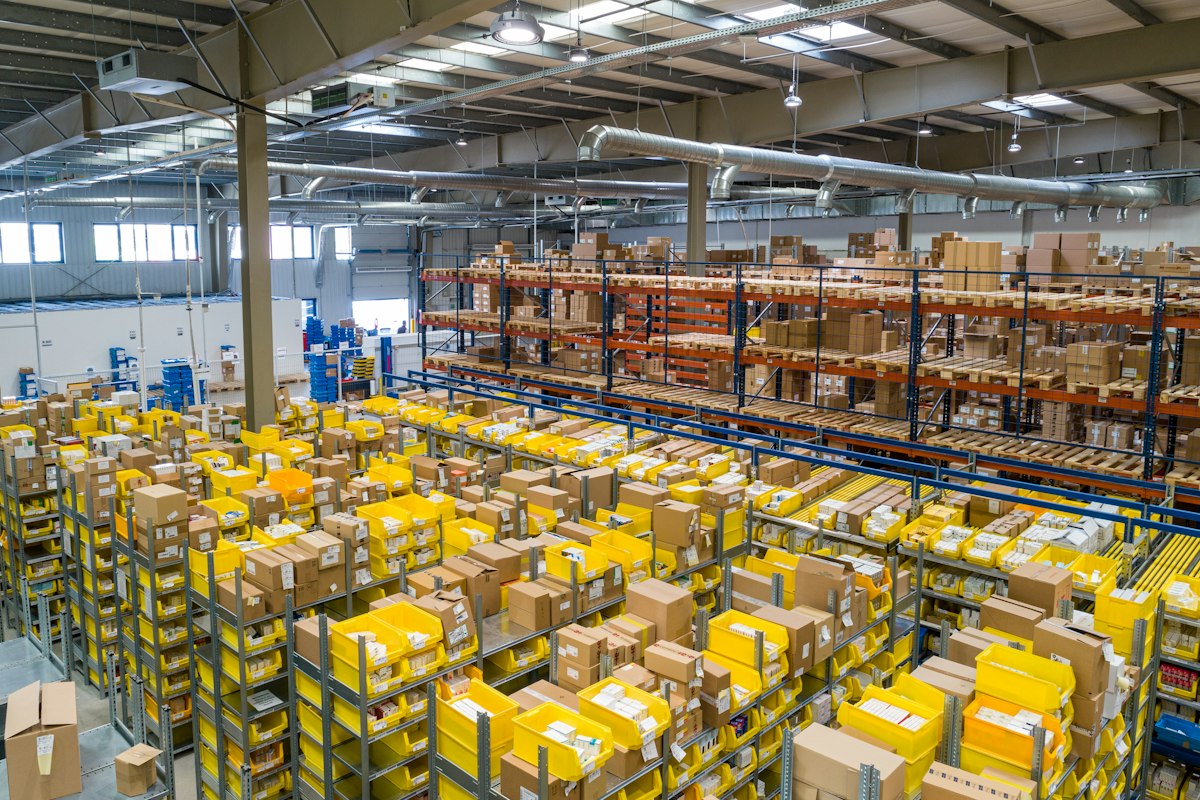
Pak Rudi manages FMCG (fast-moving consumer goods) distribution for the Central Java region, supplying food and beverage products to more than 1,200 stores and minimarkets. Every month the company runs a dozen or more different promotion programs, from volume discounts for large stores to bonus stock for select minimarkets, with a total monthly promotion budget reaching hundreds of millions of rupiah. The problem is that every one of these programs is logged and claimed through paper forms and separate spreadsheets managed by sales representatives in each region, and there's no single system that can show in real time which promotion programs are actually being used as planned and which have exceeded budget.
The problem turned serious when the finance team ran a quarterly reconciliation and found that the promotion budget for one beverage product had actually been used at 140% of its approved allocation, because several sales representatives in different regions had claimed the same discount for the same store without knowing about each other. Meanwhile, when management wanted to know which promotion program was most effective at driving sales, there was no data linking the promotion spend to the actual sales lift at the stores receiving that promotion, so decisions to continue or discontinue a program were based purely on intuition, not clear ROI data. Pak Rudi is not an outlier. This is the normal condition at many mid-to-large Indonesian FMCG distributors running trade promotions without a centralized tracking system.
What is a TPM (Trade Promotion Management) system
A TPM system is a platform that manages the entire trade promotion program lifecycle, from budget planning per product and region, submitting and approving field sales promotion claims, real-time tracking of budget realization, to ROI analysis per program compared against actual sales lift, all in one system that management can monitor anytime.
The difference from paper forms and spreadsheets is fundamental. A paper form logs promotion claims one at a time with no cross-validation, so duplicate claims like Pak Rudi's case can slip through undetected until the quarterly reconciliation. A spreadsheet can track budgets, but doesn't automatically link promotion spend to actual sales data at the same store, so ROI per program is never really measured. With a TPM system, every promotion claim is automatically validated against remaining budget and prior claim history, and post-promotion sales data is automatically compared against a baseline to calculate real ROI.
The real cost of running trade promotions without a centralized system
- Budget leakage from duplicate claims. Without automatic cross-validation, the same promotion claim can be submitted more than once by different sales reps for the same store, as in Pak Rudi's case, only detected after the budget had already been used at 140%.
- No clear ROI data per promotion program. Without linking promotion spend to actual sales lift, management can't tell which programs genuinely drive sales versus which just burn budget with no real impact.
- Slow claim processing delaying store payouts. Promotion claims processed manually through paper forms and email take weeks to approve and disburse, frustrating partner stores and making them reluctant to participate in future promotions.
- Difficulty catching budget overruns early. Without real-time tracking, management only finds out a promotion program has exceeded budget during quarterly reconciliation, long after the moment to stop or adjust the program has passed.
- Promotion data that can't inform future planning. Without a cleanly stored history of promotion performance per product and region, the marketing team struggles to design the next promotion program based on historical data about what's proven effective.
Key features a real TPM platform needs
- Promotion budget planning and allocation per product and region. Promotion budgets are allocated and tracked separately per product, region, and period, with always-current visibility into remaining budget.
- Digital promotion claim submission from the field. Sales reps submit promotion claims directly through a mobile app with photo proof and store data, replacing slow, easily-lost paper forms.
- Automatic anti-duplication claim validation. The system automatically detects and flags claims that could be duplicates for the same store and product, preventing budget leakage before funds are disbursed.
- Tiered approval workflow by claim value. Promotion claims above a certain threshold are automatically routed to a supervisor or regional manager for additional approval, with a full audit trail.
- Promotion ROI analysis based on actual sales data. The system links promotion spend to sales data at the same store before and after the promotion, producing an ROI figure comparable across programs.
- A real-time budget realization dashboard. Management can see anytime what percentage of the promotion budget has been used per product and region, with automatic alerts when approaching the allocation limit.
- A promotion performance history archive for future planning. ROI data and promotion-effectiveness patterns are stored cleanly per product category and season, serving as a reference when designing the next period's promotion program.
Build vs buy
Off-the-shelf global TPM platforms are available for distributors with a fairly standard promotion structure, with licensing costs that can be significant at enterprise scale. But generic platforms are often less flexible for promotion schemes specific to a distributor's agreements with brand principals in Indonesia, or integration with an existing SFA and distribution system.
A custom-built system makes more sense once a distributor runs more than ten simultaneous promotion programs, has commission and claim schemes specific to agreements with various brand principals, or needs deep integration with an existing SFA and distribution ERP system. For mid-scale Indonesian FMCG distributors, a custom system integrated with existing field-sales workflows often gets better adoption than a generic platform.
Cost and timeline ranges in Indonesia
Global enterprise TPM platforms typically license from tens of millions of rupiah per month depending on transaction scale, on top of implementation and integration costs that can be considerable. For mid-scale custom development, covering digital claim submission, anti-duplication validation, and a budget realization dashboard, expect an investment of roughly Rp 150 million to Rp 400 million with a 4-to-6-month build. For a large-scale system with full ROI analysis and deep integration into SFA and distribution ERP systems, investment can reach Rp 450 million to Rp 1.1 billion with a 7-to-10-month timeline. Budget annual maintenance at roughly 15-20% of the initial investment.
Case study: Distributor Makmur Sejahtera
Distributor Makmur Sejahtera is a composite illustration of a pattern common among mid-to-large Indonesian FMCG distributors running many trade promotion programs at once. Supplying more than 1,200 stores with a dozen or more active promotion programs a month, the company previously relied on paper forms and spreadsheets per region. After implementing a TPM system with anti-duplication validation and ROI analysis based on actual sales data, within eight months budget leakage from duplicate claims dropped from an average of 12% of total promotion budget to under 2%. The company also managed to identify that three of twelve routine promotion programs actually delivered negative ROI and discontinued them, reallocating that budget to programs with proven higher ROI, which overall boosted promotion budget effectiveness by 22% within a year. Promotion claim payout time to stores also dropped from an average of three weeks to five business days, significantly boosting partner store satisfaction.
Metrics to track after implementation
- Budget leakage rate from duplicate claims, tracked as a percentage of total promotion budget, ideally kept under 2%.
- Average ROI per promotion program, compared across products and regions to identify programs worth continuing.
- Average promotion claim payout time, from submission to funds disbursed to the store.
- Budget realization percentage against planned allocation, monitored per product and region on an ongoing basis.
- Number of negative-ROI promotion programs identified and discontinued, as an indicator of data-driven decision-making efficiency.
Implementation challenges and how to address them
The most common challenge when implementing a TPM system is adoption from field sales reps who have spent years submitting promotion claims via paper forms and aren't as familiar with mobile apps. The solution is choosing an app with an extremely simple claim submission flow, just a photo of proof and a few short fields, plus short-term incentives for reps who consistently use the new system during the transition period.
The second challenge is aligning the different promotion schemes across the various brand principals a distributor serves, since each principal usually has its own unique discount and bonus-stock rules. Designing the system with a flexible promotion scheme structure that's configurable per principal, rather than hardcoding a single scheme, is essential so the system stays relevant as the principal portfolio grows.
The third challenge is ensuring the post-promotion sales data used to calculate ROI is genuinely accurate, especially if store sales data is still partly manual. Integrating the TPM system with an existing SFA or store POS system, instead of relying on manual entry of post-promotion sales data, greatly improves the reliability of the resulting ROI figures.
Where to start
An FMCG distributor still running trade promotions through paper forms and separate spreadsheets is quietly carrying budget-leakage risk that only becomes visible at reconciliation time, long after the moment to correct it has passed. The most realistic first step is to calculate what percentage of your promotion budget can actually be traced through to real sales data over the last three months, because that number usually becomes the strongest case for investing in the right TPM system. AFSS builds trade promotion management systems tailored to your distribution structure and principal agreements, not a generic template. Check pricing estimates for your needs, or go straight to submit a project to discuss what your TPM system actually needs.
Have a similar project?
Free consultation, no commitment. Tell us what you need — we'll help you find the best solution.
Free Consultation

