Construction Project Management Software: Schedule, Cost & Progress

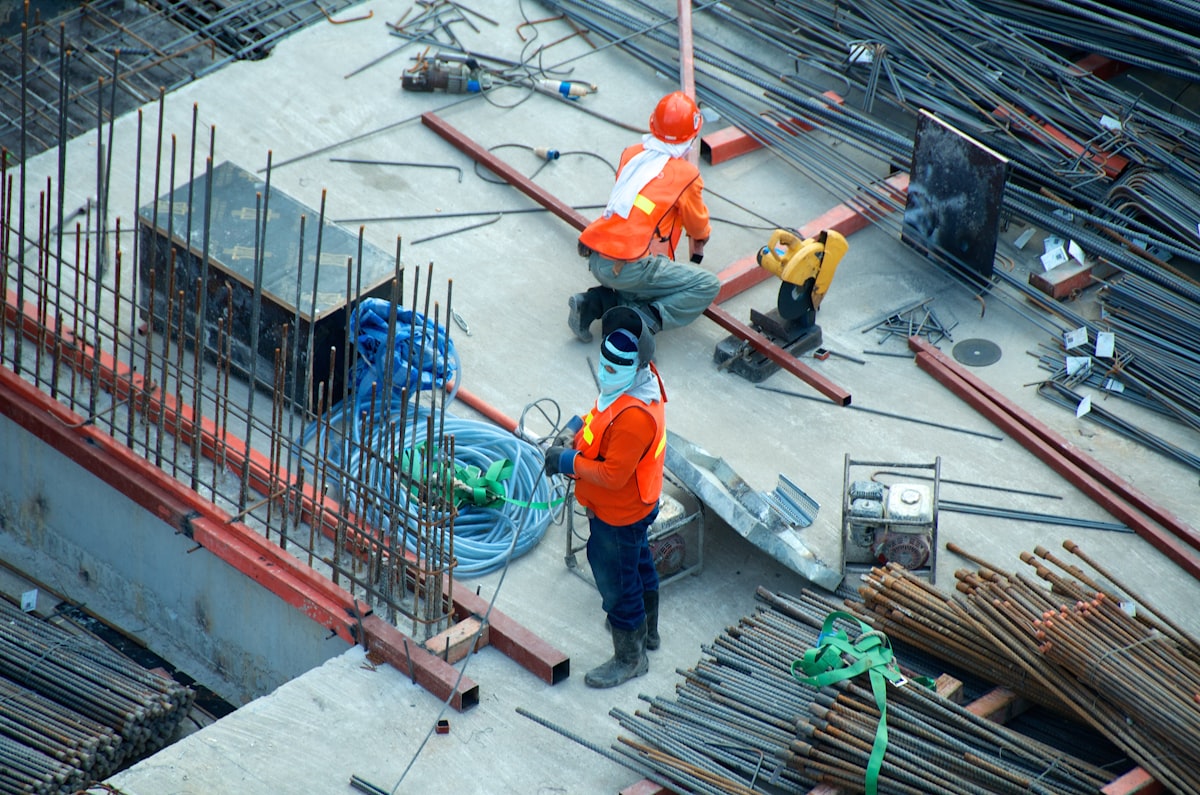
Pak Yanto owns a mid-scale construction contracting firm in Semarang currently juggling five projects at once, from shophouse renovations to factory warehouse builds. Every project has its own work schedule in Excel, daily progress reports arrive from foremen as photos and WhatsApp messages piling up in each project's group chat, and the RAB (project budget plan) is stored separately from the actual field expense log. When one client asked about the progress of a factory warehouse project already four months in, Pak Yanto needed half a day to reassemble a report from WhatsApp, field photos, and foreman notes before he could give a confident answer.
The problem turned serious when that same warehouse project turned out to have exceeded its material budget by 18% without anyone noticing early, because material purchases were logged manually by a separate purchasing team, disconnected from the original budget plan, and nobody was comparing the two on a regular basis. The client was furious upon learning of the cost overrun in month five, even though the warning signs had actually been visible since month two, if only someone had been tracking actual cost against budget routinely. On another project, a delayed material shipment from one subcontractor went undetected until the field crew genuinely ran out of material and work stopped for three days, because no system was tracking subcontractor delivery schedules against the overall project timeline. Pak Yanto is not an outlier. This is the normal condition at many mid-scale Indonesian contractors still relying on Excel, WhatsApp, and paper reports to manage multi-site projects.
What is construction project management software
Construction project management software is a digital platform that unifies timeline planning, budget versus actual cost tracking, daily field progress reports, coordination with subcontractors and material suppliers, and photo documentation and design-change approvals, all in one system accessible to everyone involved, from the project owner and main contractor to the client, according to their access level.
The difference from an Excel-and-WhatsApp combo is fundamental. Excel records the budget plan at one point in time but doesn't automatically compare it against actual spending that keeps happening every day. WhatsApp spreads progress reports and photos, but the information gets buried in an unstructured, ever-growing chat thread that's hard to search when needed. With project management software, every daily progress report automatically links to the project timeline, every material purchase is automatically compared against the budget, and every design change has a clear approval trail.
The real cost of running a construction project without a centralized system
- Cost overruns detected too late. Without a regular comparison between actual spending and the budget plan, cost overruns like Pak Yanto's case only come to light after the fact, when the options to correct course are already far narrower and more expensive.
- Project delays from poor subcontractor coordination. Without a centralized timeline linking every subcontractor's and supplier's schedule, one party's delay often goes undetected until other field work stalls because of it.
- Progress reports clients can't rely on. A client asking about project progress deserves a fast, accurate answer, not half a day waiting for the team to reassemble data from scattered chats and photo folders.
- Undocumented design-change disputes (variation orders). Mid-project spec changes requested by clients are often only agreed to verbally or in a short chat message, creating potential disputes over extra costs at project close because there's no clear approval documentation.
- Lost historical data for estimating future projects. Without actual cost and work-duration data kept cleanly per project, contractors struggle to build increasingly accurate budget and schedule estimates for future projects, and every new project effectively starts from zero.
Key features a real construction project management platform needs
- Interactive Gantt chart and project timeline. The schedule for every work stage, from foundation to finishing, is visualized on one timeline that shows dependencies between stages, so a delay in one stage automatically surfaces its impact on the next.
- Real-time budget versus actual cost tracking. Every material purchase and subcontractor payment is automatically logged and compared against the original budget per work category, with automatic alerts when actual spending approaches or exceeds the limit.
- Photo- and location-based daily progress reports (geotagging). Foremen or site supervisors upload progress photos directly from the field via a mobile app, with timestamp and location automatically recorded as tamper-proof proof of progress.
- Variation order management with digital approval. Every spec change or additional request from the client is logged as a formal variation order with a digital approval flow, avoiding cost disputes at project close.
- A client portal for progress transparency. Clients get limited access to view progress, field photos, and their own project's budget status anytime, without having to contact the contractor for a manual update.
- Centralized subcontractor schedule and contact management. Every material delivery and subcontractor work schedule sits on the same timeline as the main project, so delays are caught earlier before they impact other work.
- A historical project data archive for more accurate estimates. Actual cost, work duration, and productivity data for every type of work is stored cleanly and can be pulled up as a reference when building the budget and schedule for a similar new project.
Build vs buy
Off-the-shelf construction project management apps are widely available for small-to-mid contractors with a fairly standard process, with an affordable monthly subscription to start. But generic apps are often less flexible for budget formats specific to a contractor's internal standard, or integration with an existing accounting and procurement system.
A custom-built system makes more sense once a contractor handles more than five simultaneous projects, has a budget format and approval structure specific to company standards, or needs a client portal with its own branding for high-value projects. Full ownership of historical project data also matters for contractors who want to keep refining estimate accuracy over time without being locked into a single SaaS vendor.
Cost and timeline ranges in Indonesia
Construction project management SaaS apps in Indonesia generally run Rp 200,000 to Rp 2 million per project per month depending on features and user count. For mid-scale custom development, covering a Gantt chart, budget tracking, and photo-based progress reports, expect an investment of roughly Rp 120 million to Rp 350 million with a 4-to-6-month build. For a large-scale system with a client portal, full variation-order management, and accounting integration, investment can reach Rp 400 million to Rp 1 billion with a 7-to-10-month timeline. Budget annual maintenance at roughly 15-20% of the initial investment.
Case study: CV Bangun Jaya Konstruksi
CV Bangun Jaya Konstruksi is a composite illustration of a pattern common among mid-scale Indonesian contractors handling multi-site projects. Handling an average of eight simultaneous projects worth tens of billions of rupiah combined per year, the company previously relied on Excel and WhatsApp for coordination. After implementing construction project management software with real-time budget tracking and photo-based progress reports, within nine months the average cost overrun per project dropped from 15% to under 4% because the management team could see budget realization early and correct course before it was too late. Project delays from poor subcontractor coordination dropped from an average of 22 days per project to 6 days, since subcontractor schedules now sit on the same timeline as the main work. Time needed to answer client questions about progress dropped from half a day to a matter of minutes via the client portal, which also significantly boosted client satisfaction according to the company's internal survey.
Metrics to track after implementation
- Cost overrun percentage per project, compared to the original budget plan, ideally kept under 5%.
- Average project delay in days, compared to the timeline planned at kickoff.
- Response time to client progress questions, targeted under one hour via the client portal.
- Number of fully documented variation orders, compared to those only agreed to verbally.
- New-project budget estimate accuracy, compared against historical actual-cost data from similar past projects.
Implementation challenges and how to address them
The most common challenge when adopting construction project management software is adoption from foremen and site supervisors used to reporting by phone or WhatsApp and less familiar with structured mobile apps. The solution is choosing an app with an extremely simple progress-input interface, ideally just a few taps and a photo, plus hands-on training at the project site itself rather than only a classroom session at the office.
The second challenge is unstable internet connectivity at remote project sites, especially for projects outside major cities. Choosing a system that supports offline mode with automatic sync once connectivity returns becomes critical so field supervisors don't lose progress report data just because the signal briefly drops.
The third challenge is aligning the new digital budget format with the budget format already used for tender and client contract purposes. Involving the estimator team from the start of designing the budget structure in the new system, ensuring the work categories and units match what's already used in existing contract documents, prevents confusion when comparing the system's budget against official project documents.
Where to start
A contractor still managing projects through Excel and WhatsApp is quietly carrying cost overrun and delay risk that only becomes visible once it's already expensive to correct. The most realistic first step is to calculate your average project cost overrun percentage over the last year, because that number usually becomes the strongest case for investing in the right project management software. AFSS builds construction project management systems tailored to your company's workflow and budget standards, not a generic template. Check pricing estimates for your needs, or go straight to submit a project to discuss what your construction project management system actually needs.
Have a similar project?
Free consultation, no commitment. Tell us what you need — we'll help you find the best solution.
Free Consultation

