LPG Gas Cylinder Distribution Software: Manage Agents, Sub-Agents & Retail Depots in One System
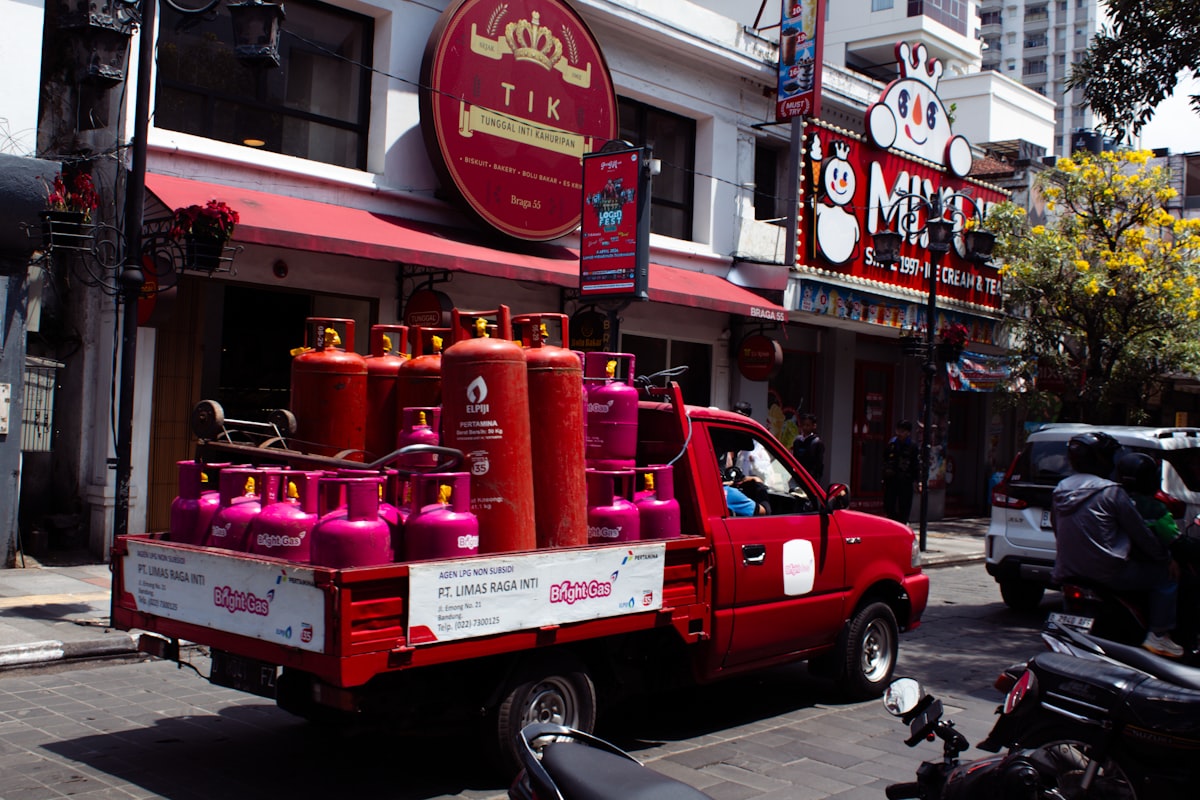
Thursday, six in the morning, in a sub-district outside Cirebon, West Java. Ibu Yayah Sulastri stands in front of her retail depot with her arms crossed. For three days straight, the subsidized 3kg cylinder allotment from her agent, CV Sumber Gas Makmur, hasn't been enough — today only 40 cylinders arrived while the line of housewives already snakes into the next alley. Two kilometers away, a depot run by Pak Darto is sitting on 60 empty cylinders that haven't been picked up since Monday, because the driver who usually covers that route is on leave and nobody reassigned it. Nobody on either side knows about the imbalance until residents start complaining in the neighborhood WhatsApp group, and a video gets posted to local social media captioned "gas shortage again, even though they say the quota's fine."
At the office of CV Sumber Gas Makmur, owner Hendra Gunawan only discovers the problem after flipping through six different notebooks and calling each of his twelve retail depots one by one. It turns out the issue isn't a supply shortfall from Pertamina — the agent's monthly quota still had more than 1,200 cylinders left — it's that distribution was uneven because drivers plan routes from habit, not from real-time stock data at each depot. That night, reconciling the day's cash-on-delivery collections, driver Bayu's cash comes up Rp340,000 short against the manual log, and nobody can tell whether it's a change-making error, a misplaced cylinder, or an actual leak somewhere along the route. Hendra finally admits it: the LPG distribution business he's run for nine years needs a system he can trust, not just notebooks and a family-sized WhatsApp group.
What LPG Distribution Software Actually Is
LPG distribution software is a digital system that unifies the entire cylinder supply chain — receiving allocation from Pertamina or a supplier, tracking full and empty cylinder stock across every depot and sub-agent, assigning deliveries to retail points, and reconciling cash from cash-on-delivery sales — into one dashboard accessible in real time to the agent owner, warehouse staff, and drivers in the field.
Compare that to the old way: orders from retail depots arrive by phone call or a WhatsApp message that gets buried among hundreds of others, stock gets logged by hand in a ledger that's only totaled up in the evening, and driver assignments are decided from the admin's memory of "which route usually needs gas." This works fine when an agent serves five or six depots. Once the network grows to a dozen or more depots with several sub-agents layered in, the gap between what's happening on the ground and what head office actually knows widens every single day — and that's exactly where subsidized quota leaks, stock jams up in the wrong places, and cash goes missing without anyone able to say why.
A good system doesn't replace drivers or depot operators — it just makes sure every cylinder, every rupiah, and every quota allocation gets recorded the moment it happens, instead of being reconstructed from memory the next morning.
The Real Cost of Running Without a Digital System
- Driver COD cash discrepancies: agents running 8-10 active drivers typically lose Rp1.5 million to Rp4 million a month in untraceable cash shortfalls — wrong change, cylinders that end up with the wrong customer, or unrecorded returns.
- Empty cylinders that never come back: without a clear handover record between depots and drivers, a mid-size agent can lose 30-60 empty cylinders a month that never make it back to the depot — at roughly Rp150,000-200,000 per steel cylinder, that's Rp4.5 million-12 million a month in vanished assets.
- Subsidized-quota compliance risk: without NIK/KTP verification logging for 3kg subsidized buyers, an agent risks being flagged as not "tepat sasaran" (properly targeted) during a Pertamina Patra Niaga or Hiswana Migas audit — which can mean a 15-20% cut to monthly quota or even a temporary license suspension.
- Stockouts at one point, surplus at another: internal data from mid-size distributors shows up to 25% of operating days show a stock imbalance somewhere within the same network — one depot runs dry while another sits on 50-plus surplus cylinders, which means lost sales on one side and a viral complaint on the other.
- Wasted fuel and delivery time from inefficient routing: routes planned from habit rather than live stock data add 15-30% unnecessary distance to daily runs — for an agent running 5 trucks over 26 working days a month, that's Rp3 million-6 million in wasted diesel every month.
Must-Have Features in an LPG Distribution System
- Order & quota management from Pertamina/supplier — logging monthly allocation by cylinder type (subsidized 3kg, 12kg, 50kg non-subsidized) with remaining quota auto-decrementing on every dispatch.
- Real-time full/empty cylinder stock visibility — across depots, sub-agents, and retail points, so admins can see which depot needs a refill without waiting for a phone call.
- Delivery dispatch & route assignment — assigning drivers and vehicles based on actual stock data and depot locations rather than habit, with estimated distance and stop sequencing built in.
- Driver COD reconciliation with digital receipts — every cash transaction logged on the spot through the driver's mobile app, with a digital handover record that reconciles directly against end-of-day cash.
- NIK/KTP-based subsidized-buyer verification logging — recording the identity of subsidized cylinder buyers to support proper-targeting compliance and leave an audit trail for regulators.
- Sub-agent/retail depot performance dashboard — showing sales volume, stock turnover speed, and reporting compliance for every partner side by side.
- Automatic low-stock alerts — early warnings to admins and drivers once stock at a given point nears a minimum threshold, before customers start complaining.
- Sales & compliance reporting for regulator audits — export-ready summaries matching Pertamina Patra Niaga or local agency formats, without rebuilding data from paper logs.
Ready-Made SaaS vs Custom-Built System
For agents managing under 15 retail depots with fairly standard workflows, off-the-shelf SaaS for LPG distribution is usually enough — low entry cost, live within days, and basic features like stock logging, ordering, and simple reports are there from day one.
But once an agent starts juggling multiple sub-agents on different pricing schemes, needs to integrate with Pertamina's internal systems or a holding company's ERP, or requires an NIK verification flow tied into a specific population database, custom-built software becomes the more sensible option. Custom systems also make sense when an agent wants unique modules like tiered driver commission calculations, integration with a depot's digital payment terminal, or a multi-branch dashboard for a business group running several agents across different regencies at once.
Cost and Timeline Ranges in Indonesia (Mid-2026)
For ready-made SaaS, subscription costs typically run Rp500,000-2.5 million a month depending on the number of depots and drivers managed, with a 1-2 week rollout including team training.
For a mid-scale custom system — covering order management, multi-depot stock, and COD reconciliation — expect an investment of Rp35 million-90 million with a 2-3.5 month build.
For a large-scale custom system covering NIK verification integration, multi-branch dashboards, driver and depot mobile apps, and automated compliance reporting in regulator-ready formats, investment ranges from Rp120 million-320 million with a 4-7 month timeline. On top of the initial build, budget roughly 15-20% of project value annually for ongoing maintenance, security updates, and regulatory adjustments.
Case Study: CV Sumber Gas Makmur, Cirebon (Composite Illustration)
Note: the following case study is a composite illustration drawn from common patterns seen in similar LPG distribution projects, not a report on a single named client.
Six months after the incident where Ibu Yayah's depot ran dry while Pak Darto's sat on surplus stock, Hendra Gunawan decided to build a custom distribution system for CV Sumber Gas Makmur, which oversees 12 retail depots and 3 sub-agents around Cirebon. The project took 3 months and focused on three things: real-time stock visibility across every point, automatic COD cash reconciliation through a driver mobile app, and NIK logging for every subsidized 3kg transaction at depot level.
Within a year of go-live, driver COD cash discrepancies dropped from an average of Rp2.8 million a month to under Rp300,000 a month, since every cash transaction was logged and reconciled against a digital receipt on the spot. Stockout rate across the depot network fell from 25% of operating days to around 6%, because admins could see restocking needs before a depot actually ran empty. Average delivery time per route dropped from 5.5 hours to 3.8 hours thanks to route planning based on actual stock data instead of driver habit. What mattered most to Hendra was that the time needed to prepare a subsidy compliance audit report for Pertamina Patra Niaga dropped from roughly 4 full working days of manual data-gathering to under 3 hours, since all NIK verification and subsidized sales volume data was already organized and export-ready.
Metrics to Track After Implementation
- Monthly COD cash discrepancy rate per driver — aim for under 1% of total cash collected.
- Percentage of stockout days per depot — compare month over month to gauge how well stock allocation is working.
- Empty cylinder return ratio — ideally above 95% of full cylinders dispatched.
- Average delivery cycle time per route — from truck departure back to depot return.
- NIK verification compliance rate on subsidized 3kg transactions — target close to 100% to protect proper-targeting status.
- Regulator audit report preparation time — measure the time saved against the previous manual process.
Where to Start
If you manage a network of LPG agents, sub-agents, or retail depots and you're seeing the same symptoms CV Sumber Gas Makmur did — lopsided stock, cash that never quite reconciles, or nagging worry about subsidy compliance — the first step is an honest map of your current process: how much still depends on phone calls, notebooks, and an admin's memory. From there, our team can help you work out whether ready-made SaaS is enough or a custom system fits your network's scale better. Check pricing for available packages, or go ahead and submit a project to talk through your distribution network's specific needs.
Have a similar project?
Free consultation, no commitment. Tell us what you need — we'll help you find the best solution.
Free Consultation

