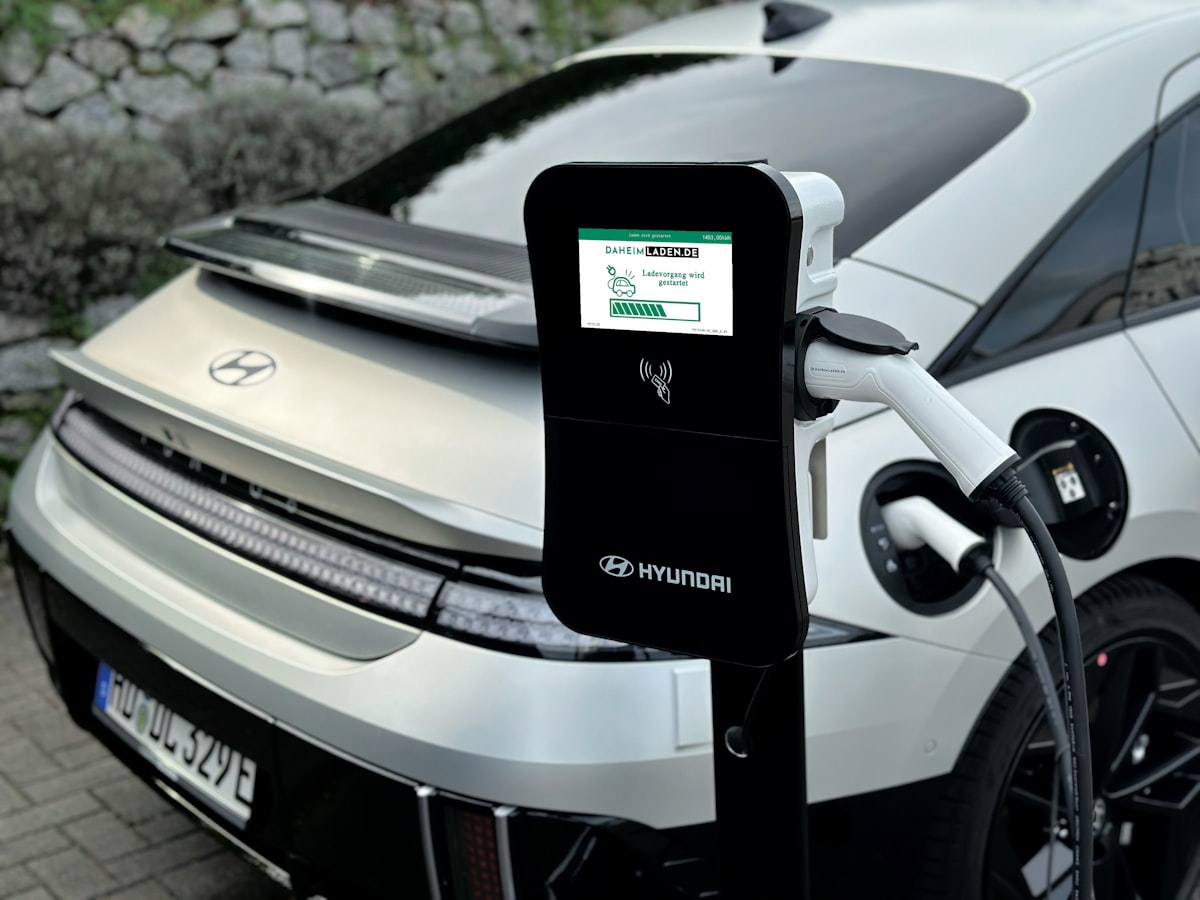
Pak Hartono runs a gas station on the Pantura corridor in Cirebon that his family has managed for three generations. Last year he spotted an opportunity: the government was pushing electric vehicles, the Pantura route saw a steady stream of EVs shuttling between Jakarta and Semarang, and a charger vendor was offering incentives to install two fast chargers on his unused lot. The investment was not small, nearly Rp 900 million for two 60 kW units plus additional electrical work. The first six months looked promising. Then complaints started showing up in EV community groups: charger number two kept showing an error status that nobody fixed for days, there was no way to check from home whether a unit was free or occupied, and payment still ran through manual bank transfers confirmed over WhatsApp with the station attendant. Frustrated drivers started choosing a competitor's station further away simply because it had an app. Pak Hartono realized the problem was never the hardware. It was the missing software layer that should have connected the chargers, the drivers, and the financial reporting into one system he could monitor at any moment.
What is a charging network management system
A charging network management system, often called a CPMS (charge point management system), is software that sits between the physical chargers and the people who use them. It pulls real-time data from every unit through a protocol like OCPP (Open Charge Point Protocol) and turns it into information three different audiences can act on: drivers searching for and reserving a charging slot through a mobile app, field operators monitoring hardware health and receiving maintenance alerts, and business owners or landlords who need revenue and revenue-share reports. Without this layer, every charger is just a passive metal box that reports to nobody when something breaks, and every transaction becomes a manual arrangement between the driver and whoever happens to be on site.
The real cost of running without a digital system
The losses from operating an EV charging network without management software rarely show up as a single line item, but they are real and they compound. A charger that goes offline undetected can sit dead for days because no automated alert reaches the maintenance team, and every offline day is revenue that never gets captured. Drivers who arrive to find a broken or occupied charger with no advance warning leave bad reviews and rarely return, and acquiring a new EV customer costs far more than retaining an existing one. Manual payment reconciliation through bank transfers and WhatsApp confirmations eats staff hours every day and is prone to mismatches once transaction volume grows. For sites operated in partnership with a landlord such as a mall or apartment building, the absence of a transparent revenue-share report frequently breeds distrust and can even end the lease agreement for the charger's footprint. The most expensive risk of all is technical: several chargers running at full power simultaneously without load management can exceed a building's electrical capacity, tripping breakers or damaging electrical panels at a repair cost that dwarfs the price of the software itself.
Key features every system needs
Real-time status monitoring for every charger and every connector, showing available, in use, or offline, along with per-unit uptime history so operators know exactly which stations fail most often.
A driver-facing mobile app that shows nearby SPKLU locations on a map, live availability, and the ability to reserve a slot in advance so drivers never arrive at a station that turns out to be full.
Integrated payment processing with per-kWh or per-session billing options, supporting QRIS and popular e-wallets like GoPay, OVO, and Dana, so transactions close automatically without staff intervention.
A diagnostics and maintenance-alert dashboard that pushes automatic notifications to the technical team the moment a charger reports an error, connector failure, or abnormal temperature, complete with a repair ticket history.
Dynamic time-of-day pricing that lets operators charge more during peak hours and less overnight to flatten usage across the day and encourage off-peak charging.
Revenue-sharing reports for site-host partners that automatically calculate the percentage owed to the gas station, mall, apartment building, or office hosting the charger, with auditable monthly statements.
Load management that automatically adjusts the power delivered to each charger when several units run at once, so total consumption never exceeds the building's available electrical capacity.
A multi-location admin panel for operators running more than one SPKLU site, so every location's data and reports can be tracked from a single centralized dashboard instead of checking each site separately.
Buying ready-made software vs building a custom system
Many early-stage SPKLU operators are tempted by off-the-shelf CPMS software from overseas vendors because it can be running within weeks. That makes sense for a small network with one or two sites and a fairly standard business model. But ready-made software usually charges a monthly per-charger license fee in US dollars, is hard to adapt to Indonesia's often unique revenue-share arrangements, and local payment integrations like QRIS frequently come with extra costs or are not supported at all. A custom system becomes the smarter choice once a network passes five sites, needs special integration with an internal accounting system or the ERP already running the gas station or mall, or involves multiple landlord partners each with a different revenue-share formula. The advantage of building custom is full ownership of the data, the freedom to add features as field needs evolve, and better long-term cost control since expenses are not tied to a per-charger license that keeps climbing as the network expands.
Typical cost and timeline in Indonesia
For operators with one to three sites needing the basics, status monitoring, a simple driver app, and QRIS integration, custom development typically runs Rp 60 million to Rp 150 million with a build time of 2 to 3 months. A mid-sized network with five to fifteen sites that needs slot reservation, a full maintenance dashboard, and automated revenue-share reporting for several landlord partners usually falls in the Rp 180 million to Rp 350 million range with a 4 to 6 month timeline. A national-scale network with dozens to hundreds of sites, complex load-management integration, and a multi-tenant panel for many different business partners can reach Rp 400 million to more than Rp 800 million depending on how much integration work is needed across charger hardware from multiple vendors. Monthly costs for hosting, server maintenance, and technical support typically range from Rp 3 million to Rp 15 million depending on the number of sites and the transaction volume being processed.
Case study: VoltaNusa Charging Network
VoltaNusa is a startup founded by two siblings in Surabaya, operating eight SPKLU sites across a mix of partner gas stations, malls, and office buildings in Surabaya and Sidoarjo. In their first year, they relied on imported CPMS software with a dollar-denominated license fee that climbed with the exchange rate, and the system could not handle different revenue-share formulas for each landlord, forcing the finance team to recalculate everything manually in separate spreadsheets every month. After switching to a custom system built specifically for their needs, VoltaNusa gained a dashboard that automatically calculates revenue share for eight landlords with different percentage splits, a driver app with a reservation feature that significantly cut complaints about arriving to a full charger, and a load-management system that prevents two chargers from drawing more power than the mall site's limited electrical capacity allows. Within six months of implementation, charger uptime rose from around 78 percent to above 96 percent because the maintenance team started receiving automatic alerts the moment a unit had a problem, and monthly transaction volume grew substantially as the network's reputation improved within the local EV driver community.
Metrics to track after implementation
Once the system is live, operators should track uptime for each charger to confirm service-availability targets are being met, average maintenance response time from the moment an alert fires to when the repair is completed, charging sessions per charger per day to spot usage patterns and decide which sites deserve added capacity, occupancy rates during peak versus off-peak hours to evaluate how well dynamic pricing is working, payment reconciliation accuracy compared to the old manual process, and landlord partner satisfaction, which can be measured through the timeliness of revenue-share reports and a drop in complaints about revenue transparency.
Implementation: common challenges and how to handle them
The first challenge that almost always surfaces is hardware diversity: chargers from different vendors implement the OCPP protocol slightly differently, so integration requires extra testing on every charger brand before public rollout. The second challenge is unreliable internet connectivity at remote sites, such as a gas station along an intercity highway, which can be solved with an offline-first design on the charger side so transactions are recorded locally and synced once the connection is restored. The third challenge is driver adoption among people used to paying cash or by manual transfer, best addressed with simple on-site education campaigns and a first-time app discount. The fourth challenge is renegotiating contracts with landlord partners who previously worked under an informal revenue-share arrangement, which calls for transparent communication from the start of the project so the new system's automated reports are accepted as a tool that benefits both sides rather than just an administrative change.
Where to start
If you operate or are planning to install SPKLU chargers, whether as a gas station owner, mall manager, or building owner looking to lease out space for a charger, the first step is mapping your current process: how drivers find out a charger is available, how payment gets processed, and how revenue gets split with landlord partners. From there, AFSS can help design a system that matches your scale, from basic monitoring for one or two sites to a full multi-tenant platform for a national network. Check estimated costs on our harga page, or go straight to ajukan proyek to discuss your SPKLU network's specific needs with our team.
Have a similar project?
Free consultation, no commitment. Tell us what you need — we'll help you find the best solution.
Free Consultation