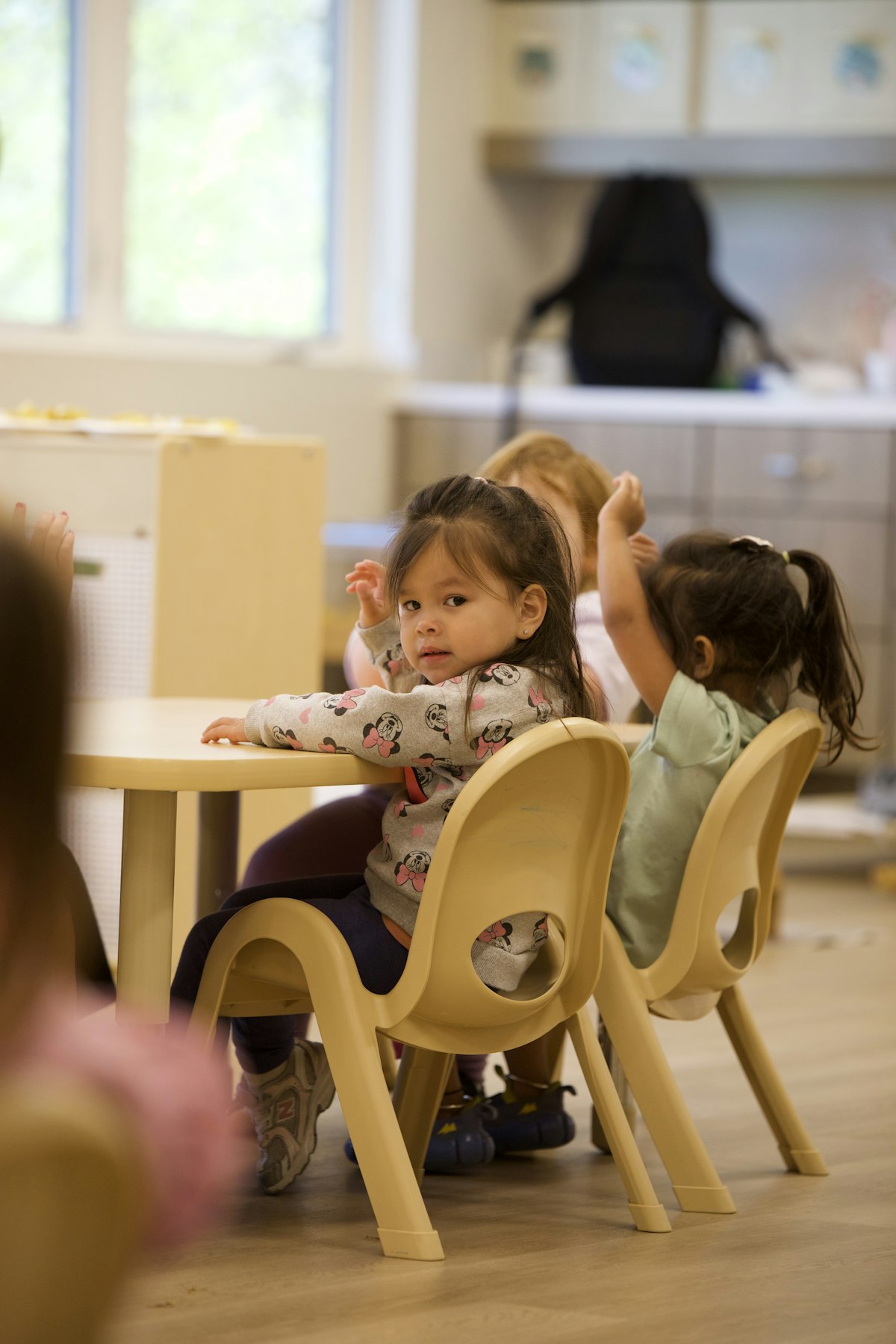
Bu Sari runs a daycare center called Rumah Ceria in Bintaro, South Tangerang, caring for 45 children aged six months to five years with eight caregivers and two assistant teachers. Every morning, parents dropping off their kids line up at the front desk to write down the child's name, arrival time, and condition in a paper logbook whose pages are already crumpled and partly stained from spilled formula milk. When a parent wants to know whether their child has eaten lunch, taken a nap, or had a minor mishap like a fall during playtime or a bite from another kid, the only way to find out is to call the receptionist, who then has to leave her desk, walk to the playroom, ask a caregiver, and walk back to call the parent again.
During the busy hours around 10 a.m. and 3 p.m., the front desk phone at Rumah Ceria rings almost nonstop, while staff who should be focused on watching the children instead spend their time answering the same questions over and over from a dozen different parents. One afternoon, the allergy note for one child — which should have flagged a peanut allergy — got left behind in another room during lunchtime, and a substitute caregiver unfamiliar with the child's history nearly served a snack containing peanuts. The incident was caught in time by a passing assistant teacher, but it made Bu Sari realize that relying on paper, staff memory, and manual phone calls is no longer a risk she can tolerate when children's safety is what's at stake.
What is daycare and childcare management software
Daycare or childcare center management software is a digital platform that consolidates every operational process of running a childcare business into one system: enrollment and child profiles, digital check-in/check-out, parent communication, tuition billing, caregiver-to-child ratio compliance, staff scheduling, and incident logging. Instead of being scattered across paper logbooks, WhatsApp groups, Excel spreadsheets, and staff memory, every piece of child data — allergies, emergency contacts, medical history, feeding preferences — lives in one place that authorized staff can access securely whenever it's needed.
A system like this typically has three layers: a mobile app for parents showing real-time activity updates, a web dashboard for admins and owners handling enrollment, finances, and operational compliance, and a tablet or phone app for caregivers in the classroom used to log activities throughout the day. The purpose is simple but high-impact: reduce staff administrative burden, increase transparency for parents, and ensure child-safety standards are consistently met every single day — not just when a licensing inspector or a prospective parent happens to be touring the facility.
The real cost of running without a digital system
Many daycare owners assume a notebook and a WhatsApp group are "good enough," but the hidden costs of running things manually are far bigger than they appear at first glance. First, wasted staff time. Observations at several daycares around Greater Jakarta show that a receptionist or admin can spend 2-3 hours a day just answering phone calls and messages from parents asking about their child's condition — time that could otherwise go toward preparing learning activities or more productive administrative work. Second, safety risk rises sharply when critical information like allergies or medical conditions sits on paper that can be lost, misfiled, or simply not read by a substitute caregiver filling in for someone on leave.
Third, revenue leakage from inconsistent billing. Many daycares still bill tuition through handwritten cash books, which leads to late invoicing, miscounted drop-in days, or forgotten after-hours pickup fees for parents who collect their child past 6 p.m. At a scale of 40-60 children, this kind of leakage can add up to millions of rupiah every month without ever being detected, simply because there's no automatic reconciliation comparing what should have been billed against what was actually collected.
Fourth, parent trust erodes slowly but steadily. Today's parents are used to instant notifications from ride-hailing apps, e-commerce platforms, and even banking apps, so not knowing their child's condition throughout the day feels far more unsettling than it did to previous generations of parents. Fifth, caregiver-to-child ratio compliance per room and per age group often goes unmonitored systematically, even though this is a basic safety requirement that can turn into serious legal and reputational trouble if it's overlooked when an incident involving media attention or a parent complaint to the relevant authority occurs. Finally, incident reports scattered across separate sheets of paper in various folders are prone to being lost or incomplete, making it hard to spot patterns — such as whether a particular play area causes frequent falls, or whether incidents tend to spike during hours when the caregiver ratio runs low.
Key features that must be included
When designing or choosing a daycare management system, the following features are core requirements, not cosmetic add-ons:
- Complete, secure child profiles store allergy information, layered emergency contacts, medical notes, the child's regular doctor, immunization history, and specific preferences such as a dairy restriction, all accessible instantly to any caregiver — including a substitute — without digging through a paper folder that might have been left in another room.
- Digital check-in/check-out with push notifications means parents automatically get notified the moment their child is scanned in or picked up, complete with a quick photo and the exact timestamp, so there's no more need to call the front desk just to confirm the child arrived safely.
- Caregiver-to-child ratio tracking per room and age group automatically alerts admins when a room is approaching or has exceeded its allowed ratio, so owners can reassign staff before it becomes a genuine safety violation.
- Automated tuition billing and payments support monthly, daily drop-in, and hourly rate schemes, complete with automatic reminders, payment history, and integration with the digital payment channels Indonesian parents already use, such as bank transfers or e-wallets.
- A parent communication app sends daily activity reports, photos, and meal and nap logs throughout the day so parents feel connected to their child even while they're at the office.
- Structured incident and injury logging ensures every incident, however small, is recorded with a timestamp, a chronology, the action taken, and the parent's digital signature at pickup, creating a clear audit trail that can be analyzed for patterns over time.
- Staff scheduling and shift management helps admins build caregiver schedules that meet the daily required ratio, manage leave requests, and avoid sudden understaffing that puts children's safety at risk.
Buy off-the-shelf software vs build a custom system
For a small daycare with a single location and standard needs, subscription-based off-the-shelf software (SaaS) is often the most sensible choice, since it can be used right away without waiting for development, requires low upfront cost, and the vendor handles server maintenance and feature updates. But this approach has real limitations in the Indonesian context: most popular daycare SaaS platforms are built for the US or European market, so local payment methods like QRIS, BCA or Mandiri bank transfers, or Indonesian-style drop-in pricing schemes often aren't natively supported and have to be worked around manually or require costly custom integration.
A custom-built system becomes the better choice once a daycare already operates multiple branches with different ratio requirements and pricing tiers, wants deep integration with an existing accounting or payroll system, or has a unique business model such as a combined daycare-and-preschool offering tiered curriculum reporting to both parents and an education foundation. With a custom system, daycare owners also fully own their child and operational data, rather than depending on the pricing decisions of a foreign vendor that could raise prices anytime or even discontinue service in the Indonesian market without much notice. The practical rule of thumb is simple: start with off-the-shelf software if capital is limited and operations are still single-location, then consider migrating to a custom system once business scale and requirement complexity outgrow what a generic template can handle.
Typical cost and timeline in Indonesia
For custom daycare management app development in Indonesia, the cost range is fairly wide depending on feature scope. A basic version covering child profiles, digital check-in/check-out, and simple tuition billing typically runs Rp 25 million to Rp 45 million with a development timeline of 6-10 weeks. A mid-tier version that adds a full parent communication app with photos and daily reports, automatic caregiver-ratio tracking, and a structured incident logging module generally falls in the range of Rp 55 million to Rp 95 million with a 3-4 month timeline. For an enterprise system serving multiple branches, integrated with payroll and accounting, and featuring a cross-branch analytics dashboard for daycare chain owners, costs can reach Rp 120 million to Rp 250 million with a 5-8 month timeline.
For comparison, daycares in cities like Surabaya, Bandung, and Medan that are just starting to digitize their operations often choose to begin with the basic package first, then add modules gradually as cash flow allows. Monthly costs for server maintenance, technical support, and minor updates typically range from Rp 1.5 million to Rp 5 million per month depending on the scale of users and number of branches served.
Case study: Kancil Pintar Daycare
Kancil Pintar is a two-branch daycare in Yogyakarta caring for 80 children total, run by a husband-and-wife team who previously relied on Excel and separate WhatsApp groups for each branch. Before going digital, they faced classic problems: reconciling financial reports from two branches at month-end was a headache, parents at the second branch frequently complained about late photo updates, and there was once an incident where the caregiver ratio in one room exceeded the standard without the admin noticing, simply because there was no real-time monitoring in place.
After partnering with a development team to build a custom system worth around Rp 78 million with a 14-week build time, Kancil Pintar now has a centralized dashboard showing the real-time condition of both branches. Every child check-in automatically triggers a parent notification, daily activity reports go out automatically at 10 a.m., 1 p.m., and 4 p.m. without caregivers needing to type them individually, and the system automatically warns branch admins whenever a room's caregiver ratio approaches its limit. Six months after implementation, child retention (the share of enrolled children who stay registered month over month) rose from 82% to 91%, and new enrollments increased by 35%, driven by word-of-mouth from satisfied parents who appreciated the transparency of the daily reports they received every working day.
Metrics to track after implementation
Once the system is live, there are several key metrics daycare owners should monitor regularly to make sure the digitization investment is actually paying off. First, the average time staff take to respond to parent questions — this should drop significantly since most questions are already answered automatically through the app. Second, the tuition late-payment rate, which should fall sharply thanks to automatic reminders and easier digital payment options. Third, the number and pattern of logged incidents — the goal isn't necessarily zero incidents, but complete, analyzable data that helps prevent the same pattern from repeating.
Fourth, a parent satisfaction score measured through short, periodic in-app surveys. Fifth, the daily caregiver-to-child ratio compliance rate, which should stay close to 100% against the standard the owner has set. Sixth, child retention rate and the number of referrals from existing parents to prospective new ones, since a transparent, trustworthy daycare tends to grow organically through word-of-mouth recommendations, which is far cheaper than paid advertising.
Implementation: common challenges and how to solve them
The most common challenge when rolling out a daycare management system is resistance from senior staff who've spent decades doing things manually and find a new app inconvenient at first. The way to address this is through phased training that starts with the simplest feature, like digital check-in, and only adds other modules once staff feel comfortable — rather than launching every feature at once in a single day, which tends to overwhelm staff and trigger outright rejection of the whole system.
The second challenge is unstable internet connectivity at some locations, especially daycares in suburban housing complexes. The solution is choosing an app architecture that supports a temporary offline mode for basic logging like check-ins, which then syncs automatically once the connection stabilizes. The third challenge is migrating child data from old paper records into the new system, which requires extra time and care so that no allergy information or emergency contact gets left out or mistyped during the transfer. It's best to run the migration in phases by age group or room, and have parents re-validate their child's data through the app the first time they log in, so data accuracy is preserved from day one of using the new system.
Where should you start?
If Rumah Ceria, Kancil Pintar, or your own daycare is still relying on a paper sign-in sheet and a phone that never stops ringing, the realistic first step is mapping out the daily operational process that eats up the most staff time — usually check-in/check-out and parent communication — and digitizing that first before adding other modules. AFSS helps daycares and childcare centers across Indonesian cities design systems that fit their scale and budget, from a basic version to a full multi-branch system. Check our cost ranges on the pricing page, or go straight ahead and submit your project to discuss your daycare's specific needs with our team.
Have a similar project?
Free consultation, no commitment. Tell us what you need — we'll help you find the best solution.
Free Consultation