Freight Forwarding & Customs Brokerage Software: A Digital System for Indonesian PPJK Companies
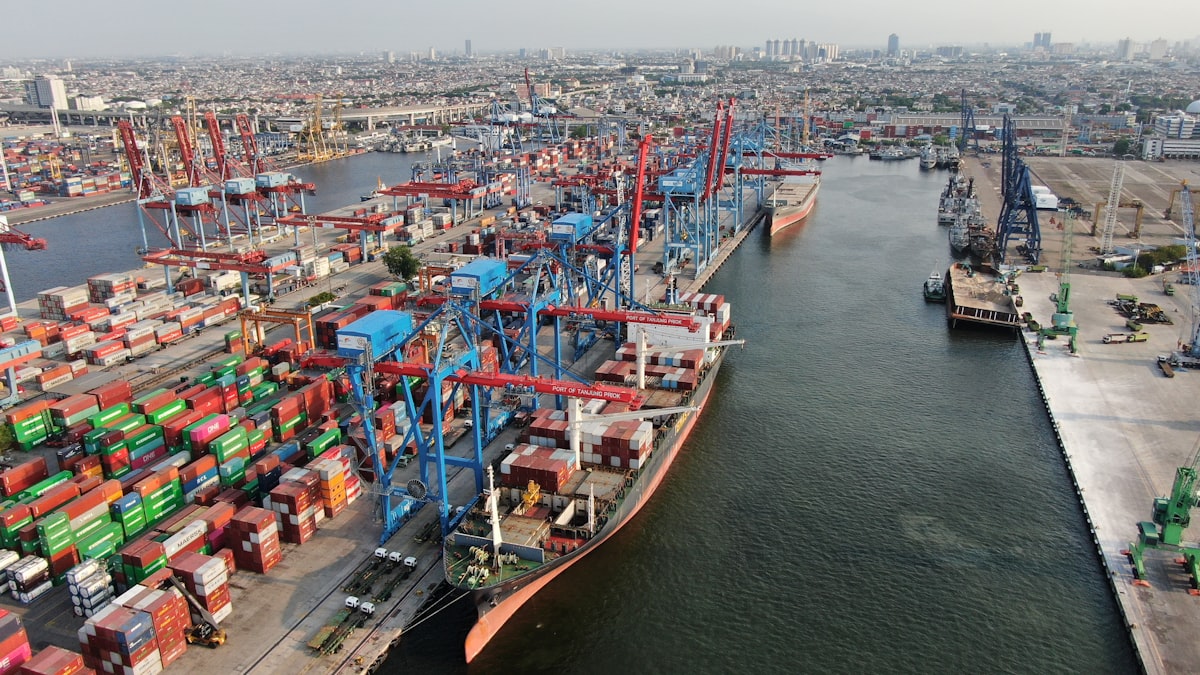
Pak Hendra runs CV Trisakti Cargo, a freight forwarding and customs brokerage (PPJK) company handling import-export clearance for around 40 regular clients in Surabaya. Most of the cargo moves through Tanjung Perak Port, while a few larger clients ship through Tanjung Priok because their head offices sit in Jakarta. Every day, Pak Hendra's operations team juggles a dozen shipments at once: FCL containers from Shenzhen, air cargo from Singapore, trailer trucks hauling goods from warehouses to the port, and customs paperwork that has to clear with Bea Cukai (Indonesian Customs) before anything can leave the bonded area.
The problem is that all of this coordination runs through more than a dozen separate WhatsApp groups — one per client, one for the truck drivers, one with shipping line partners, and another with warehouse vendors. Bills of Lading get sent as WhatsApp photos that are sometimes too blurry to read the container number, PIB (import declaration) documents get printed and filed in physical folders that go missing on whoever's desk they land on, and shipment status is only known if a field staffer happens to reply to a chat. Last month, one major client's container sat an extra three days at Tanjung Perak because the packing list used for the customs filing turned out to be an outdated version — the warehouse team had actually sent the updated file over WhatsApp, but it got buried among hundreds of other messages and nobody noticed until a customs officer flagged the mismatch. The client complained loudly, demurrage and storage fees piled up into the millions of rupiah, and nobody could pin down exactly whose fault it was, so Pak Hendra ended up absorbing part of the extra cost just to keep the relationship intact.
By the end of the month, CV Trisakti Cargo's finance team scrambles to recalculate freight costs for every client one by one from handwritten notes and scattered chat screenshots, because there is no system that automatically rolls up freight charges, trucking fees, warehouse fees, estimated import duty, and brokerage service fees into one clean invoice. Two clients have questioned bills that didn't match their initial quotes, and without a clear paper trail, resolving each dispute has taken days. Situations like this are exactly why more and more freight forwarding and PPJK business owners across Indonesia are starting to seriously consider a dedicated digital system for their operations.
What is a freight forwarding and customs management system
A freight forwarding and customs management system is a digital platform that unifies a forwarding and PPJK company's entire workflow — from receiving shipment orders, tracking cargo across sea, air, and land modes, managing documents such as Bills of Lading, PIB, PEB (export declarations), packing lists, and invoices, all the way through cost calculation and client billing — inside one system that internal staff, partners, and clients can access in real time. Unlike a generic chat app or spreadsheet, this kind of system is built around how Indonesian logistics and customs work actually happen on the ground: shipment status follows real field stages (booking, loading, in transit by sea or air, arrival, customs clearance, released from the warehouse, delivered to the client), and every document is linked directly to its shipment and client, so nothing ever again ends up "lost in the wrong folder" or buried in the wrong WhatsApp thread.
At its core, this kind of system usually has four major modules: multi-modal shipment tracking, document and customs workflow management, a self-service client portal for status visibility and document downloads, and cost calculation with invoicing. Larger companies typically add a vendor and partner management module (trucking subcontractors, warehouses, shipping lines) plus a reporting module for shipment volume and profitability, useful for management review and sales planning.
The real cost of running without a digital system
Many forwarding business owners assume WhatsApp and Excel are "good enough" because they're free and everyone already knows how to use them. But the real cost stays hidden until something goes wrong. First, customs delays caused by outdated or misdirected documents — exactly like Pak Hendra's case — translate directly into demurrage and storage fees that can run into millions of rupiah per container per day, depending on the port and cargo type. Second, billing disputes with clients arise because freight cost calculations are done manually and inconsistently from one staff member to another — fuel surcharges, port handling fees, and estimated import duty often get missed or double-counted, eroding both client trust and company margin. Third, enormous operational time is lost: admin staff can spend two to three hours a day just hunting for documents, confirming shipment status to clients over the phone, and re-compiling notes scattered across WhatsApp groups. Fourth, compliance risk with Customs grows — poorly archived documents make audits and spot-checks far harder to handle, and small errors in PIB/PEB filings can trigger administrative fines that dwarf the cost of a digital system. Fifth, it becomes nearly impossible to know which clients or trade lanes are actually profitable, since cost and revenue data is scattered and never consistently rolled up by client or by route.
Key features a good system must have
A solid freight forwarding and customs system doesn't need to be overly complex, but it does need to cover a handful of core features that genuinely solve day-to-day operational pain:
- Real-time multi-modal shipment tracking — every shipment, whether by sea, air, or land, carries a status that's always current from booking through client delivery, so staff no longer need to call the driver or ask around in a WhatsApp group to know where a shipment actually is.
- Centralized digital document management — Bills of Lading, PIB/PEB, packing lists, invoices, and delivery notes all live in one place, linked directly to their shipment and client, complete with version history so an outdated file is never mistaken for the current one again.
- Customs workflow and Bea Cukai status tracking — the stages of clearing documents with Customs (submission, inspection, green/yellow/red lane, duty settlement, through to the release permit) are logged as clear statuses, so the team can see exactly which container is at risk of getting held up longer.
- Self-service client portal — clients log in themselves to see current shipment status and download the documents they need whenever they need them, without waiting on a WhatsApp reply from an operations staffer.
- Automated cost calculation and invoicing — the system calculates base freight rates, surcharges (fuel, terminal handling, documentation), and estimated import duty consistently, then compiles it all into a clean, defensible invoice whenever a client asks questions.
- Vendor and partner management — data on trucking subcontractors, warehouse partners, and shipping lines is stored along with performance history, contract rates, and cooperation documents, making it easy to evaluate which partners are actually the most reliable.
- Volume and profitability reporting — management can see shipment volume and profit margin by client and by trade lane, so decisions like renegotiating rates or expanding into a new route can be based on data rather than gut feel.
Buying off-the-shelf software vs building a custom system
There are two main paths: buying an off-the-shelf TMS (Transportation Management System) or foreign-built freight forwarding software, or building a custom system designed specifically around the company's own workflow. Off-the-shelf software is usually quick to deploy and already comes packed with standard features, but it's often designed around its country of origin's customs regulations rather than Indonesian Customs' actual process — terms like PIB, PEB, the green/yellow/red inspection lanes, or integration with the CEISA customs system are frequently missing and end up handled manually outside the software anyway. Licensing costs are typically charged per user in US dollars, which balloons as the team grows, and deep customization to a company's specific workflow is usually very limited or simply not possible.
A custom system, on the other hand, is built around how the company actually operates: automatic WhatsApp notifications to clients when status changes, PIB/PEB formats tailored to local needs, a client portal carrying the company's own branding, and room to integrate with Customs systems down the line. The tradeoff is a longer initial build time and upfront investment that needs planning. But for forwarding and PPJK companies with reasonably mature processes and distinctive characteristics — a specific combination of sea-land routes, or a mix of freight and warehousing services, for example — a custom system usually delivers far greater long-term value, since the data is entirely the company's own and the system can keep evolving alongside changing business needs.
Typical cost and timeline in Indonesia
For a small-to-medium forwarding company in Indonesia, a system with basic modules (shipment tracking, digital document management, and a simple client portal) typically falls in the range of Rp 25 million to Rp 40 million, with a build time of 4 to 6 weeks. For a mid-sized scope that adds automated cost calculation, invoicing, and vendor/partner management, costs usually run Rp 45 million to Rp 80 million with a 2 to 3 month timeline. For companies managing multiple branches, needing deep trade-lane profitability reporting, and wanting to prepare for future integration with customs systems like CEISA, the investment typically lands between Rp 90 million and Rp 150 million or more, with a 4 to 6 month build. On top of initial development, plan for monthly hosting and maintenance costs, which for a system of this size usually run Rp 1.5 million to Rp 5 million a month depending on user count and data volume.
Case study: PT Nusantara Bahari Logistindo
PT Nusantara Bahari Logistindo is a freight forwarding and PPJK company operating out of Tanjung Priok with a small branch in Belawan, serving around 60 regular clients across manufacturing and retail. Before going digital, their team spent an average of 5 working days completing one document cycle from order intake through final invoice, and customs clearance delays caused by incomplete or outdated documents happened at least twice a month.
After building a custom system with AFSS covering shipment tracking, centralized document management, a client portal, and automated cost calculation, PT Nusantara Bahari Logistindo cut its document cycle from 5 days down to an average of 2 working days. Customs delays caused by misdirected documents dropped sharply, since every document revision now automatically replaces the outdated version in the system and notifies the relevant team, instead of getting buried in a WhatsApp thread. Billing disputes with clients, which used to happen roughly 3 times a month, fell to nearly zero, because every invoice can now be traced back to its individual cost components — base freight, surcharges, trucking fees, and estimated import duty — and shown directly to the client through the portal. Within the first six months, management also discovered that one trade lane long assumed to be profitable actually carried razor-thin margins once trucking and storage costs were properly accounted for, allowing them to renegotiate rates with the client on that route.
Metrics to track after implementation
Once the system is running, these metrics are worth monitoring regularly to confirm the investment is actually paying off: average customs clearance time per shipment from submission to release permit, document error rate (the percentage of filings requiring revision), on-time delivery percentage per trade lane, invoice-to-cash cycle time or how long clients typically take to pay after an invoice is issued, client portal adoption rate — the share of clients who actually log in themselves versus still calling by phone, the number and value of demurrage/storage incidents per month, and profitability margin by client and by trade lane to see which routes or clients deserve the most attention.
Implementation: common challenges and how to handle them
The most common challenge is resistance from field staff and truck drivers who've coordinated over WhatsApp for years and are reluctant to switch to a new app. The fix isn't to eliminate WhatsApp entirely, but to integrate automatic notifications from the system into WhatsApp, so staff still get updates in a familiar channel while the core data stays properly recorded in the system. The second challenge is migrating years of old spreadsheets and physical document folders — an effective approach is phased migration, starting with active clients and in-progress shipments before tackling historical data needed for reporting. The third challenge is uneven technology literacy among external partners like small trucking vendors and warehouses who may not be used to digital systems, so partner-facing interfaces should be kept extremely simple, or even reduced to a WhatsApp bot and short forms. The final challenge is how frequently Customs regulations change, which means the system needs to be designed flexibly from the start and built with a development partner who understands Indonesia's customs workflow, not just a generic technical team.
Where to start?
If CV Trisakti Cargo's situation sounds familiar, the most realistic first step is to start with whichever module hurts the most — usually shipment tracking and document management — then add invoicing and reporting once the team is comfortable. AFSS helps freight forwarding and PPJK companies across Indonesia design systems around how work actually happens on the ground, not a generic template imported from abroad. Check estimated investment on the harga page, or go straight to ajukan proyek to discuss the freight forwarding and customs system your business needs.
Have a similar project?
Free consultation, no commitment. Tell us what you need — we'll help you find the best solution.
Free Consultation