Used Car Dealership and Showroom Management App: Inventory, Documents, and Commission Solutions
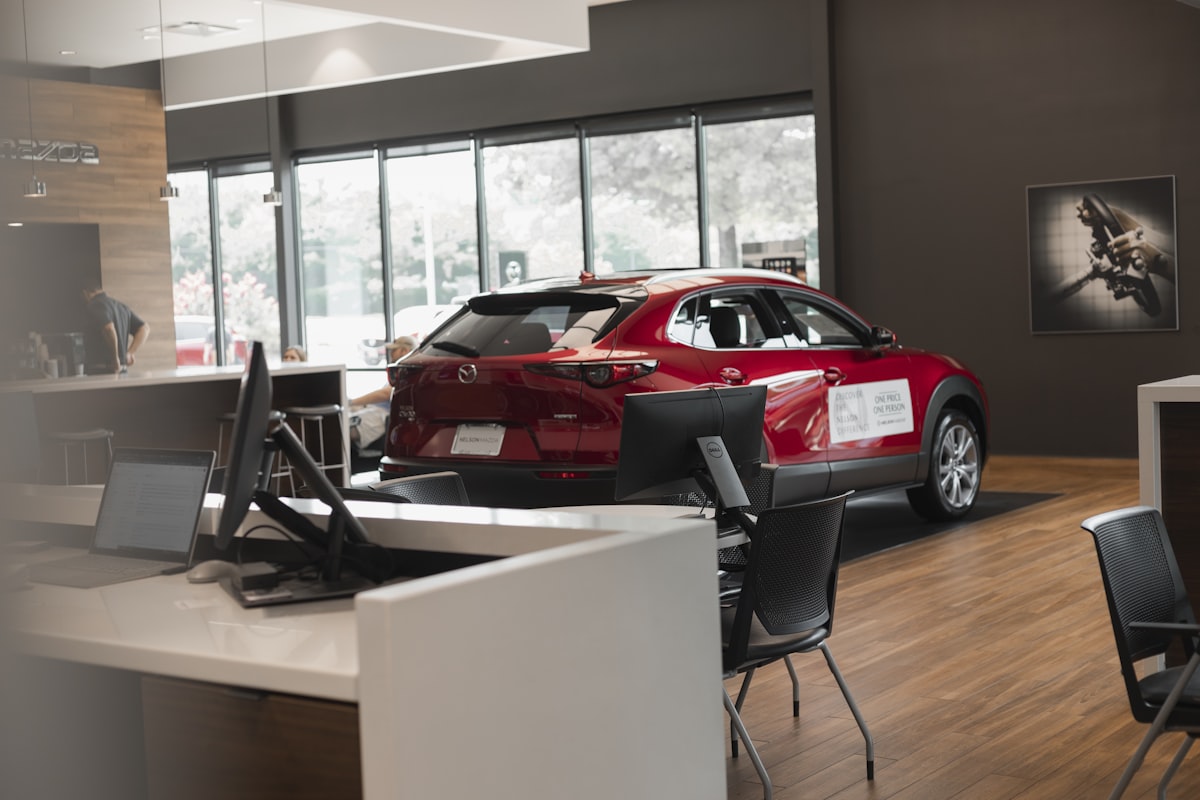
Pak Iwan Setiabudi has run a used car showroom called Sinar Jaya Motor in Semarang since 2011. With about 1,200 square meters of lot space and an average stock of 45 units per month, the showroom is a well-known mid-size player in the city. For years, Pak Iwan managed everything manually: a large ledger book for recording vehicle purchases and sales, physical folders of photocopied STNK (vehicle registration) and BPKB (ownership certificate) sorted by intake date, and an internal WhatsApp group to coordinate his six salespeople on which units were sold and which were still available. Whenever a customer brought in a car on consignment to sell through the showroom, the profit-sharing agreement was simply handwritten on a slip of paper kept in the admin's desk drawer.
A major problem surfaced in early 2024. A 2019 Toyota Avanza came in as a consignment vehicle from a customer named Bu Meilani. What the showroom admin did not know was that the car was still under an active credit agreement with a leasing company, and its original BPKB was still held as fiduciary collateral because three installments totaling Rp 78 million remained unpaid. Because there was no system flagging each unit's document status, the car stayed on display and was eventually sold for Rp 165 million to a buyer named Pak Rudi. When Pak Rudi tried to transfer ownership at the local vehicle registration office, the process stalled completely because the showroom could not hand over the original BPKB. Pak Rudi threatened legal action, and Sinar Jaya Motor was forced to pay off the remaining Rp 78 million balance to the leasing company out of its own pocket to release the BPKB, plus roughly Rp 12 million in compensation to Pak Rudi to keep the case from escalating into a formal legal notice. The net loss from this single incident exceeded Rp 90 million, not counting the reputational damage among buyers and fellow dealers in the city.
This situation is common among mid-size used car showrooms in Indonesia that still rely on manual records and staff memory to track document status, ownership status, and consignment agreements for dozens of units moving in and out every month. As the number of units and salespeople grows, a manual system like this is almost guaranteed to eventually miss a critical detail.
What is a used car showroom management app
A used car showroom management app is a software system that integrates a used vehicle dealer's entire workflow into one centralized platform: recording incoming units, verifying and tracking legal documents such as STNK and BPKB, distinguishing ownership status between vehicles owned outright by the showroom and consignment or entrusted vehicles from customers, submitting financing applications to leasing partners, calculating commission for each salesperson, logging repair and reconditioning costs per unit, and scheduling test drives for prospective buyers.
Unlike the combination of Excel, ledger books, and WhatsApp groups commonly used today, this kind of application treats every vehicle unit as a single data entity with a complete history that can be traced at any time by anyone with authorized access. If Sinar Jaya Motor had already been using a system like this in 2024, Bu Meilani's still-outstanding BPKB status at the leasing company would have automatically appeared as a red flag the moment the unit was marked ready for sale, well before the transaction with Pak Rudi ever took place.
The real cost of running a used car showroom without a centralized system
- Legal risk from incomplete or unclear documents. A car whose BPKB is still held by a leasing company, whose STNK tax has lapsed for years, or whose ownership was never formally transferred from a previous owner can slip through and get sold if no system forces a document status check before a unit goes on display.
- Consignment payment disputes. Owners of consigned vehicles are not paid on time, or the sale proceeds are disputed because manual records were lost, scattered, or out of sync between admin and sales staff, damaging trust with consignment suppliers who are actually an important source of stock.
- Sales commission calculated manually is prone to internal disputes. Without systematically recorded commission rules per unit, per margin tier, and per salesperson, end-of-month calculations frequently go wrong, breeding suspicion among salespeople and lowering the sales team's motivation.
- Reconditioning costs go untracked, making profit margins inaccurate. Repainting, engine servicing, tire replacement, or interior detailing costs are often paid in cash and not neatly recorded per unit, so the showroom does not actually know whether it made or lost money on each car sold.
- Poorly scheduled test drives cause double bookings and disappointed buyers. Two prospective buyers arrive at the same time for the same unit, or a unit promised for a test drive turns out to already be out with another salesperson, damaging the buyer experience and potentially costing the sale.
Key features every used car showroom app must have
- Vehicle inventory with STNK and BPKB document tracking. Every unit carries a clear document status — complete, held by a leasing company, or pending ownership transfer — so units with problematic documents cannot be marked ready for sale until their status is clean.
- Distinction between consignment status and showroom-owned stock. The system records the original owner, the profit-sharing or consignment fee agreement, and the payment deadline to the owner once the unit sells, eliminating record discrepancies that lead to disputes.
- Integrated financing and leasing partner applications. The credit application status of prospective buyers across various leasing partners can be tracked in a single view, from submission through survey to disbursement, so the showroom knows exactly which transactions are still waiting on leasing approval.
- Automatic per-salesperson commission calculation. Commission rules based on unit margin, vehicle type, or monthly targets are calculated automatically the moment a transaction closes, eliminating manual calculation errors at month end.
- Per-unit reconditioning cost tracking. Every servicing, painting, tire, or detailing expense is logged directly to the relevant unit's record, so the accurate net margin per car can be calculated before the unit is released to the buyer.
- Centralized test drive scheduling. A per-unit and per-salesperson test drive calendar prevents double bookings while also logging the history of prospective buyers who have already tried a particular unit, useful for sales follow-up.
- Management dashboard and reporting. The showroom owner can see total stock, average days on lot, projected commission payouts, and each salesperson's performance without manually recompiling data from ledger books.
Buy an off-the-shelf app or build a custom system
For small showrooms selling fewer than 15 units per month, operating a single branch, with a relatively simple workflow, a generic subscription-based app is often sufficient. Its standard features usually cover basic stock recording and invoicing, though it rarely offers detailed legal document tracking or commission calculations flexible enough to match each showroom's specific policies.
For mid-to-large showrooms with many salespeople, multiple branches, partnerships with several leasing companies each with different application workflows, and complex consignment and commission policies, a custom system is usually a far better investment. A custom system can be tailored exactly to the showroom's commission structure, integrated with an in-house reconditioning workshop's process, and developed incrementally as the business grows, rather than forcing the showroom's workflow to conform to the limitations of a generic app not designed specifically for the used vehicle industry.
Cost range and development timeline in Indonesia
Generic subscription apps typically range from Rp 500 thousand to Rp 2 million per month depending on the number of users and features. A mid-scale custom system for a showroom with one to two branches typically requires an investment of Rp 60 million to Rp 150 million with a development timeline of three to five months. A large-scale custom system for a dealer network with multiple branches, API integrations with several leasing partners, and a full reconditioning module can reach Rp 200 million to Rp 450 million with a development timeline of five to eight months. Beyond the initial development cost, annual maintenance for system updates, bug fixes, and technical support generally ranges from 15 to 20 percent of the initial investment value per year.
Case study: Showroom Bintang Auto
As a composite illustration representing a common pattern among mid-size used car showrooms in Indonesia, Showroom Bintang Auto previously needed an average of 52 days to sell a unit from the time it entered stock, experienced three to four incomplete-document incidents every month, and often paid sales commission up to two weeks late due to manual reconciliation. After implementing an integrated showroom management application, the average days-on-lot dropped to 34 days as unit readiness status became more transparent to the sales team, problematic document incidents fell to zero over six consecutive months because every unit was verified before being displayed, and sales commission was paid automatically within a maximum of two days after a transaction closed, directly boosting the sales team's motivation and retention.
Metrics to monitor after implementation
- Average days on lot per unit, targeted to keep decreasing as stock turnover accelerates and unit visibility for the sales team improves.
- Number of problematic document incidents per month, ideally trending toward zero with automatic STNK and BPKB status verification before a unit is displayed.
- Average time to pay commission after a transaction, targeted under two business days to maintain sales team motivation.
- Per-unit margin accuracy after reconditioning costs, monitored so pricing decisions are always based on real costs rather than rough estimates.
- Test drive to sale conversion rate, used to measure sales team effectiveness and the quality of conflict-free scheduling.
Implementation challenges and how to overcome them
The first challenge that almost always arises is resistance from long-time staff who are used to ledger books and WhatsApp groups after years of working that way. The solution is gradual training that starts with the simplest features, such as recording incoming units, before expanding to commission and reporting features once the team feels comfortable, while directly demonstrating concrete benefits such as the speed of checking a unit's status compared to flipping through a ledger book.
The second challenge is migrating historical unit and old consignment data currently scattered across various books and physical folders. The most practical solution is to prioritize data entry for units still active on the lot and consignments not yet settled, while the history of units sold long ago can be entered later or archived gradually without disrupting the showroom's daily operations.
The third challenge is integrating with many leasing partners, each with different systems and application formats. A realistic approach is to start by recording application status in a structured way within the application itself, even if still manually entered by admin staff, before gradually building direct API integrations with the leasing partners handling the highest transaction volumes according to business priority.
Where to start
An incident like the one Sinar Jaya Motor experienced can happen at any showroom still relying on manual records to track documents for dozens of units every month, and the cost rarely stops at a single incident once buyer and consignment supplier trust starts to erode. The most concrete first step is to count for yourself how many times in the last six months your showroom experienced a document problem, a consignment payment dispute, or a sales commission discrepancy — that number alone is usually enough to reveal a scale of loss that had gone unnoticed.
AFSS builds used car showroom management systems tailored to each dealer's specific workflow and commission policy, not generic templates that force your business to conform to the software's limitations. Check our pricing or go ahead and submit a project to discuss your showroom's needs.
Have a similar project?
Free consultation, no commitment. Tell us what you need — we'll help you find the best solution.
Free Consultation
Refillable Water Depot Management Software: Solving Deposit Gallons, Subscriptions, and Delivery Routes
Read more
Senior Care Facility Management App: Medication Schedules, Care Plans, and Family Communication
Read more