ERP for Distribution and Supply Chain Businesses: The Features You Actually Need
Distribution and supply chain businesses are the backbone of Indonesia's economy — from FMCG distributors supplying hundreds of small shops, to logistics companies connecting manufacturers with retailers across the archipelago. Yet many still rely on a mix of spreadsheets, WhatsApp groups, and physical documents to manage complex operations.
The result? Stock piles up in one location while another runs out. Orders get missed, buried in a chat group. Financial reconciliation takes days at month-end. An ERP system built specifically for distribution and supply chain can solve these problems systematically.
Why Generic ERP Isn't Enough for Distribution Businesses
Many distribution companies try using generic ERP (or even ordinary accounting software) and get frustrated when it doesn't fit. Distribution businesses have specific needs that generic systems don't meet:
- Multi-warehouse, multi-location: Stock is spread across various points, requiring centralized visibility
- Batch and expiry date management: Crucial for food, pharmaceutical, and FMCG distribution
- Integration with delivery fleets: From dispatch order to digital proof of delivery
- Complex principal/supplier management: Targets, promotions, and rebates from multiple principals
- Sales force automation: Field sales teams that need real-time access to stock and order history
Systems that don't meet these needs get forced into manual workarounds — which only create more problems.
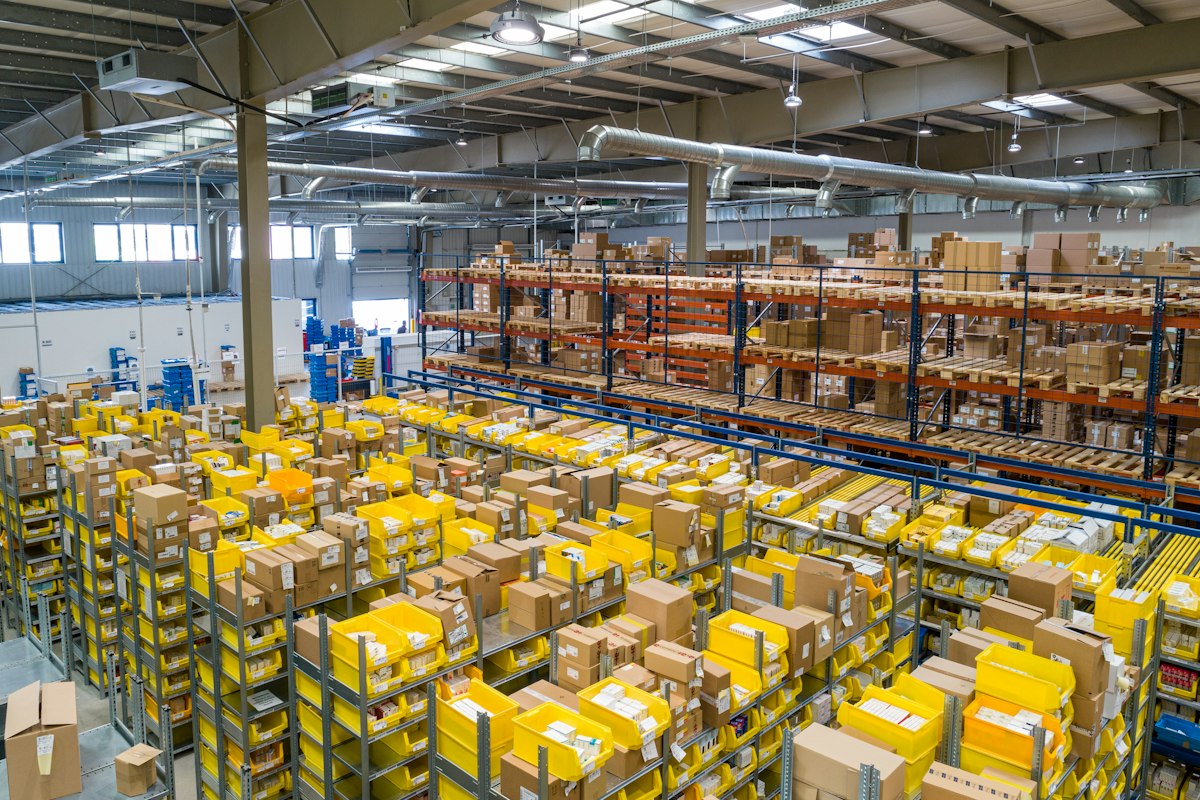
Must-Have ERP Features for Distribution Businesses
1. Multi-Warehouse Inventory Management
This is the foundation of everything. You need to see in real time:
- Actual stock vs. committed stock (ordered but not yet shipped) vs. available stock
- Specific stock location, down to shelf/bin level if needed
- Stock aging — which products are about to expire and need to be prioritized
- Complete stock movement history for audit purposes
What's often overlooked: The system must accurately handle inter-warehouse transfers, in-transit stock, and returned stock. A single wrong entry can create phantom inventory that ruins your entire planning process.
2. Fast, Accurate Order Management
Good order management includes:
- Fast order entry: Salespeople can input orders in the field from a smartphone, with real-time stock validation
- Approval workflow: Orders above a certain value need approval; overdue customer credit is automatically put on hold
- Backorder management: What happens when stock isn't enough? Partial fulfillment or automatic backorder
- Order status tracking: The customer service team can answer "where's my order?" in seconds
3. Sales Force Automation (SFA)
Field sales teams are the spearhead of a distribution business. They need the right tools:
- Access to the product catalog, pricing, and stock from a smartphone
- Purchase history and receivables for every outlet visited
- Efficient route planning and call plans
- Directly inputting orders in the field without needing to return to the office
- GPS tracking to verify visits (optional but powerful)
SFA integrated with ERP eliminates the lag between an incoming order and internal processing — from days down to minutes.
4. Delivery and Logistics Management
From a confirmed order to a fully documented delivery:
- Dispatch planning: Grouping orders by area, fleet capacity, and priority
- Digital delivery orders (DO): No need to print thousands of pages — drivers carry them on a tablet/smartphone
- Digital Proof of Delivery (POD): Electronic signatures and delivery photos
- Return management: A clearly documented return process, including reasons and item condition
- Integration with third-party fleets: If you use external logistics, ideally it's integrated for tracking
5. Customer and Credit Management
For distribution businesses operating on credit:
- Credit limit management: Every customer has a credit limit; the system automatically holds orders once it's exceeded
- Aging receivables: Visualize receivables per customer based on age (current, 30, 60, 90 days)
- Collection tracking: The collection team knows who needs to be billed today
- Blacklist and whitelist management: Customers with poor credit history can't order until they've settled their balance
6. Principal and Promotion Management
Distributors handling multiple principals face additional complexity:
- Sales targets per principal per period
- Active principal promotions (buy X get Y, quantity discounts, bundling)
- Accurate promotion claim recording for billing back to principals
- Performance analytics per principal: which ones are profitable, which aren't
7. Purchase Planning and Replenishment
Nothing is worse than running out of stock during high demand. A good system should:
- Calculate a reorder point based on supplier lead time and average consumption
- Automatically generate a purchase order when stock hits the reorder point
- Demand forecasting based on historical sales, factoring in seasonality
- Manage suppliers: lead time, minimum order quantity, and payment terms

8. Reporting and Business Intelligence
Data without insight is useless. A good distribution ERP should provide:
Daily operational reports:
- Sales recap per salesperson, per area, per product
- Delivery status: how many are late, how many succeeded
- Stock below minimum (needs reordering)
Weekly/monthly management reports:
- P&L per principal or product line
- Sales trend analytics — which products are rising, which are falling
- Fleet efficiency: cost per delivery, on-time delivery rate
- Salesperson productivity: coverage, hit rate, average order value
Real-time dashboard for management:
- Key KPIs in a single view, accessible anytime, anywhere
ERP Implementation Process for Distribution Companies
Successful ERP implementation isn't just about technology — it's a business transformation project. Here's the framework we use:
Phase 1: Discovery and Mapping (2-4 weeks)
- Detailed mapping of existing business processes
- Identifying pain points and bottlenecks
- Defining clear business requirements
- Cleaning up master data (products, customers, suppliers)
Dirty master data is the leading cause of ERP implementation failure. Don't skip this phase.
Phase 2: Configuration and Customization (4-8 weeks)
- System setup according to organizational structure and business processes
- Configuring approval workflows
- Customizing reports based on management needs
- Integration with existing systems (accounting, salesperson mobile apps, etc.)
Phase 3: Testing and Training (3-4 weeks)
- User acceptance testing with real data
- User training per department
- Simulating edge-case scenarios (complex returns, negative stock from entry errors, etc.)
Phase 4: Go-Live and Hypercare (2-4 weeks)
- Historical data migration
- Phased go-live (one warehouse first, then roll out)
- Intensive support in the early weeks to ensure operations aren't disrupted
Expected ROI
Based on implementations we've done for distribution business clients:
- 30-50% reduction in obsolete stock: Better demand planning
- 60-70% reduction in order processing time: From hours down to minutes
- 15-25% improvement in delivery accuracy: Better documentation
- Rp 10-30M/month in administrative cost savings: Elimination of manual work
- 10-20 days faster cash collection: Real-time receivables visibility
How Much Investment Is Required?
For a medium-sized distribution business (5-20 salespeople, 2-5 warehouses, annual revenue of Rp 5-50B), the right custom ERP investment typically ranges:
- Development and implementation: Rp 80-250M depending on complexity and scope
- Timeline: 4-8 months for full implementation
- Annual maintenance: 15-20% of the initial value
Another option is a ready-made cloud-based ERP (Odoo, SAP B1, etc.) with monthly subscription costs — cheaper upfront but potentially expensive long-term and often requiring extra customization for Indonesian distribution businesses.
Read a more detailed comparison in our articles on SaaS vs Custom Software and Cloud vs On-Premise ERP.
Conclusion
The right ERP for a distribution business is a system that truly understands the complexity of distribution operations — not an accounting system with warehouse features bolted on, not a manufacturing ERP forced to fit distribution.
The key to success: choose an implementation partner who understands the distribution business, not just the technology. A well-mapped business process is the foundation that determines everything else.
AFSS has experience building distribution business management systems tailored to the specific needs of Indonesian clients. Discuss your distribution ERP needs with our team — free initial consultation, no commitment.
Have a similar project?
Free consultation, no commitment. Tell us what you need — we'll help you find the best solution.
Free Consultation